AIIMS Delhi Nursing Officer 2019 question paper
AIIMS Nursing Officer · 2019 · 200 questions · 180 minutes · 0.33 mark deducted per wrong answer
- Medical & Surgical Nursing 60
- Nursing Foundations 24
- Obstetrics & Gynaecology 23
- Pharmacology 19
- Child Health Nursing (Pediatrics) 14
- Mental Health Nursing 14
- Applied Microbiology & Infection control 10
- Applied Anatomy 7
- Reasoning 6
- Quantitative Aptitude and Mathematics 6
- General Knowledge 5
- Applied Physiology 4
- Nursing Management & Leadership 2
- Community Health Nursing 2
- Applied Psychology 1
- Nursing Research & Statistics 1
- Applied Nutrition & Dietetics 1
- Forensic Nursing & Indian laws 1
See the answers and explanations
Sign in free: every answer with its explanation, attempt the paper timed with negative marking, and track your score.
Q1 · Nursing Foundations · Nursing Care & Specific Procedures
Look at the image and tell which of the following is incorrect combination:
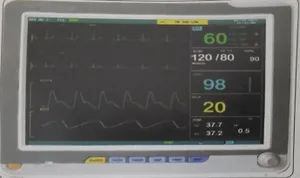
- A.
Green colour denotes- Heart Rate
- B.
Light blue colour denotes – SPO2
- C.
Yellow colour denotes - Respiration
- D.
White number denotes - MAP
- A.
Q2 · Reasoning · Arrangements & Puzzles
Arrange the following words in logical sequence 1. Crime 2. FIR 3. Bail 4. Court 5. Police.
- A.
1,2,3,5,4
- B.
5, 1, 3, 4, 2
- C.
1, 5, 2,4, 3
- D.
4, 5, 1, 2, 3
- A.
Q3 · Medical & Surgical Nursing · Integumentary Function
This type of dressing is known as:
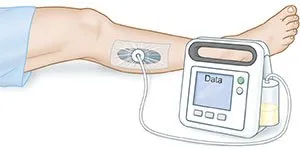
- A.
Foam dressing
- B.
Sponge dressing
- C.
Negative pressure dressing
- D.
Positive pressure dressing
- A.
Q4 · Nursing Foundations · Vital Signs
A bedridden patient has been lying in the same position for several hours. Which nursing intervention is most important to prevent pressure ulcers?
- A.
Apply talcum powder
- B.
Change position every 2 hours
- C.
Increase room temperature
- D.
Give high protein diet only
- A.
Q5 · Obstetrics & Gynaecology · Hypertensive Disorders in Pregnancy
Pregnant woman is monitored by nurse, based on the following image. Identify the wave pattern:
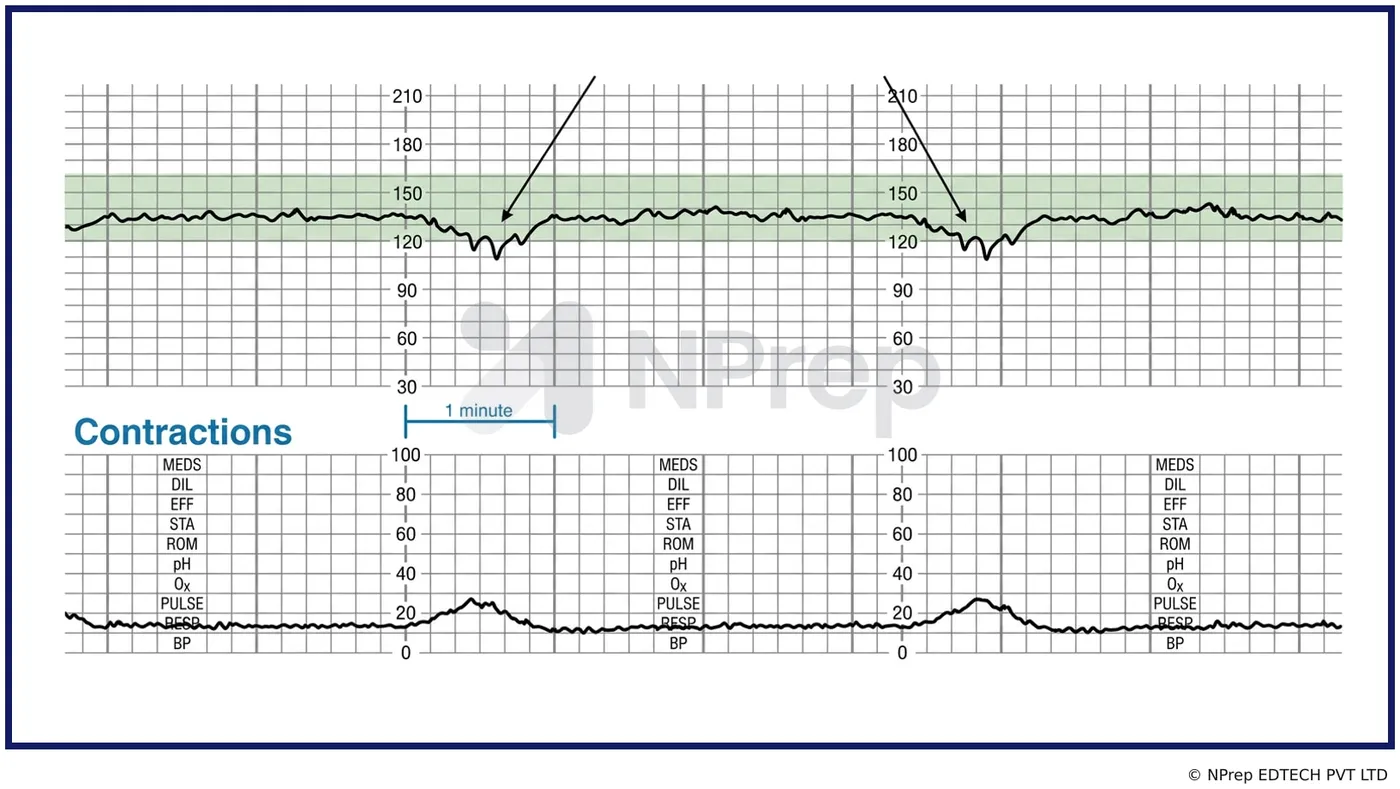
- A.
Fetal deceleration
- B.
Reassuring pattern
- C.
Fetal tachycardia
- D.
Fetal acceleration
- A.
Q6 · General Knowledge · International Current Affairs
Which Indian city hosted the 2019 Howdy Modi event?
- A.
New York
- B.
Houston
- C.
Washington DC
- D.
Chicago
- A.
Q7 · Pharmacology · General Pharmacology
Patient with DVT is advised low molecular heparin. At which site nurse will administer this?
- A.
SC
- B.
IM
- C.
Oral
- D.
IV
- A.
Q8 · Child Health Nursing (Pediatrics) · Pediatric Critical Care
Based on the following image, which one is true option:
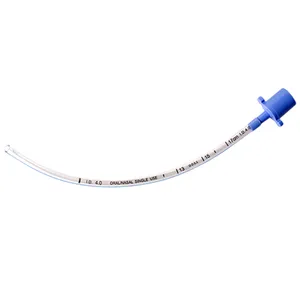
- A.
This is uncuffed tube appropriate for child
- B.
This cuffed tube is appropriate for child
- C.
This uncuffed tube is inappropriate for child
- D.
This is cuffed and inappropriate for child
- A.
Q9 · Medical & Surgical Nursing · Other Acute Problems
First priority in trauma patient according to primary survey is:?
- A.
Circulation
- B.
Airway with cervical spine control
- C.
Disability
- D.
Exposure
- A.
Q10 · Medical & Surgical Nursing · Sensorineural Function
Identify the following instrument in image:

- A.
Otoscope
- B.
Tonometer
- C.
Ophthalmoscope
- D.
None of these
- A.
Q11 · Nursing Foundations · Procedures
Identify the procedure done in the image:
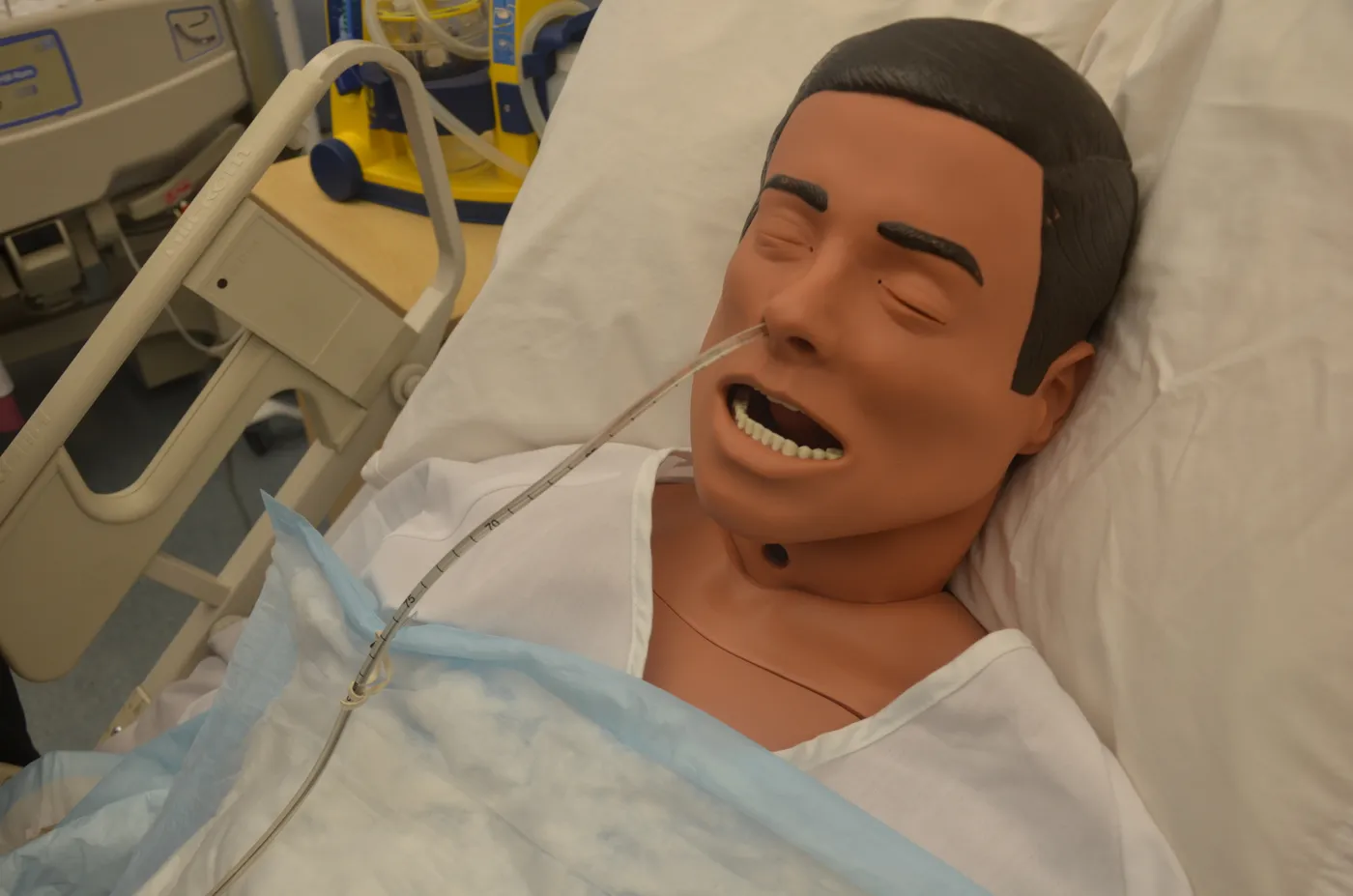
- A.
Nasogastric insertion
- B.
NJ tube insertion
- C.
ET insertion
- D.
None of these
- A.
Q12 · Applied Anatomy · Introduction to Anatomical terms & Organization of Human Body
Identify the marked area in the image:
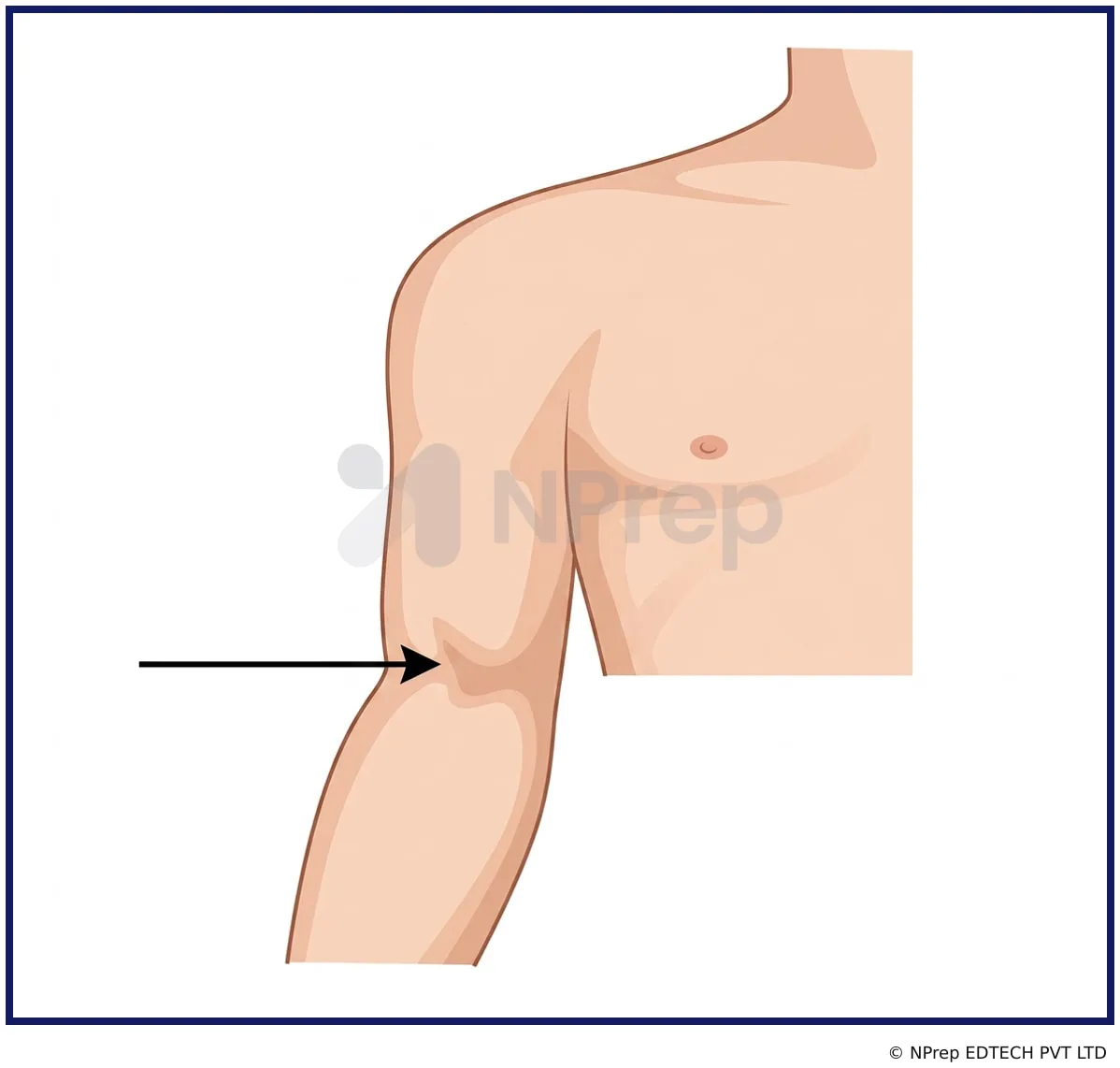
- A.
Femoral
- B.
Radial
- C.
Popliteal
- D.
Cubital fossa
- A.
Q13 · Mental Health Nursing · Substance Use Disorders
A patient came to emergency with alcohol withdrawal symptoms. What symptoms will you observe?
- A.
Tremor, sweating, restlessness
- B.
Fever, nausea, vomiting, hyperactivity
- C.
Hypertension, sweating, rhinorrhea
- D.
Deep coma, lacrimation, tears
- A.
Q14 · Pharmacology · Miscellaneous
How frequently will you conduct blood test while patient is on regular clozapine?
- A.
Twice a week
- B.
Weekly
- C.
Monthly
- D.
Fortnight
- A.
Q15 · Applied Microbiology & Infection control · Employee Safety Indicators
Needle stick injury can result in all of the following; EXCEPT:
- A.
HIV
- B.
HBV
- C.
HCV
- D.
Malaria
- A.
Q16 · Nursing Management & Leadership · Management of Nursing Service in the Hospital & Community
At what time ward census done?
- A.
Day time
- B.
Morning shift
- C.
Evening shift
- D.
None of these
- A.
Q17 · Applied Microbiology & Infection control · Biomedical Waste Management (BMW)
Glove papers are discarded in which BMW dustbin?
- A.
Black dustbin
- B.
Red dustbin
- C.
Yellow dustbin
- D.
Blue dustbin
- A.
Q18 · Quantitative Aptitude and Mathematics · Profit & loss
A number is increased by 20% and then decreased by 20%. What is the net change?
- A.
8% decrease
- B.
4% increase
- C.
4% decrease
- D.
No change
- A.
Q19 · Obstetrics & Gynaecology · Abnormalities of the Puerperium
A patient is on postpartum period of 72 hours, A purpura developed fever with decreased skin integrity due to fluid loss and excessive vaginal secretions may indicate development of sepsis. In above scenario, the body temperature support sepsis is:
- A.
36°C
- B.
37°C
- C.
38°C
- D.
40°C
- A.
Q20 · Pharmacology · Respiratory System Drugs
Injection Morphine is given intrathecal during procedure for pain relief after the procedure. After procedure which of following analgesic you will not administer?
- A.
Paracetamol
- B.
Diclofenac
- C.
Tramadol
- D.
Fentanyl
- A.
Q21 · Medical & Surgical Nursing · Gas Exchange and Respiratory Function
Patient is suffering from dyspnea. Which position will you provide for patient to relieve?
- A.
Supine
- B.
Prone
- C.
Trendelenburg
- D.
Fowler's
- A.
Q22 · Medical & Surgical Nursing · Other Acute Problems
Identify the following image:
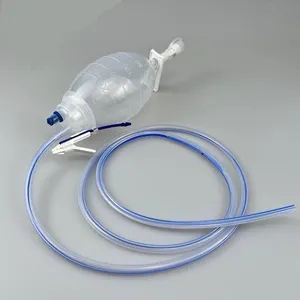
- A.
Jackson-Pratt drain
- B.
Wound drain
- C.
Hemovac drain
- D.
None of these
- A.
Q23 · Medical & Surgical Nursing · Fluid and Electrolytes: Balance and Distribution
A patient reports calcium loss. What is the nursing intervention?
- A.
Reposition the patient every 2 hourly
- B.
Give supplemental feeds in between meals
- C.
Encourage to walk
- D.
Give dairy products
- A.
Q24 · Medical & Surgical Nursing · Perioperative Concepts and Nursing Management
Why it is necessary to remove dark coloured nail paint before surgery?
- A.
Nail paint interferes with SPO2 monitoring and we cannot assess Capillary Refill Time (CRT)
- B.
To prevent burns from cautery
- C.
Nail paint increases chances of infections
- D.
To follow OT ethics
- A.
Q25 · Mental Health Nursing · Mood disorders
How will you differentiate clinical depression with normal grief?
- A.
Persistent anhedonia in clinical depression
- B.
Normal grief, sense of guilt is present in every situation
- C.
Often opens up angry
- D.
Feels temporary loss of self-esteem
- A.
- Sign in free
Done 25 questions? Check your answers
Sign in free: every answer with its explanation, attempt the paper timed with negative marking, and track your score.
Q26 · Reasoning · Blood Relations
Pointing to a woman, a man said, “She is the daughter of my grandfather’s only son.” Who is the woman?
- A.
Sister
- B.
Cousin
- C.
Daughter
- D.
Aunt
- A.
Q27 · Medical & Surgical Nursing · Urinary Tract Function
A patient is admitted with acute renal kidney injury, and nurse is advised to monitor strict urine output. She notices urine output is less than 100 ml. for last 24 hours, it is called:
- A.
Urine output is less
- B.
Urine output is more
- C.
Its normal
- D.
None of these
- A.
Q28 · Obstetrics & Gynaecology · Practical Obstetrics
Identify the blade used:
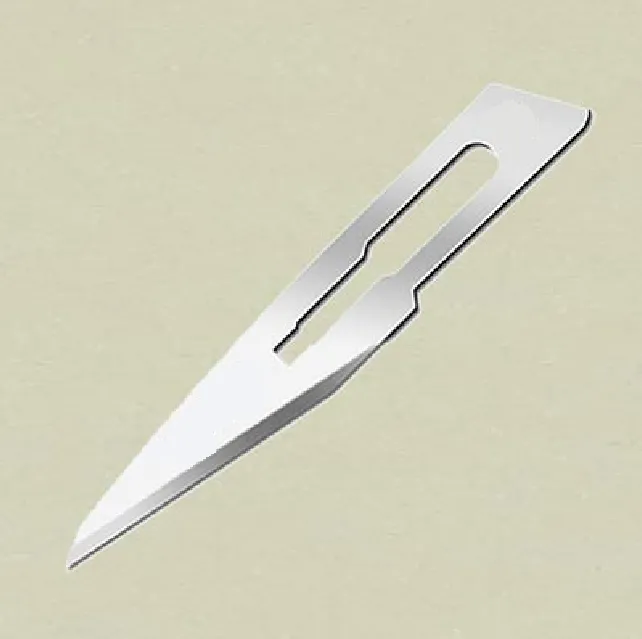
- A.
11
- B.
15
- C.
21
- D.
22
- A.
Q29 · Pharmacology · Drugs Acting on Central Nervous System
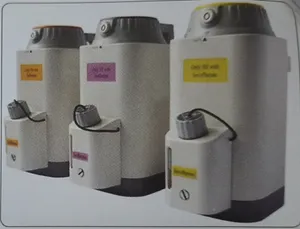
Identify the Yellow vaporizer in the following image:
- A.
Sevoflurane
- B.
Isoflurane
- C.
Enflurane
- D.
None of these
- A.
Q30 · Child Health Nursing (Pediatrics) · Modern concepts of child- care
A 4-year-old child is hospitalized and refuses to eat, crying for parents. Which stage of separation anxiety is this?
- A.
Protest stage
- B.
Despair stage
- C.
Detachment stage
- D.
Regression stage
- A.
Q31 · Obstetrics & Gynaecology · Examination of a Gynecological Patient
The obstetrical assessment reveals:1. This is her third pregnancy2. Her first child was delivered at 38 weeks3. Her second child was delivered at 34 weeks. Calculate the GTPAL Score.
- A.
31101
- B.
31102
- C.
31111
- D.
32111
- A.
Q32 · Applied Microbiology & Infection control · Hospital-Acquired Infections
The most common hospital-acquired infection is:?
- A.
Respiratory infection
- B.
Urinary tract infection
- C.
Bloodstream infection
- D.
Skin infection
- A.
Q33 · Nursing Foundations · Nutritional Needs
A doctor has asked the nurse to insert Ryle's tube and has also mentioned do not perform whoosh test to confirm the placement of the tube" How whoosh test is performed?
- A.
Aspiration of the gastric content
- B.
Push air in the tube and auscultate
- C.
Flush with water through NG
- D.
Perform Chest X-ray
- A.
Q34 · Nursing Foundations · Administration of medications
Which of the following techniques is used for the instillation of eye drops?
- A.
Tell the patient to look downward, retract lower lids and instill eye drop.
- B.
Look upward, retract lower lids and instill eye drop
- C.
Look lateral, retract lower lids and instill eye drop
- D.
Look forward, retract upper lids and instill eye drop
- A.
Q35 · General Knowledge · Sports Current Affairs
Who won the 2019 ICC Cricket World Cup?
- A.
India
- B.
England
- C.
Australia
- D.
New Zealand
- A.
Q36 · Medical & Surgical Nursing · Perioperative Concepts and Nursing Management
Vicryl 3-0 is:
- A.
Natural absorbable
- B.
Synthetic non-absorbable
- C.
Synthetic absorbable
- D.
Natural non absorbable
- A.
Q37 · Obstetrics & Gynaecology · Population Dynamics and Control of Conception
A nurse is counseling a young woman about starting combined oral contraceptives (COCs). Which potential risk is important to discuss for long-term use?
- A.
Decreased risk of ovarian cancer
- B.
Increased risk of breast and cervical cancer
- C.
Significant weight loss
- D.
Increased bone mineral density
- A.
Q38 · Nursing Foundations · Administration of medications
A nurse prepares to administer medication but notices the dose on the prescription seems unusually high. What should be the nurse’s first action?
- A.
Administer the medication
- B.
Ask another nurse to give it
- C.
Clarify the order with the physician
- D.
Document the order
- A.
Q39 · Medical & Surgical Nursing · Digestive and Gastrointestinal Function
Identify the following procedure which nurse is doing in following image:

- A.
TPN
- B.
Dialysis
- C.
Hydration
- D.
Lavage solution
- A.
Q40 · Quantitative Aptitude and Mathematics · Profit & loss
If 25% of a number is 50, what is the number?
- A.
100
- B.
150
- C.
200
- D.
250
- A.
Q41 · Child Health Nursing (Pediatrics) · Newborn Infants
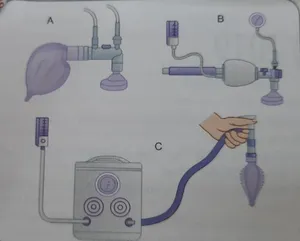
Which of the following equipment is used in Neonatal Resuscitation program?
- A.
A only
- B.
A and B only
- C.
A and C only
- D.
All of these
- A.
Q42 · Medical & Surgical Nursing · Gas Exchange and Respiratory Function
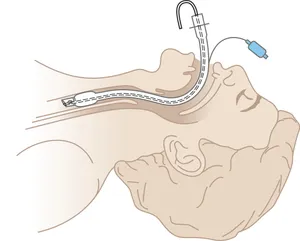
What is the procedure shown in the image?
- A.
Endotracheal intubation
- B.
Oropharyngeal airway
- C.
Combi-tube intubation
- D.
Bronchoscopy
- A.
Q43 · Mental Health Nursing · Neurotic, stress related and somatisation disorders
Arrange the following events in the order of their occurrence in panic circle? I. Apprehension or worry II. Body sensations III. Perceived threat IV. Interpretation of sensations as catastrophic V. Trigger stimulus
- A.
I, III, II, V, IV
- B.
V, II, III, I, IV
- C.
V, III, I, II, IV
- D.
III, V, I, II, IV
- A.
Q44 · Applied Microbiology & Infection control · Pathogenic Organisms
A patient in the second week of a febrile illness presents with a fever that gradually increases each day, reaching a high plateau. This characteristic fever pattern in typhoid fever is known as:
- A.
Intermittent fever
- B.
Step-ladder pyrexia
- C.
Remittent fever
- D.
Pel-Ebstein fever
- A.
Q45 · Applied Microbiology & Infection control · Biomedical Waste Management (BMW)
BMW management of vial and broken ampule discarded in:
- A.
Blue dustbin
- B.
Red dustbin
- C.
Black dustbin
- D.
Blue cardboard box
- A.
Q46 · Pharmacology · Drugs Acting on Kidney
A patient has undergone donor nephrectomy. The drug will not begiven:
- A.
Morphine
- B.
Fentanyl
- C.
Paracetamol
- D.
Diclofenac
- A.
Q47 · Mental Health Nursing · Schizophrenia
A patient states, “My organs have stopped working; I am already dead.” This delusion is called:?
- A.
Somatic delusion
- B.
Nihilistic delusion
- C.
Grandiose delusion
- D.
Referential delusion
- A.
Q48 · Mental Health Nursing · Schizophrenia
Social skill training for Schizophrenia patient is done for which symptom?
- A.
Positive sign
- B.
Negative sign
- C.
Hallucination
- D.
Delusion
- A.
Q49 · Applied Anatomy · Nervous System
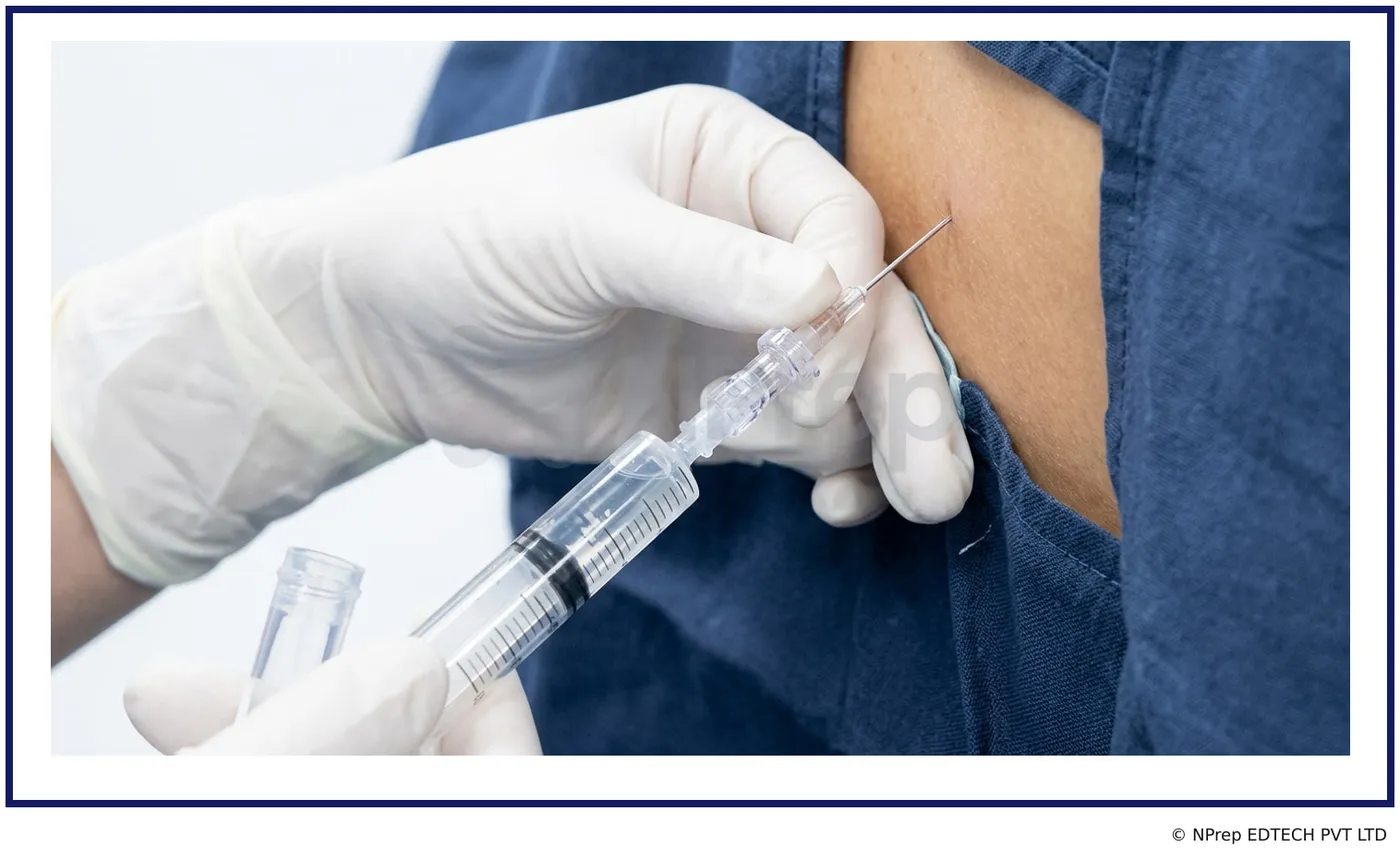
Identify the procedure done by the health care professional in the image below:
- A.
Cerebrospinal fluid
- B.
Pleural fluid
- C.
Cerebral fluid
- D.
Peritoneal fluid
- A.
Q50 · Medical & Surgical Nursing · Integumentary Function
A patient with 40% total body surface area burn arrives in the emergency unit. The nurse prepares to calculate fluid resuscitation using the Parkland formula. Which fluid is commonly used?
- A.
5% Dextrose
- B.
Ringer lactate
- C.
3% saline
- D.
Albumin
- A.
- Sign in free
Done 50 questions? Check your answers
Sign in free: every answer with its explanation, attempt the paper timed with negative marking, and track your score.
Q51 · Pharmacology · Drugs acting on peripheral nervous system
The following medication in the picture act as :
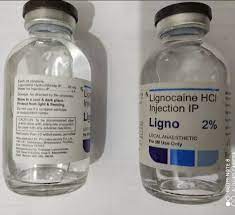
- A.
Local anesthetic
- B.
Tooth extraction
- C.
Cannula insertion
- D.
Oral procedure
- A.
Q52 · Reasoning · Arrangements & Puzzles
Arrange the following words in a meaningful order 1. River 2. Dam 3. Generator 4. Electricity 5. Turbine
- A.
1,2,5,3, 4
- B.
1, 3, 5, 4, 2
- C.
3, 1, 5,4, 2
- D.
3, 1, 2, 5, 4
- A.
Q53 · Applied Microbiology & Infection control · Disinfection and Sterilization
This is a solution used in hospitals. After how many days will you change this solution?
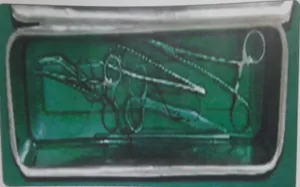
- A.
7 days
- B.
28 days
- C.
14 days
- D.
21 days
- A.
Q54 · Medical & Surgical Nursing · Cardiovascular, Circulatory, and Hematologic Function
Which of the following is the most common type of anemia in India?
- A.
Pernicious anemia
- B.
Iron deficiency anemia
- C.
Aplastic anemia
- D.
Sickle cell anemia
- A.
Q55 · Pharmacology · Miscellaneous
Which of the following combination is incompatible?
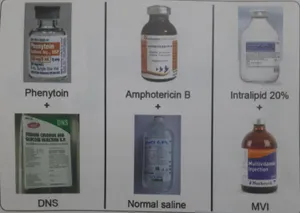
- A.
A only
- B.
A and B
- C.
A and C
- D.
None of these
- A.
Q56 · Medical & Surgical Nursing · Digestive and Gastrointestinal Function
Find out the problem in the following image:
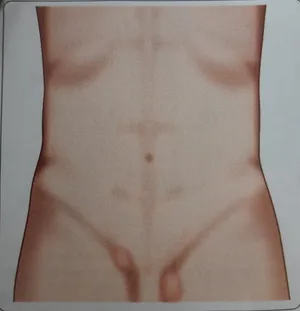
- A.
Inguinal hernia
- B.
Incisional hernia
- C.
Scrotal hernia
- D.
None of the above
- A.
Q57 · Mental Health Nursing · Treatment modalities and therapies used in mental disorders
What is the difference in regular ECT and modified ECT?
- A.
Low Volt shock is provided
- B.
Analgesic is given
- C.
Muscle relaxant is given
- D.
Pain killer is provided
- A.
Q58 · Quantitative Aptitude and Mathematics · Average
The ratio of ages of A and B is 3 : 5. If the sum of their ages is 32 years, what is A’s age?
- A.
10
- B.
12
- C.
15
- D.
20
- A.
Q59 · Medical & Surgical Nursing · Urinary Tract Function
The following are the use of the central line catheter; EXCEPT:
- A.
CVP monitor
- B.
Administer medication
- C.
Left ventricular function
- D.
TPN administration
- A.
Q60 · Applied Microbiology & Infection control · Hand Hygiene
WHO hand wash time with soap?
- A.
40 to 60 seconds
- B.
20 to 30 seconds
- C.
2 minutes
- D.
5 minutes
- A.
Q61 · Medical & Surgical Nursing · Perioperative Concepts and Nursing Management
A surgeon is going to give a skin incision on patient. Which of the following is to be done?
- A.
Sign in
- B.
Sign out
- C.
Time out
- D.
Time in
- A.
Q62 · Obstetrics & Gynaecology · COMPLICATED LABOR-Malposition, Malpresentation and Cord Prolapse
The relation of the long axis of the fetus to the long axis of the uterus is known as?
- A.
Position of the fetus
- B.
Lie
- C.
Presentation
- D.
Attitude
- A.
Q63 · Nursing Foundations · Nursing Care & Specific Procedures
Identify the airway used in emergency in the following image:
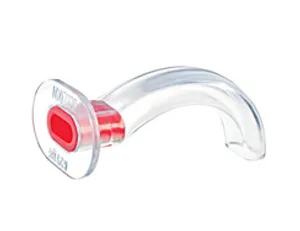
- A.
Oropharyngeal airway
- B.
Nasopharyngeal airway
- C.
Nasogastric tube
- D.
None of the above
- A.
Q64 · Applied Microbiology & Infection control · Pathogenic Organisms
Which laboratory test is considered the gold standard for diagnosing typhoid fever, especially during the first week of illness?
- A.
Widal test
- B.
Blood culture
- C.
Stool culture
- D.
Urine culture
- A.
Q65 · Obstetrics & Gynaecology · Complicated Pregnancy
A primigravida with O negative blood group delivered a baby with O positive blood group. While DCT was negative. What should be done next?
- A.
Repeat DCT
- B.
Give 300 mg of Anti-D to mother
- C.
Give 150 mg of Anti-D to mother
- D.
No need to give Anti-D to mother
- A.
Q66 · Nursing Management & Leadership · Organisational Behaviour & Human Relations
The flow of information between persons of the same hierarchical levels. This helps in improving understanding between equals is known as what type of communication?
- A.
Oral communication
- B.
Horizontal communication
- C.
Upward communication
- D.
Downward communication
- A.
Q67 · Medical & Surgical Nursing · Miscellaneous
The following instrument is used in which surgery?
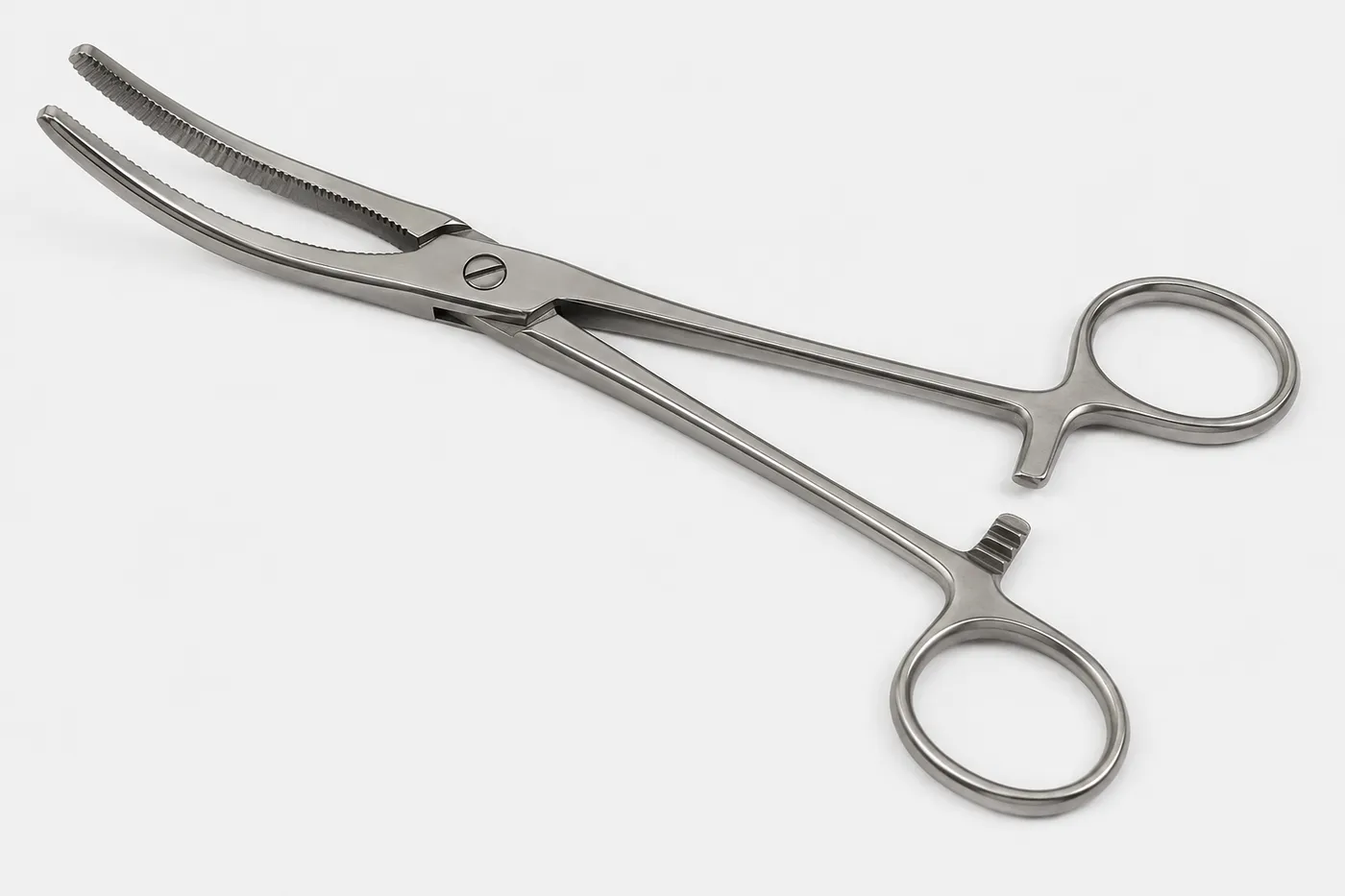
- A.
Thyroidectomy
- B.
Abdominal surgery
- C.
Thoracotomy
- D.
Cesarean section
- A.
Q68 · Child Health Nursing (Pediatrics) · Newborn Infants
Refrigerated breastmilk should not be used if it is beyond:
- A.
1 week.
- B.
48 hours.
- C.
2 months.
- D.
2 weeks.
- A.
Q69 · Pharmacology · General Pharmacology
Patient admitted in the ward had 3 episodes of vomiting. Which of the following drug should not be given?
- A.
Fentanyl
- B.
Promethazine
- C.
Tramadol
- D.
Ondansetron
- A.
Q70 · Nursing Foundations · Nursing Care & Specific Procedures
Identify the procedure done in the given image:
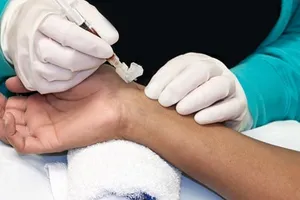
- A.
Blood culture
- B.
Mantoux test
- C.
Arterial blood gas sampling
- D.
None of the above
- A.
Q71 · Applied Psychology · Miscellaneous
Give the correct order of the five stages of a dying person?
- A.
Anger - Depression - Bargaining - Denial - Acceptance
- B.
Denial - Depression - Bargaining - Anger - Acceptance
- C.
Depression - Denial - Anger - Bargaining - Acceptance
- D.
Denial - Anger - Bargaining - Depression - Acceptance
- A.
Q72 · Nursing Foundations · Nutritional Needs
Identify the following tube in the image:
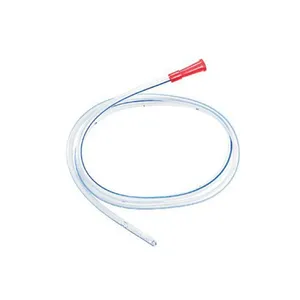
- A.
Nasogastric tube
- B.
Orogastric tube
- C.
NJ tube
- D.
Urinary tube
- A.
Q73 · Community Health Nursing · Respiratory Infections
Mantoux Test (Purified Protein Derivative) is significantly positive when the erythema measures?
- A.
15 mm or greater
- B.
3.5 mm - 9.9 mm
- C.
5 mm - 10 mm
- D.
10 mm - 14.9 mm
- A.
Q74 · Child Health Nursing (Pediatrics) · Integrated Management of Neonatal and Childhood Illness
Doctor prescribed pediatric child as follows: 50 ml fluid transfused over 30 minutes at drop rate of 15 gtts/mL per hours. In 30 minutes, what will be the flow rate?
- A.
20
- B.
50
- C.
25
- D.
30
- A.
Q75 · Obstetrics & Gynaecology · Genital Malignancy
A 19-year-old unmarried girl came to gynae OPD for vaccination against cervical cancer. Which vaccine will be administered to the client?
- A.
Gardasil
- B.
TCV
- C.
Bexsero
- D.
HBV
- A.
- Sign in free
Done 75 questions? Check your answers
Sign in free: every answer with its explanation, attempt the paper timed with negative marking, and track your score.
Q76 · Obstetrics & Gynaecology · Special Topics in Obstetrics
Which Leopold maneuver is used to assess the fetal attitude during abdominal palpation of an ANC mother?
- A.
First
- B.
Second
- C.
Third
- D.
Fourth
- A.
Q77 · Nursing Foundations · Promoting safety in health care environment
An elderly patient tries to get out of bed frequently and is at risk of falling. What is the best nursing intervention?
- A.
Apply physical restraints immediately
- B.
Lower bed height and keep call bell nearby
- C.
Leave patient alone
- D.
Lock the room
- A.
Q78 · Medical & Surgical Nursing · Gas Exchange and Respiratory Function
Patient in emergency department diagnosed to have fluid and air present in lung. What is the above-mentioned condition known as?
- A.
Hemothorax
- B.
Hydropneumothorax
- C.
Hemopneumothorax
- D.
Pneumothorax
- A.
Q79 · Quantitative Aptitude and Mathematics · Profit & loss
If the cost price of an article is ₹400 and it is sold at 20% profit, what is the selling price?
- A.
₹440
- B.
₹460
- C.
₹480
- D.
₹500
- A.
Q80 · Medical & Surgical Nursing · Cardiovascular, Circulatory, and Hematologic Function
Which position is best for a patient experiencing air embolism?
- A.
Fowler's position
- B.
Supine position
- C.
Left lateral Trendelenburg position
- D.
Knee-chest position
- A.
Q81 · Medical & Surgical Nursing · Neurologic Function
In the following picture, little finger under jaw is used because for:
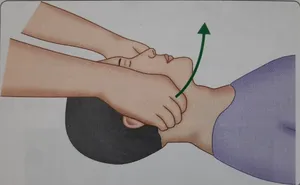
- A.
To lift mandible angle
- B.
It helps in C-spine stabilization
- C.
To extend the jaw
- D.
None of the above
- A.
Q82 · General Knowledge · Awards & honours
Who won the 2019 Nobel Peace Prize?
- A.
Greta Thunberg
- B.
Abiy Ahmed
- C.
Malala Yousafzai
- D.
Barack Obama
- A.
Q83 · Medical & Surgical Nursing · Neurologic Function
A patient with spinal cord injury above T6 suddenly develops severe hypertension, headache, sweating, and bradycardia. This condition is:
- A.
Neurogenic shock
- B.
Autonomic dysreflexia
- C.
Spinal shock
- D.
Hypovolemic shock
- A.
Q84 · Child Health Nursing (Pediatrics) · Newborn Infants
Normally enteral feedings are flushed with water to open blocked tube and ease feeding. In which area it is done with air?
- A.
NICU
- B.
Operation unit
- C.
Rehabilitation unit
- D.
Critical care unit
- A.
Q85 · General Knowledge · National Current Affairs
Article 370 was revoked in 2019 from which state?
- A.
Jammu and Kashmir
- B.
Himachal Pradesh
- C.
Uttarakhand
- D.
Punjab
- A.
Q86 · Nursing Foundations · Infection control & BMW management
Sharp blades and needle to be discarded in which of following?
- A.
Black cardboard
- B.
Red
- C.
White container
- D.
Blue
- A.
Q87 · Medical & Surgical Nursing · Gas Exchange and Respiratory Function
Which of the following is not involved in chest physiotherapy?
- A.
Nebulization
- B.
Percussion
- C.
Coughing
- D.
Vibration
- A.
Q88 · Pharmacology · Miscellaneous
Adrenaline dose in anaphylactic shock is:
- A.
1:1000 (0.5 ml)
- B.
1.10000 (0.5 ml)
- C.
1:1000 (1 ml)
- D.
1: 10000 (1 ml)
- A.
Q89 · Medical & Surgical Nursing · Musculoskeletal Function
A patient with spinal injury should be transported using:?
- A.
Wheelchair
- B.
Log roll technique
- C.
Sitting position
- D.
Knee chest position
- A.
Q90 · Nursing Foundations · Fluid, electrolytes & Acid-base balances
A nurse is asked to give 1000 ml of normal saline at flow rate of 125 ml per hour. How much time it will take to complete this fluid?
- A.
8 hours
- B.
6 hours
- C.
10 hours
- D.
12 hours
- A.
Q91 · Medical & Surgical Nursing · Perioperative Concepts and Nursing Management
Following is the picture of sterile sponge used in emergency. It has a blue colour thread. What is the purpose of this colour thread?

- A.
Blue line is radiopaque
- B.
Blue colour is easily visible when soiled in blood
- C.
No specific purpose
- D.
Design of gauze piece
- A.
Q92 · Medical & Surgical Nursing · Cardiovascular, Circulatory, and Hematologic Function
Identify the catheter in the following image:
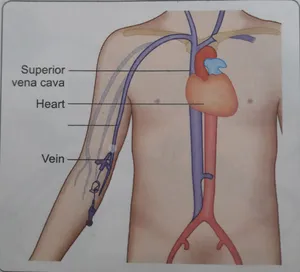
- A.
Central venous line
- B.
Intra-arterial line
- C.
Peripherally inserted central line
- D.
None of the above
- A.
Q93 · Medical & Surgical Nursing · Digestive and Gastrointestinal Function
Which of the following is the contraindication of gastric aspiration from NG tube?
- A.
Hypertension
- B.
Diabetes
- C.
Esophageal varices
- D.
Severe dehydration
- A.
Q94 · Nursing Foundations · Vital Signs
In which condition, distal pulse is preferred rather than apical pulse?
- A.
Arrhythmia
- B.
Shock
- C.
Hypertension
- D.
Heart block
- A.
Q95 · Pharmacology · Miscellaneous
In rehabilitation center, which of the following drug is used as opioid substitute in substance abuse patient?
- A.
Buprenorphine
- B.
Bupinone
- C.
Haloperidol
- D.
Quitepine
- A.
Q96 · Medical & Surgical Nursing · Gas Exchange and Respiratory Function
A patient with chest trauma has absent breath sounds on one side and tracheal deviation. The condition is:
- A.
Hemothorax
- B.
Pneumothorax
- C.
Tension pneumothorax
- D.
Pulmonary embolism
- A.
Q97 · Pharmacology · Antimicrobial Drugs
Patient is allergic to Beta-lactamase and which of following drug is safe to administer?
- A.
Amoxicillin
- B.
Penicillin
- C.
Vancomycin
- D.
Cefazoline
- A.
Q98 · Mental Health Nursing · Psychiatric Emergencies
Priority action of patient agitation management?
- A.
Argue with patient until he understands about situation
- B.
Don't consider about patient and leave patient in room
- C.
Decrease the environmental stimuli that causes agitation and place patient on safer place
- D.
None of the above
- A.
Q99 · Child Health Nursing (Pediatrics) · Common Medical Procedures
Identify the Cannula used in infants as per the image:
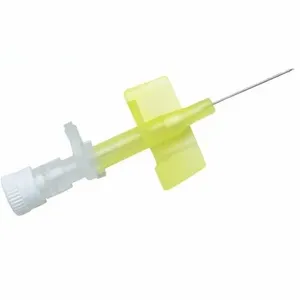
- A.
20 G
- B.
22 G
- C.
24 G
- D.
26 G
- A.
Q100 · Mental Health Nursing · Psychiatric Emergencies
A patient has tried to commit suicide with drug overdose. Which of the situation depicts that the patient has high risk of suicide?
- A.
Wrote a note
- B.
Informed a relative
- C.
Impulsive attempt
- D.
Alcohol intake before committing suicide
- A.
- Sign in free
Done 100 questions? Check your answers
Sign in free: every answer with its explanation, attempt the paper timed with negative marking, and track your score.
Q101 · Pharmacology · Miscellaneous
Which of the following component is not present in normal saline?
- A.
Na+ 154 mEq/L
- B.
Cl- 154 mEq/L
- C.
K+ 52 mEq/L
- D.
None of the above
- A.
Q102 · Obstetrics & Gynaecology · Abnormalities of the Puerperium
A woman with 3rd day postpartum has complaint of engorgement in both breasts. What is cut off temperature for fever in postpartum women?
- A.
37°C
- B.
38°C
- C.
39°C
- D.
34°C
- A.
Q103 · Medical & Surgical Nursing · Neurologic Function
The earliest symptom of increased intracranial pressure (ICP) is:?
- A.
Bradycardia
- B.
Change in level of consciousness
- C.
Fixed pupil
- D.
Irregular respiration
- A.
Q104 · Obstetrics & Gynaecology · Population Dynamics and Control of Conception
The minimum recommended distance between two births according to WHO is?
- A.
12 months
- B.
18 months
- C.
24 months
- D.
36 months
- A.
Q105 · Obstetrics & Gynaecology · Practical Obstetrics
Identify, which of the following retractor is used in abdominal surgery?
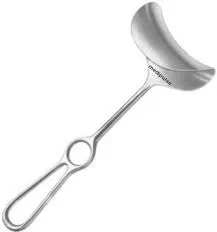
- A.
Vaginal surgery
- B.
Thoracotomy
- C.
Cesarean section
- D.
None of these
- A.
Q106 · Applied Anatomy · Introduction to Anatomical terms & Organization of Human Body
As per the following image, an imaginary plane that divides the body into superior and inferior parts is:

- A.
Coronal plane
- B.
Frontal plane
- C.
Sagittal plane
- D.
Transverse plane
- A.
Q107 · Nursing Foundations · Hospital Admission & Discharge
Position for patients with continuous RT feeding:
- A.
Supine
- B.
Fowlers
- C.
Reverse Trendelenburg
- D.
Side lying
- A.
Q108 · Child Health Nursing (Pediatrics) · Central Nervous System
A nurse is taking care of child who is having epilepsy. What nurse should do immediately?
- A.
Airway management and provide side lying position
- B.
Administer oxygen to child
- C.
Do nothing and record the epilepsy type and duration
- D.
Inform doctor about epilepsy and record in nurses chart
- A.
Q109 · Medical & Surgical Nursing · Cardiovascular, Circulatory, and Hematologic Function
Normal hemoglobin level in adult is:
- A.
12 to 15 g%
- B.
12 to 15 mg%
- C.
10 to 18 g%
- D.
10 to 18 mg%
- A.
Q110 · Medical & Surgical Nursing · Urinary Tract Function
A nurse is taking care of Chronic renal dysfunction patient. What diet she will advise for this patient?
- A.
Low sodium, low potassium, low protein diet
- B.
High protein, low sodium, low potassium diet
- C.
Low sodium, low potassium, high carbohydrate diet
- D.
Low sodium, high potassium, low protein diet
- A.
Q111 · Obstetrics & Gynaecology · Practical Obstetrics
Identify the following instrument:
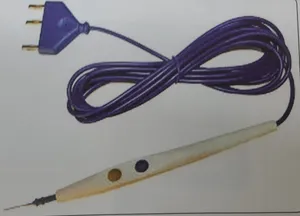
- A.
Monopolar cautery pencil
- B.
Bipolar cautery pencil
- C.
Electric pencil
- D.
None of the above
- A.
Q112 · Medical & Surgical Nursing · Gas Exchange and Respiratory Function
Identify the tube in the following image:
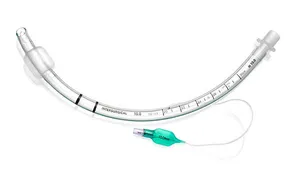
- A.
Oropharyngeal airway
- B.
Endotracheal tube
- C.
Tracheostomy tube
- D.
Combi tube
- A.
Q113 · Medical & Surgical Nursing · Urinary Tract Function
After 6 hours of nephrostomy, the patient complains of nausea and abdominal distention. What should the nurse intervene?
- A.
Check urine output & inform to on duty doctor
- B.
Check the client's temperature
- C.
Check the client's blood pressure
- D.
Check the client's LOC
- A.
Q114 · Obstetrics & Gynaecology · Hypertensive Disorders in Pregnancy
An antenatal mother is admitted with complaints of eclampsia. What will be the loading dose of MgSO4 given to patient?
- A.
4 ml in 16 ml of NS
- B.
8 ml in 12 ml of NS
- C.
6 ml in 14 ml of NS
- D.
2 ml in 18 ml of NS
- A.
Q115 · Nursing Foundations · Fluid, electrolytes & Acid-base balances
A nurse on PICU is advised to give 400 ml fluid to be given on 8 hours, drop factor is 60 drop per minute. Nurse will run this fluid at what flow rate?
- A.
13 drops per minute
- B.
50 drops per minute
- C.
17 drops per minute
- D.
30 drops per minute
- A.
Q116 · Applied Physiology · Blood
Universal blood donor?
- A.
O -ve
- B.
AB +ve
- C.
A +ve
- D.
B +ve
- A.
Q117 · Medical & Surgical Nursing · Digestive and Gastrointestinal Function
Sengstaken - Blakemore tube method is used to control bleeding in which condition?
- A.
Hematemesis
- B.
Gastritis
- C.
Melena
- D.
Esophageal varices
- A.
Q118 · Quantitative Aptitude and Mathematics · Average
The average of 5 numbers is 24. If one number is removed, the average becomes 20. What is the removed number?
- A.
36
- B.
40
- C.
44
- D.
48
- A.
Q119 · Nursing Foundations · Infection control & BMW management
Which of the following glove is of largest size?
- A.
6.0 glove
- B.
6.5 glove
- C.
7.0 glove
- D.
None of the above
- A.
Q120 · Medical & Surgical Nursing · Perioperative Concepts and Nursing Management
A patient planned for surgery advised to remove Jewellery because:
- A.
To maintain OT ethics
- B.
It causes burns to patient with use of cautery
- C.
To prevent theft
- D.
To prevent disturbance to surgeon
- A.
Q121 · Applied Anatomy · Introduction to Anatomical terms & Organization of Human Body
Movement toward midline is called as:
- A.
Anterior central
- B.
Posterior
- C.
Medial rotation
- D.
Posterior lateral
- A.
Q122 · Reasoning · Analogy
Eiffel tower = Paris; Big ben clock tower = ?

- A.
London
- B.
USA
- C.
Italy
- D.
Japan
- A.
Q123 · Obstetrics & Gynaecology · Fundamentals of Reproduction
Interstitial implantation of fertilized ovum is completed on the?
- A.
2nd day
- B.
6th day
- C.
11th day
- D.
7th day
- A.
Q124 · Medical & Surgical Nursing · Cardiovascular, Circulatory, and Hematologic Function
A patient was brought to ED with complaint of chest pain from last 1 hour. Which test is done to detect myocardial infarction?
- A.
Serum electrolyte
- B.
Check ABG
- C.
Check CBC
- D.
Troponin T
- A.
Q125 · Applied Anatomy · Introduction to Anatomical terms & Organization of Human Body
Identify the marked area in the following image:
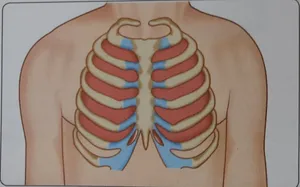
- A.
Thoracic
- B.
Axillary
- C.
Mid-axillary
- D.
None of these
- A.
- Sign in free
Done 125 questions? Check your answers
Sign in free: every answer with its explanation, attempt the paper timed with negative marking, and track your score.
Q126 · Pharmacology · Cardiovascular Drugs
Digoxin should be stopped in a child if the heart rate goes below?
- A.
60
- B.
70
- C.
90
- D.
110
- A.
Q127 · Pharmacology · Antimicrobial Drugs
A nurse is advised to administer inj. Metronidazole to a patient. She knows action of this is:
- A.
Analgesic
- B.
Antipyretic
- C.
Antibiotic
- D.
Sedative
- A.
Q128 · Nursing Foundations · Comfort, Rest & Sleep & Pain
Identify the position in the following image:
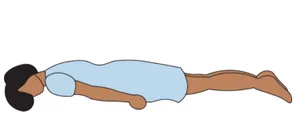
- A.
Supine
- B.
Prone
- C.
Sims
- D.
Dorsal recumbent
- A.
Q129 · Mental Health Nursing · Psychiatric Emergencies
A psychiatric patient states, “I hear voices telling me to harm myself.” What should be the nurse’s priority response?
- A.
Ignore the statement
- B.
Ask the patient to describe the voices
- C.
Immediately ensure patient safety
- D.
Change the topic
- A.
Q130 · Applied Anatomy · Introduction to Anatomical terms & Organization of Human Body
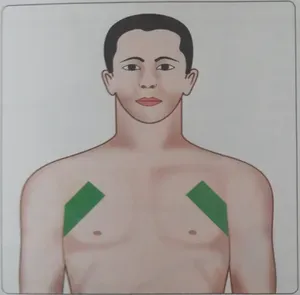 Marked area shown in the following image is:
- A.
Axillary region
- B.
Cubital region
- C.
Thoracic region
- D.
None of these
- A.
Q131 · Medical & Surgical Nursing · Perioperative Concepts and Nursing Management
All of the following are correct regarding stoma formation; EXCEPT:
- A.
Stoma is created near the bony prominence
- B.
Stoma should be created away from bony prominence
- C.
Stoma is created in lower abdomen in fatty region
- D.
Stoma can be done anywhere
- A.
Q132 · Mental Health Nursing · Mood disorders
What advice should a nurse give to a patient on lithium therapy?
- A.
Drink lots of water
- B.
Take medicine after meal
- C.
Take medicine on empty stomach
- D.
Take high calorie diet
- A.
Q133 · General Knowledge · National Current Affairs
Which Indian organization launched Mission Shakti (2019) anti-satellite test?
- A.
ISRO
- B.
DRDO
- C.
HAL
- D.
BARC
- A.
Q134 · Medical & Surgical Nursing · Fluid and Electrolytes: Balance and Distribution
ECG of the patient is showing ST depression, Prominent U wave and inverted T wave. Which of the electrolyte imbalance present?
- A.
Potassium 2.2 mEq/L
- B.
Calcium 8.2 mEq/L
- C.
Magnesium 1.8 mg/dL
- D.
Sodium 133 mEq/L
- A.
Q135 · Medical & Surgical Nursing · Neurologic Function
The nurse is posted in ED and patient comes with seizure. The priority management of seizure patient is:
- A.
Airway management by side lying position and head turn
- B.
Controlling seizure with medications
- C.
Circulation management with IV fluids
- D.
None of the above
- A.
Q136 · Applied Physiology · Nervous System
Which cranial nerve is responsible for gag reflex?
- A.
CN V and VII
- B.
CN IX and X
- C.
CN III and IV
- D.
CN XI and XII
- A.
Q137 · Applied Anatomy · Musculoskeletal System
All of the following are sesamoid bone; EXCEPT:
- A.
Patella
- B.
Pisiform
- C.
Hyoid
- D.
Fibulla
- A.
Q138 · Nursing Research & Statistics · Analysis of data
Which among measures of dispersion?
- A.
Mean
- B.
Range
- C.
Mode
- D.
Median
- A.
Q139 · Medical & Surgical Nursing · Cardiovascular, Circulatory, and Hematologic Function
Identify the use of following machine used in pneumatic compression device:
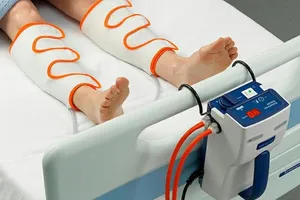
- A.
DVT
- B.
Pulmonary Embolism
- C.
Varicose vein
- D.
Leg pain
- A.
Q140 · Medical & Surgical Nursing · Gas Exchange and Respiratory Function
Identify the instrument shown in the following image:
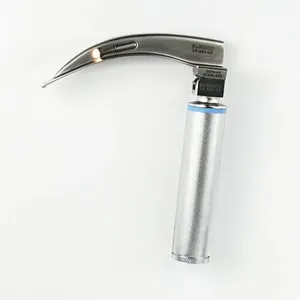
- A.
Laryngoscope
- B.
Bronchoscope
- C.
Videoscope
- D.
Endoscope
- A.
Q141 · Reasoning · Coding-Decoding
If CAT = 24, DOG = 26, then BAT = ?
- A.
21
- B.
23
- C.
25
- D.
27
- A.
Q142 · Pharmacology · Drugs Acting on Central Nervous System
Which of the psychiatric drug does not need any test dose before starting routine dose?
- A.
Haloperidol
- B.
Risperidone
- C.
Clozapine
- D.
Quitepine
- A.
Q143 · Medical & Surgical Nursing · Immunologic Function
In an immunocompromised patient, the nurse should take infection prevention methods when WBC is:
- A.
11000
- B.
5800
- C.
7000
- D.
2000
- A.
Q144 · Nursing Foundations · Nursing Theories
Self-care deficit theory has been proposed by:
- A.
D Orem's
- B.
Rogers
- C.
Betty Newman
- D.
Leininger
- A.
Q145 · Medical & Surgical Nursing · Shock and Multisystem Failure
Identify the cannula which is used in patient with hemorrhagic shock shown in the picture:
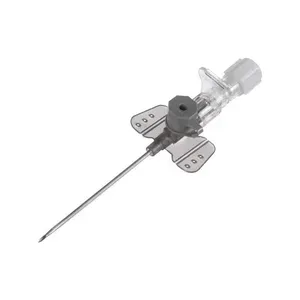
- A.
14 G
- B.
16 G
- C.
18 G
- D.
20 G
- A.
Q146 · Child Health Nursing (Pediatrics) · Disorders of Kidney and Urinary Tract
What are the urine specific gravity and color of urine in a 6-year-old child?
- A.
1.020 yellow
- B.
1.045 yellow
- C.
1.003 yellow
- D.
1.065 yellow
- A.
Q147 · Nursing Foundations · Hygiene
A nurse is preparing to give bath to admitted patient with perineal problem. Which of the following will help the patient?
- A.
Bed bath
- B.
Therapeutic bath
- C.
Self-bath with minimal help
- D.
None of the above
- A.
Q148 · Obstetrics & Gynaecology · Examination of a Gynecological Patient
The patient will be positioned as followed for vaginal examinations:
- A.
Prone
- B.
Left lateral
- C.
Supine
- D.
Dorsal recumbent
- A.
Q149 · Pharmacology · Drugs acting on peripheral nervous system
Lignocaine and adrenaline not used for repair of injury to digitalis because:
- A.
Adrenaline causes vasoconstriction of blood vessels supplying digitalis which may lead to decreased tissue perfusion and necrosis
- B.
Adrenaline decreases the effect of lignocaine
- C.
Adrenaline causes systemic effect
- D.
Adrenaline causes vasodilation which may lead to increased bleeding.
- A.
Q150 · Mental Health Nursing · Eating Disorders
Patient with Anorexia nervosa taking food correctly as per her diet plan, but there was no increase in weight observed. What will be the nursing intervention for the above patient?
- A.
Observe patient while taking meal and after up to 2 hours
- B.
Increase calorie of food from 1500 to 2000
- C.
Add vitamin tablet to her medications
- D.
Engage them in other activities
- A.
- Sign in free
Done 150 questions? Check your answers
Sign in free: every answer with its explanation, attempt the paper timed with negative marking, and track your score.
Q151 · Quantitative Aptitude and Mathematics · Speed–distance–time
A train running at 60 km/h crosses a pole in 12 seconds. What is the length of the train?
- A.
150 m
- B.
180 m
- C.
200 m
- D.
240 m
- A.
Q152 · Medical & Surgical Nursing · Immunologic Function
A nurse notices redness and itching around intravenous cannula insertion site. What she should suspect?
- A.
Allergic to fluid
- B.
Allergic to IV cannula
- C.
Infiltration
- D.
Phlebitis
- A.
Q153 · Mental Health Nursing · Organic Brain Disorders
A patient admitted in a ward with the diagnosis of delirium. In first 24 to 48 hours what nurse plan according to priority:
- A.
Orientation to person, place and environment
- B.
To restore bladder and bowel function
- C.
Correct the wake and sleep cycle
- D.
To improve nutritional status
- A.
Q154 · Applied Physiology · Circulatory & Lymphatic system
Symptoms of acute blood loss are:
- A.
Tachycardia, hypertension
- B.
Bradycardia, hypertension
- C.
Tachycardia, hypotension
- D.
Bradycardia, hypotension
- A.
Q155 · Child Health Nursing (Pediatrics) · Newborn Infants
Identify the following instrument used in hyperbilirubinemia monitoring based on the image:
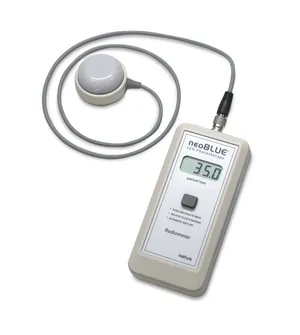
- A.
Phototherapy Irradiance meter
- B.
Tempometer
- C.
Conversion meter
- D.
None of the above
- A.
Q156 · Child Health Nursing (Pediatrics) · Newborn Infants
A nurse is advised to give injection vitamin K for new born baby. The route and dose of Vitamin K is:
- A.
Vitamin K 1 mg IM
- B.
Vitamin K 1 mg SC
- C.
Vitamin K 0.5 ID
- D.
Vitamin K 10 mg IV
- A.
Q157 · Medical & Surgical Nursing · Metabolic and Endocrine Function
Patient came to ED with uncontrolled diabetes, urine test showed ketone positive. ABG reports showed pH - 6.25, pCO2 - 39 pO2 - 55 and blood glucose is 600 mg/dL. Which of the following condition is present?
- A.
Respiratory acidosis
- B.
Respiratory alkalosis
- C.
Metabolic acidosis
- D.
Metabolic alkalosis
- A.
Q158 · Medical & Surgical Nursing · Cardiovascular, Circulatory, and Hematologic Function
The following all are blood transfusion complications from; EXCEPT:
- A.
TRALI
- B.
Hemolytic reactions
- C.
Transmission of infections
- D.
Fluid deficit
- A.
Q159 · Applied Nutrition & Dietetics · Balanced Diet
Find the odd word:?
- A.
Apple
- B.
Mango
- C.
Banana
- D.
Potato
- A.
Q160 · Medical & Surgical Nursing · Metabolic and Endocrine Function
Contraindication of liver biopsy is:?
- A.
Diabetic condition of the patient
- B.
Decreased Activated Partial Thromboplastin Clotting Time.
- C.
Increased Activated Partial Thromboplastin Clotting Time.
- D.
Immunocompromised patient
- A.
Q161 · Medical & Surgical Nursing · Fluid and Electrolytes: Balance and Distribution
Which of the following patient is at risk of fluid volume deficit?
- A.
Patient with wound irrigation
- B.
Ileostomy
- C.
Patient with cardiac disease
- D.
None of the above
- A.
Q162 · Medical & Surgical Nursing · Cardiovascular, Circulatory, and Hematologic Function
Identify the red wave forms in the following image:
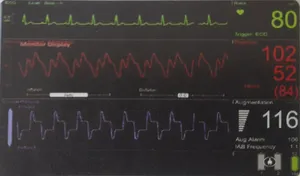
- A.
IABP
- B.
CVP
- C.
NIBP
- D.
None of these
- A.
Q163 · Medical & Surgical Nursing · Shock and Multisystem Failure
A patient arrives at the emergency department after severe bleeding due to trauma. Which of the following vital sign changes is most commonly seen in acute blood loss?
- A.
Bradycardia with increased blood pressure
- B.
Tachycardia with decreased blood pressure
- C.
Tachycardia with increased blood pressure
- D.
Bradycardia with normal blood pressure
- A.
Q164 · Reasoning · Direction Sense
If South-East becomes North, what will North become?
- A.
South-East
- B.
South-West
- C.
North-East
- D.
West
- A.
Q165 · Forensic Nursing & Indian laws · Indian Judicial System and Laws
In the absence of nurse from floor, patient falls from bed. This type of injury belongs to:
- A.
Battery
- B.
Negligence
- C.
Tort
- D.
None of these
- A.
Q166 · Nursing Foundations · Elimination needs
A nurse is advised to give enema for patient with chronic liver disease. What position is used to administer enema?
- A.
Prone
- B.
Supine
- C.
Sim's
- D.
Trendelenburg
- A.
Q167 · Medical & Surgical Nursing · Integumentary Function
The following picture shows is bedsore present in bedridden patient. Which grade of bedsore is present?
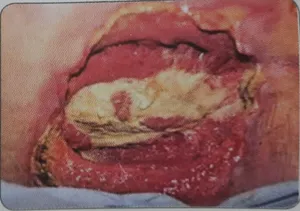
- A.
Stage
- B.
Stage 2
- C.
Stage 3
- D.
Stage 4
- A.
Q168 · Obstetrics & Gynaecology · Population Dynamics and Control of Conception
A nurse is counseling a fully lactating mother who is 10 weeks postpartum about family planning. Which contraceptive method is most suitable for her?
- A.
Combined oral contraceptive pill (COC)
- B.
Progestin-only pill (Minipill)
- C.
Female sterilization
- D.
Natural family planning (rhythm method)
- A.
Q169 · Child Health Nursing (Pediatrics) · Disorders of Cardiovascular System
The most common congenital heart disease in children is:
- A.
Tetralogy of Fallot
- B.
Ventricular septal defect
- C.
Atrial septal defect
- D.
Patent ductus arteriosus
- A.
Q170 · Child Health Nursing (Pediatrics) · Newborn Infants
A pre-eclampsia woman's baby is lying with her mother. Neonate is born in 37 weeks. After 57 hours, when nurse is monitoring vital signs of baby, temperature is low as 35°What will be the intervention?
- A.
Give punishment for mother for not caring baby
- B.
Separate the baby from mother
- C.
Place baby under radiant warmer
- D.
Cover the baby and check the vitals after 30 minutes
- A.
Q171 · Medical & Surgical Nursing · Fluid and Electrolytes: Balance and Distribution
A patient receiving IV infusion develops swelling, pain, and cool skin at the IV site. What complication is most likely?
- A.
Phlebitis
- B.
Infiltration
- C.
Infection
- D.
Hemorrhage
- A.
Q172 · Nursing Foundations · Vital Signs
When a pulse rate is irregular, it is best to count the?
- A.
Radial pulse for 30 seconds.
- B.
Radial pulse for a full minute.
- C.
Apical pulse for a full minute.
- D.
Apical pulse for 30 seconds.
- A.
Q173 · Medical & Surgical Nursing · Fluid and Electrolytes: Balance and Distribution
All are crystalloid solution; except:
- A.
Normal saline
- B.
Ringer lactate
- C.
5% Dextrose
- D.
HES
- A.
Q174 · Obstetrics & Gynaecology · Complications of the Third Stage of Labor
Which of the following drug is preferrably administered immediately after delivery of baby?
- A.
Oxytocin 10 units IM
- B.
Oxytocin 20 units IM
- C.
Methergine 2 mg IM
- D.
Methergine 4 mg IM
- A.
Q175 · Child Health Nursing (Pediatrics) · Development
A newborn is administered an injection of Vitamin K shortly after birth. What is the primary clinical reason for this intervention?
- A.
To enhance bone mineralization
- B.
To prevent hemorrhagic disease of the newborn
- C.
To support retinal development
- D.
To boost the immune system
- A.
- Sign in free
Done 175 questions? Check your answers
Sign in free: every answer with its explanation, attempt the paper timed with negative marking, and track your score.
Q176 · Nursing Foundations · Nursing Care & Specific Procedures
Match the following:
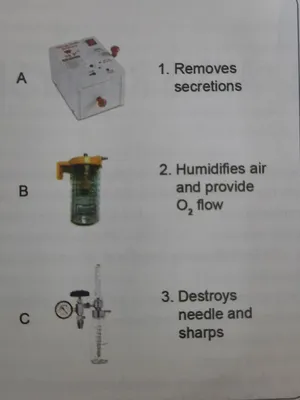
- A.
A->3, B->1, C->2
- B.
A->2, B->3, C->3
- C.
A->3 B->2, C->1
- D.
A->1, B->2, C->3
- A.
Q177 · Pharmacology · Miscellaneous
A patient came to ED unconscious with pinpoint pupil, lacrimation and history of substance abuse. Which of the drug will be administered?
- A.
Flumazenil
- B.
Naloxone
- C.
Lorazepam
- D.
Naltrexone
- A.
Q178 · Medical & Surgical Nursing · Miscellaneous
A Glasgow Coma Scale (GCS) score of 8 indicates:?
- A.
Mild head injury
- B.
Moderate head injury
- C.
Severe head injury
- D.
Normal
- A.
Q179 · Applied Microbiology & Infection control · Miscellaneous
Identify the following machine:

- A.
Autoclave
- B.
Ultrasonic instrument washer
- C.
High risk medication cub-board
- D.
None of the above
- A.
Q180 · Pharmacology · Miscellaneous Drugs
Identify the milky white solution which is widely used in OT for sedation and anesthesia based on the following the image:
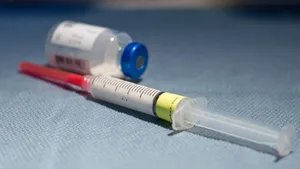
- A.
Propofol
- B.
Midazolam
- C.
Ketamine
- D.
Rocuronium
- A.
Q181 · Medical & Surgical Nursing · Immunologic Function
A nurse has given the following glove to the surgeon. What could be the possible reason?
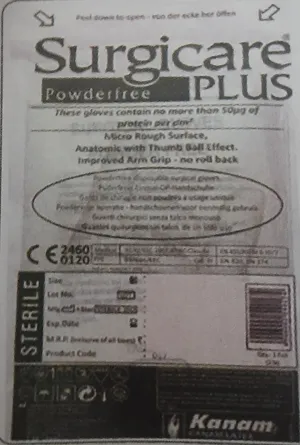
- A.
They are cheap
- B.
Because of allergic tendency of surgeon
- C.
Just because they are only available
- D.
None of the above.
- A.
Q182 · Medical & Surgical Nursing · Miscellaneous
Identify the disease based on the following image of mesh:
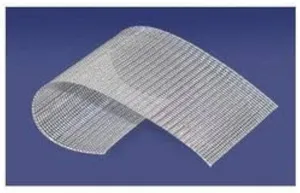
- A.
Inguinal hernia
- B.
Thoracotomy
- C.
Bleeding disorders
- D.
None of these
- A.
Q183 · Medical & Surgical Nursing · Gas Exchange and Respiratory Function
Identify the following instrument which is used in diagnostic procedures:
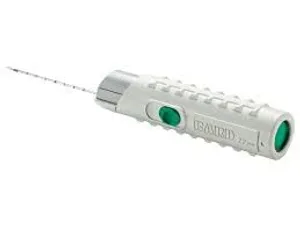
- A.
Trucut biopsy needle
- B.
Lumbar puncture needle
- C.
Punch biopsy
- D.
Pleural tapping needle
- A.
Q184 · Pharmacology · Miscellaneous
0.45% NS is?
- A.
Hypotonic solution
- B.
Isotonic solution
- C.
Hypertonic solution
- D.
Colloid
- A.
Q185 · Mental Health Nursing · Eating Disorders
A patient with anorexia nervosa will have:
- A.
Tachycardia, Hypertension, Hypothermia
- B.
Bradycardia, Hypotension, Hypothermia
- C.
Tachycardia, Hypotension, Hypothermia
- D.
Bradycardia, Hypertension, Hyperthermia
- A.
Q186 · Obstetrics & Gynaecology · Complications of the Third Stage of Labor
Post-partum women having bleeding within 24 hrs after delivery is called:
- A.
Primary PPH
- B.
Secondary PPH
- C.
Third stage hemorrhage
- D.
True post-partum hemorrhage
- A.
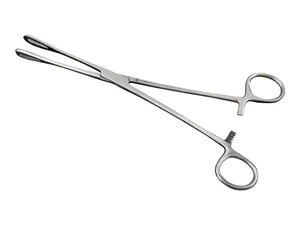
Q187 · Obstetrics & Gynaecology · Practical Obstetrics
Identify the instrument used by a nurse in the following image:
- A.
Cheattle forceps
- B.
Ovum forceps
- C.
Sponge holder
- D.
Kocher forceps
- A.
Q188 · Nursing Foundations · Infection control & BMW management
Patient with MRSA admitted in MICU, the nurse has to provide colostomy care to patient. Which PPE should the nurse use?
- A.
Gloves, Gown, Mask
- B.
Gloves only
- C.
Gloves and mask
- D.
Gloves and shoe cover
- A.
Q189 · Medical & Surgical Nursing · Cardiovascular, Circulatory, and Hematologic Function
A patient is undergoing blood transfusion and suddenly shows complaints of transfusion reaction. What will be the priority nursing intervention?
- A.
Stop the infusion and remove cannula
- B.
Stop the infusion and flush with NS
- C.
Complete the transfusion and administer injection avil
- D.
Complete the transfusion and discard the bag
- A.
Q190 · Nursing Foundations · Vital Signs
Identify the Instrument below:

- A.
Disposable tongue depressor
- B.
Disposable SPO2 probe
- C.
Disposable thermometer
- D.
None of the above
- A.
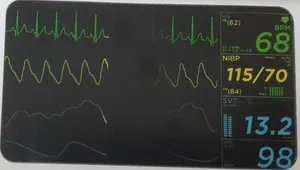
Q191 · Medical & Surgical Nursing · Cardiovascular, Circulatory, and Hematologic Function
Calculate the pulse pressure from the below image of cardiac monitor:
- A.
35 mm Hg
- B.
45 mm Hg
- C.
55 mm Hg
- D.
40 mm Hg
- A.
Q192 · Obstetrics & Gynaecology · Medical and Surgical Illness Complicating Pregnancy
An antenatal mother came to OPD with Hb-8.5 g% which of the following is true?
- A.
Mild anemia
- B.
Moderate anemia
- C.
Severe anemia
- D.
No anemia
- A.
Q193 · Community Health Nursing · Records & Reports
Patient's Medical record with all essential information is responsibility of:
- A.
Patient
- B.
Director
- C.
Treating doctor
- D.
Medical superintendent
- A.
Q194 · Medical & Surgical Nursing · Other Acute Problems
in trauma care, the "Golden Hour" refers to:?'
- A.
First 30 minutes
- B.
First 1 hour after injury
- C.
First 2 hours
- D.
First 24 hours
- A.
Q195 · Medical & Surgical Nursing · Sensorineural Function
Accumulation of endolymph causing distention and increased pressure within the membranous labyrinth with destruction of sensory cells in the ampulla and cochlea is
- A.
Osteosclerosis
- B.
Hordeolum
- C.
Otitis media
- D.
Meniere's disease
- A.
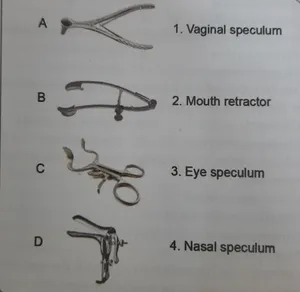
Q196 · Obstetrics & Gynaecology · Practical Obstetrics
Match the following
- A.
A->4, B->3, C->2, D->1
- B.
A->4, B->2, C->3, D->1
- C.
A->4, B->1, C->2, D->3
- D.
A->3, B->4, C->2, D->1
- A.
Q197 · Obstetrics & Gynaecology · Practical Gynecology
Identify the following sample collection tube shown:

- A.
Pap's smear
- B.
Throat swab
- C.
Culture
- D.
None of these
- A.
Q198 · Applied Physiology · Respiratory system
Temporary cessation of breathing is:
- A.
Dyspnea
- B.
Bradypnea
- C.
Apnea
- D.
Tachypnea
- A.
Q199 · Applied Microbiology & Infection control · Miscellaneous
Which solution should be used to mop up spilled blood on the floor of an operation theatre?
- A.
Cidex
- B.
Sodium hypochlorite
- C.
Savlon
- D.
Formalin
- A.
Q200 · Mental Health Nursing · Legal Issues in Mental Health Nursing
In Mental Health Act 2017, experienced psychiatric mese posted at which hospital?
- A.
Central or State Mental Health Authority (MHA)
- B.
Tertiary centers
- C.
Secondary centers
- D.
None of the above
- A.
More AIIMS Nursing Officer papers
- AIIMS Jodhpur Senior Nursing Officer 20232023 · 99 questions
- AIIMS Raipur Lecturer 20212021 · 100 questions
- AIIMS Nagpur Nursing Officer 20202020 · 100 questions
- AIIMS Patna Nursing Officer 20202020 · 200 questions
- Combined AIIMS Nursing Officer 2020 (Jodhpur, Bhopal, Patna, Raipur)2020 · 200 questions
- AIIMS Rishikesh Nursing Officer 20192019 · 100 questions
- AIIMS Mangalagiri Nursing Officer 20192019 · 100 questions
- AIIMS Bathinda Nursing Officer 20192019 · 100 questions
- AIIMS Raipur Nursing Officer 2019 (Shift 1)2019 · 100 questions
- AIIMS Raipur Nursing Officer 2019 (Shift 2)2019 · 100 questions
- AIIMS Raipur Nursing Officer 2019 (Shift 3)2019 · 100 questions
- AIIMS Bhubaneswar Senior Nursing Officer 20192019 · 100 questions