ESIC Nursing Officer 2019 (Shift 2) question paper
ESIC Nursing Officer · 2019 · 125 questions · 120 minutes · 0.25 mark deducted per wrong answer
- Medical & Surgical Nursing 21
- Obstetrics & Gynaecology 17
- Child Health Nursing (Pediatrics) 12
- Applied Physiology 11
- Nursing Foundations 11
- Quantitative Aptitude and Mathematics 11
- Community Health Nursing 9
- Mental Health Nursing 8
- Applied Microbiology & Infection control 6
- General Knowledge 5
- Reasoning 5
- Pathology & Genetics 3
- Pharmacology 2
- Biochemistry & Nutrition 2
- Applied Psychology 1
- Nursing Research & Statistics 1
See the answers and explanations
Sign in free: every answer with its explanation, attempt the paper timed with negative marking, and track your score.
Q1 · Applied Physiology · Blood
Which of the following is the most abundant type of blood cells?
- A.
Lymphocyte.
- B.
Monocyte.
- C.
Thrombocyte.
- D.
Erythrocyte.
- A.
Q2 · Obstetrics & Gynaecology · Normal Labor
Complete dilation of cervix to birth of a baby is staged as:
- A.
Stage 3 of labor.
- B.
Stage 2 of labor.
- C.
Stage 1 of labor.
- D.
Stage 4 of labor.
- A.
Q3 · Obstetrics & Gynaecology · Medical and Surgical Illness Complicating Pregnancy
Gestational diabetes increases risk for the following, EXCEPT
- A.
Congenital anomalies.
- B.
Small for date fetus.
- C.
Macrosomia.
- D.
Prematurity and still birth.
- A.
Q4 · Obstetrics & Gynaecology · Hemorrhage in Early Pregnancy
Cerclage (encircling cervix with suture) is done for patients with
- A.
Incomplete abortion.
- B.
Complete abortion.
- C.
Threatened abortion.
- D.
Incompetent cervix.
- A.
Q5 · Applied Microbiology & Infection control · Isolation Precautions and Use of Personal Protective Equipment
Beds on the unit have rapidly filled and the patient with bacterial pneumonia is about to have a roommate. The roommate is a postsurgical patient without an infection. The nurse would
- A.
Notify the admitting office that the new patient cannot be housed with a patient under droplet pneumonia.
- B.
Not to worry because this room has its own air filtration system.
- C.
Simply prepare the unit for the arrival of the new patient.
- D.
Make certain that the curtains around the new patient's bed are functional and completely closed.
- A.
Q6 · Mental Health Nursing · Schizophrenia
The following are presenting symptoms of patients with catatonic schizophrenia, EXCEPT
- A.
Stereotyped position with waxy flexibility.
- B.
Sudden onset of mutism.
- C.
Disorganized behavior and speech.
- D.
Have dangerous periods of agitation and explosive behavior.
- A.
Q7 · Child Health Nursing (Pediatrics) · Newborn Infants
Phototherapy is indicated for children with
- A.
Hypoglycemia.
- B.
Necrotizing enterocolitis.
- C.
Hemolytic disease.
- D.
Hyperbilirubinemia.
- A.
Q8 · Child Health Nursing (Pediatrics) · Newborn Infants
Refrigerated breastmilk should not be used if it is beyond:
- A.
1 week.
- B.
48 hours.
- C.
2 months.
- D.
2 weeks.
- A.
Q9 · General Knowledge · Sports Current Affairs
Which country hosted 2018 FIFA world cup?
- A.
Japan
- B.
China
- C.
UAE
- D.
Qater
- A.
Q10 · Child Health Nursing (Pediatrics) · Otolaryngology
The cleft palate is usually repaired
- A.
3 months.
- B.
2-3 years.
- C.
6 months.
- D.
12-18 months.
- A.
Q11 · Nursing Foundations · Vital Signs
When a pulse rate is irregular, it is best to count the
- A.
Radial pulse for 30 seconds.
- B.
Radial pulse for a full minute.
- C.
Apical pulse for a full minute.
- D.
Apical pulse for 30 seconds.
- A.
Q12 · Mental Health Nursing · Eating Disorders
The drug of choice to treat Bulimia nervosa is:
- A.
Antidepressants (Eg. SSRI)
- B.
Thiamine IV.
- C.
Benzodiazepines.
- D.
IV Glucose 10%
- A.
Q13 · Community Health Nursing · Epidemiology of Chronic Non-Communicable Diseases & Conditions
You are suffering from diabetes and obesity. At a wedding party, your colleague offered you two more sweets. What would you do?"
- A.
Politely declining the offer with a pleasant smile, they say, 'I'm full.'"
- B.
As your colleague has offered, eat the dessert with gratitude.
- C.
He scolds her for giving him sweets.
- D.
Accept the sweets and throw them in the dustbin in front of him.
- A.
Q14 · Quantitative Aptitude and Mathematics · Miscellaneous
Two poles of equal height stand facing each other along a 40 m wide road. From a point midway on the road, the angles of elevation of the tops of the poles are 60 degrees and 30 degrees, respectively. The heights of the poles are:
- A.

- B.

- C.

- D.
15m
- A.
Q15 · Child Health Nursing (Pediatrics) · Otolaryngology
When assessing physical development of the five year old, you would find it abnormal if he
- A.
Could stack up pile of six blocks.
- B.
Needed to go up a stairway one step at a time.
- C.
Could jump on one foot a few times.
- D.
Could catch a large rubber ball.
- A.
Q16 · Child Health Nursing (Pediatrics) · Adolescent Health and Development
To encourage an infant's cognitive and psychosocial development, parents and other caregivers should
- A.
Allow the baby to play alone several hours each day.
- B.
Firmly explain the rules of acceptable behavior.
- C.
Give loving, consistent care, including playing.
- D.
Keep the baby with them at all times so he or she is safe.
- A.
Q17 · Applied Physiology · General Physiology
The elderly individual is at greater risk for dehydration than the middle-aged adult because
- A.
The elderly have more muscle mass.
- B.
The elderly drinks little fluid.
- C.
Their bodies are almost 80% water.
- D.
Compensatory mechanisms work less efficiently.
- A.
Q18 · Medical & Surgical Nursing · Integumentary Function
To properly stage a pressure ulcer,
- A.
The skin must be completely dry.
- B.
The patient must be supine.
- C.
Eschar must be removed.
- D.
Natural light must be used.
- A.
Q19 · Quantitative Aptitude and Mathematics · Miscellaneous
The length of the diagonal of a square is 25 cm, then the perimeter of this square is:
- A.
100 cm
- B.

- C.
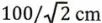 S
- D.
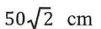
- A.
Q20 · Applied Physiology · Nervous System
The cerebrospinal fluid is secreted by
- A.
Central sulcus.
- B.
Arachnoid villi.
- C.
Choroid plexuses.
- D.
Pons.
- A.
Q21 · Child Health Nursing (Pediatrics) · Otolaryngology
Why is it important for health care providers to monitor the growth and development of children?
- A.
Studying groups of children helps to determine normal ranges.
- B.
Early detection of potential problems leads to earlier care and treatment.
- C.
Parents need the reassurance of professionals to know their children are healthy.
- D.
Statistical analysis is important for research.
- A.
Q22 · Quantitative Aptitude and Mathematics · Miscellaneous
A number has two digits. The digit in the tens place is 2 more than the digit in the ones place. The sum of the digits is 1/6 of the number. So the number is:
- A.
54
- B.
46
- C.
108
- D.
64
- A.
Q23 · Community Health Nursing · Home Visits
Health maintenance program for older people in the community are as follows EXCEPT
- A.
Dietary guidance and food services
- B.
Palliative care
- C.
Health education
- D.
Home health service
- A.
Q24 · Applied Physiology · Nervous System
The brain region which is responsible for coordination of voluntary muscular movement, posture and balance
- A.
Cerebral cortex.
- B.
Spinal cord.
- C.
Medulla Oblongata.
- D.
Cerebellum.
- A.
Q25 · Obstetrics & Gynaecology · Antenatal Assessment of Fetal Well-Being
The patient who has an appointment for a Pap smear should have been instructed.
- A.
That the procedure takes about 45 minutes.
- B.
Not to douche or use vaginal medication before the test.
- C.
To bring sanitary pad because moderate bleeding may occur.
- D.
That she will know the test results before leaving the office.
- A.
- Sign in free
Done 25 questions? Check your answers
Sign in free: every answer with its explanation, attempt the paper timed with negative marking, and track your score.
Q26 · Medical & Surgical Nursing · Musculoskeletal Function
Protective devices are applied snugly, which of the following findings would you be concerned about?
- A.
Skin that is warm and pink.
- B.
Ability to move fingers and toes.
- C.
Quick capillary refill of the nailbeds.
- D.
Pallor of the nailbeds.
- A.
Q27 · Medical & Surgical Nursing · Metabolic and Endocrine Function
Tumors within sella turcica and small adenomas of the pituitary glands can be removed through
- A.
Infratentorial approach.
- B.
Transphenoidal approach.
- C.
Supratentorial approach.
- D.
Craniectomy.
- A.
Q28 · Medical & Surgical Nursing · Fluid and Electrolytes: Balance and Distribution
Patient complains of pain and has redness with swelling at the site of IV. The nurse must
- A.
Stop infusion and remove IV cannula.
- B.
Apply warm moist pack to the reddened area.
- C.
Start nasal oxygen.
- D.
Change IV tubing and the solution.
- A.
Q29 · Obstetrics & Gynaecology · Preterm Labor, Preterm Rupture of the Membranes, Postmaturity, Intrauterine Fetal Death
Preterm labor is when it occurs between:
- A.
32-36 weeks of gestation.
- B.
20-37 weeks of gestation.
- C.
16-20 weeks of gestation.
- D.
24-30 weeks of gestation.
- A.
Q30 · Nursing Foundations · Documentation & Reporting
The traditional source-oriented, narrative type of charting is characterized by all of the following forms, EXCEPT the
- A.
Doctor's progress sheet.
- B.
History and physical examination form.
- C.
Laboratory sheet.
- D.
Database form.
- A.
Q31 · Community Health Nursing · Nutrition Assessment and Nutrition Education
The major determinants of health
- A.
Screening for diseases
- B.
Public Education and Information
- C.
Public works, water, sanitation and housing
- D.
Agriculture, Food and Nutrition
- A.
Q32 · Medical & Surgical Nursing · Fluid and Electrolytes: Balance and Distribution
The main clinical manifestations of pulmonary edema are as follows, EXCEPT
- A.
Cough with expectoration.
- B.
Hypotension.
- C.
Cyanosis.
- D.
Dyspnea.
- A.
Q33 · Nursing Foundations · Communication & Nurse-Patient Relationship
Responses to avoid in therapeutic communication are as follows, EXCEPT:
- A.
Arguing and judgmental responses.
- B.
Closed-ended questions.
- C.
Advice giving.
- D.
Reflecting and clarifying.
- A.
Q34 · Obstetrics & Gynaecology · Sexually Transmitted Infections
The main cause of genital warts (Condylomata Acuminata) is:
- A.
Human papilloma virus (HPV).
- B.
Pelvic inflammatory disease.
- C.
Neisseria gonorrhea.
- D.
Herpes simplex virus.
- A.
Q35 · Mental Health Nursing · Treatment modalities and therapies used in mental disorders
Absolute contraindication of ECT is:?
- A.
Hematoma
- B.
Increased intracranial pressure
- C.
Psychosis
- D.
Disorientation
- A.
Q36 · Obstetrics & Gynaecology · Amenorrhea
Wearing seat belts, safety helmets and other safety equipment are examples of:
- A.
Secondary health promotion behavior.
- B.
Holistic health care model.
- C.
Tertiary health promotion behavior.
- D.
Primary health promotion behavior.
- A.
Q37 · Applied Microbiology & Infection control · Pathogenic Organisms
In what ways could Hepatitis A virus be spread if one of the kitchen employees is in the reservoir?
- A.
While he speaks and sneezes, through droplet route.
- B.
If he sustains a cut through blood borne.
- C.
While he coughs out through air borne route.
- D.
Oral-fecal route, through his hands.
- A.
Q38 · Applied Microbiology & Infection control · Immunity
Artificially acquired immunity is obtained by
- A.
Recovering from a disease.
- B.
Being breast fed.
- C.
Immunization with antibody response.
- D.
Exposure to a disease.
- A.
Q39 · Pathology & Genetics · Genetics
Example for autosomal recessive inheritance
- A.
Hemophilia.
- B.
Cystic fibrosis.
- C.
Craniofacial disorders.
- D.
Skeletal disorders.
- A.
Q40 · Medical & Surgical Nursing · Immunologic Function
In rheumatoid arthritis, during the acute phase the values which are significant are
- A.
LFT elevation (Liver Function Test).
- B.
ESR and C Reactive Protein (CRP) elevation.
- C.
CBC elevation (Complete Blood Count).
- D.
RFT elevation (Renal Function Test).
- A.
Q41 · General Knowledge · Books, authors & institutions
Who is the author of 'Wide Angle'?
- A.
Shane Warne
- B.
Rahul Dravid
- C.
Anil Kumble
- D.
Shoaib Akhtar
- A.
Q42 · Obstetrics & Gynaecology · Miscellaneous
False labor manifestations are as follows, EXCEPT
- A.
Contraction lessen with activity or rest.
- B.
Cervix progressively effaced and dilated.
- C.
Abdominal discomfort.
- D.
Contractions irregular.
- A.
Q43 · Child Health Nursing (Pediatrics) · Development
Why it is important for health care provider to monitor the growth and development of the children?
- A.
Studying groups of children helps to determine normal ranges.
- B.
Early detection of potential problems leads to earlier care and treatment.
- C.
Parents need the reassurance of professionals to know their children are healthy.
- D.
Statistical analysis is important for research.
- A.
Q44 · Quantitative Aptitude and Mathematics · Miscellaneous
A 10-meter-long ladder reaches a window 8 meters above the ground. The distance from the base of the wall to the foot of the ladder is
- A.
4m
- B.
5m
- C.
6m
- D.
7m
- A.
Q45 · Quantitative Aptitude and Mathematics · Miscellaneous
If the height of a right circular cylinder is 14 cm and its curved surface area is 704 cm², then its volume will be:
- A.
1408 cm³
- B.
5632 cm³
- C.
9856 cm³
- D.
2816 cm³
- A.
Q46 · Community Health Nursing · Geriatric Health Care
Philosophy of Primary Health Care are as follows EXCEPT
- A.
Inter-sectoral approach
- B.
Inter - relationship of health and development
- C.
Primary prevention
- D.
Equity and justice
- A.
Q47 · Medical & Surgical Nursing · Integumentary Function
The inflammatory / exudative phase of wound healing will last for
- A.
1 year.
- B.
1-4 days.
- C.
5-20 days.
- D.
21 days to a month.
- A.
Q48 · Community Health Nursing · Demography, Surveillance and Interpretation of Data
Vital statistics include the following, EXCEPT
- A.
Birth rate.
- B.
Education rate.
- C.
Morbidity and mortality statistics.
- D.
Life expectancy.
- A.
Q49 · Pathology & Genetics · General Pathology
Which of the following is not a typical difference factor between benign and malignant tumors?
- A.
Size of the tumor.
- B.
Growth rate.
- C.
Encapsulation.
- D.
Cell differentiation.
- A.
Q50 · Mental Health Nursing · Psychiatric Emergencies
Behavioral clues of impending suicide are as follows, EXCEPT
- A.
Withdraws from social activities and plans.
- B.
Hypervigilance and exaggerated startle response.
- C.
Becomes energetic after a period of severe depression.
- D.
Gives away valuable possessions.
- A.
- Sign in free
Done 50 questions? Check your answers
Sign in free: every answer with its explanation, attempt the paper timed with negative marking, and track your score.
Q51 · Child Health Nursing (Pediatrics) · Otolaryngology
When considering the principle of growth and development, remember that
- A.
Development occurs evenly, with periods of no growth occurring every third year.
- B.
All children should grow at the same rate; all four year olds should weigh within 4 kgs of each other.
- C.
Although development occurs in an orderly sequence, the rate may vary between individuals.
- D.
Most children can run before they walk.
- A.
Q52 · Nursing Foundations · Promoting safety in health care environment
When dangling the patient at the bedside, monitor for:
- A.
Fever from exertion.
- B.
Visual field disturbances and dizziness.
- C.
Malignant hypertension and dizziness.
- D.
Orthostatic hypotension and dizziness.
- A.
Q53 · General Knowledge · Miscellaneous
In which country does the Irrawaddy River flow?
- A.
Myanmar
- B.
Bhutan
- C.
Bangladesh
- D.
Vietnam
- A.
Q54 · General Knowledge · Miscellaneous
What is the capital of Sweden?
- A.
Geneva
- B.
Stockholm
- C.
Madrid
- D.
Kiev
- A.
Q55 · Reasoning · Syllogism (Basic)
दिए गए कथन (नों) और निष्कर्षों को ध्यान से पढ़ें और चुनें किसे कौनसा निष्कर्ष, तार्किक रूप से कथन का पालन करता है।
कथनः
1. सभी नींबू आम हैं।
2. सभी संतरे आम हैं।
निष्कर्ष :
1. सभी नींबू संतरे हैं।
2. कुछ संतरे नींबू हैं।
- A.
केवल निष्कर्ष 1 पालन करता है
- B.
1 और 2, दोनों पालन करते हैं
- C.
केवल निष्कर्ष 2 पालन करता है
- D.
न तो 1 और न ही 2 पालन करता है
- A.
Q56 · Mental Health Nursing · Substance Use Disorders
Alcohol withdrawal symptoms are as follows, EXCEPT
- A.
Euphoria.
- B.
Anxiety and insomnia.
- C.
Hallucinations.
- D.
Tremor.
- A.
Q57 · Applied Physiology · Digestive system
In the liver bacteria that found their way into portal circulation is destroyed by?
- A.
Kupffer cells
- B.
Cilia
- C.
Hydrochloric acid
- D.
Leukocytosis
- A.
Q58 · Applied Physiology · Sensory organs
The size of which part of the eye contributes to controlling the amount of light entering the eye?
- A.
Lens.
- B.
Optic disc.
- C.
Macula lutea.
- D.
Pupil.
- A.
Q59 · Medical & Surgical Nursing · Sensorineural Function
Accumulation of endolymph causing distention and increased pressure within the membranous labyrinth with destruction of sensory cells in the ampulla and cochlea is
- A.
Osteosclerosis.
- B.
Hordeolum.
- C.
Otitis media.
- D.
Meniere's disease.
- A.
Q60 · Applied Psychology · Personality
In Erickson's theory, adolescent develop a sense of
- A.
Intellect.
- B.
Initiative.
- C.
Industry.
- D.
Identity.
- A.
Q61 · Reasoning · Coding-Decoding
If L represents +, M represents −, N represents ×, and P represents ÷, then what will be the result of the following expression?
80 N 2 L 180 P 60 M 40
- A.
121
- B.
163
- C.
123
- D.
180
- A.
Q62 · Obstetrics & Gynaecology · Hypertensive Disorders in Pregnancy
Eclampsia is characterized by the following, EXCEPT
- A.
Seizures.
- B.
Marked proteinuria.
- C.
Mild facial edema.
- D.
BP greater than 160/110 Hg.
- A.
Q63 · Pharmacology · Miscellaneous
The commonest drug which is administered during an anaphylactic reaction
- A.
Anticonvulsant.
- B.
Injection Epinephrine.
- C.
Antibiotic.
- D.
Diuretic.
- A.
Q64 · Reasoning · Classification (Odd One Out)
दिए गए विकल्पों में से तीन एक निश्चित संबंध का पालन करते है। उस यंत्र का पता लगाएं जो समूह से संबंधित नहीं है।
- A.
बाँसुरी
- B.
क्लेरिनेट
- C.
सैक्सोफोन
- D.
कोंगा
- A.
Q65 · Medical & Surgical Nursing · Digestive and Gastrointestinal Function
The key dietary advice given for patients with gastroesophageal reflux disease is:
- A.
High fiber diet with lot of fluids.
- B.
To take high carbohydrate diet.
- C.
To avoid protein and calcium.
- D.
To avoid caffeine, tobacco, beer, milk and carbonated beverages.
- A.
Q66 · Quantitative Aptitude and Mathematics · Miscellaneous
The curved surface area of a right circular cylinder of base radius R, in terms of volume V, is:
- A.
VR
- B.
V/R
- C.
2VR
- D.
2V/R
- A.
Q67 · Applied Microbiology & Infection control · Isolation Precautions and Use of Personal Protective Equipment
The nurse is assigned to a patient who has bacterial pneumonia and is under droplet precautions. Which personal protective equipment (PPE) will s/he wear to deliver the meal tray?
- A.
Special filtration mask and gloves.
- B.
Only mask is needed.
- C.
Gown, mask, gloves, shoe covers.
- D.
No PPE required.
- A.
Q68 · Nursing Foundations · Documentation & Reporting
Which of the following would not promote trust in the nurse-patient relationship?
- A.
Returning at the stated time.
- B.
Fulfilling promises.
- C.
Maintaining confidentiality.
- D.
Examining a wound without providing privacy.
- A.
Q69 · Quantitative Aptitude and Mathematics · Miscellaneous
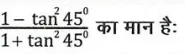
- A.
Sin45°
- B.
tan90°
- C.
0
- D.
1
- A.
Q70 · Applied Physiology · General Physiology
The normal levels of sodium in plasma are?
- A.
135-145 mEq/L
- B.
97-106 mEq/L
- C.
90-196 mg/100ml
- D.
60-100 mg/dl
- A.
Q71 · Applied Physiology · Blood
In the liver, bacteria that found their way into portal circulation are destroyed by
- A.
Kupffer cells.
- B.
Cilia.
- C.
Hydrochloric acid.
- D.
Leukocytosis.
- A.
Q72 · Medical & Surgical Nursing · Miscellaneous
The person who becomes short of breath with little exertion, such as when eating a meal, has what kind of respiratory condition?
- A.
Dyspnea.
- B.
Hyperventilation.
- C.
Stridor.
- D.
Cheyne - Stokes respiration.
- A.
Q73 · Biochemistry & Nutrition · Insulin, Glucose Homeostasis & Diabetes Mellitus
HbA1C indicates post serum glucose levels over previous
- A.
6 months period.
- B.
2 months period.
- C.
1 month period.
- D.
3 months period.
- A.
Q74 · Child Health Nursing (Pediatrics) · Newborn Infants
Reye's syndrome is associated with
- A.
Biliary colic.
- B.
Use of aspirin with viral illness.
- C.
Sickle cell crisis.
- D.
Hemolytic transfusion reactions.
- A.
Q75 · Medical & Surgical Nursing · Miscellaneous
The key instruction to be given to the patient and the caregiver with epilepsy is as follows, EXCEPT
- A.
Avoid alcohol, smoking, hypoglycemia.
- B.
Maintain medication and seizure chart.
- C.
Take showers in bathtubs.
- D.
Take medications daily.
- A.
- Sign in free
Done 75 questions? Check your answers
Sign in free: every answer with its explanation, attempt the paper timed with negative marking, and track your score.
Q76 · Nursing Foundations · Introduction to Health & Illness
Approach to health that acknowledges and respects the interaction of a person's mind, body and spirit within the environment is termed as:
- A.
Holistic Health Model
- B.
High - Level Wellness Model
- C.
Health Belief Model
- D.
Clinical Model
- A.
Q77 · Quantitative Aptitude and Mathematics · Miscellaneous
कुत्तों और मुर्गियों के एक समूह में, पैरों की संख्या सिरों की संख्या के दोगुने से 14 अधिक है। कुत्तों की संख्या ज्ञात कीजिये ?
- A.
7
- B.
6
- C.
10
- D.
8
- A.
Q78 · Quantitative Aptitude and Mathematics · Miscellaneous
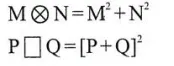
Select the option from the given choices that corresponds to the relationship in the equation (function) given below:
- A.

- B.

- C.

- D.

- A.
Q79 · Quantitative Aptitude and Mathematics · Miscellaneous
The total amount invested by three persons A, B and C is Rs 1,290, in which A's share is 3/2 times that of B and B's share is 7/4 times that of C. Then C's share is:
- A.
Rs. 320
- B.
Rs. 630
- C.
Rs. 520
- D.
Rs. 240
- A.
Q80 · Obstetrics & Gynaecology · Normal Puerperium
The characteristics of lochia rubra is:
- A.
Yellow-white.
- B.
Bloody with fleshy odor.
- C.
Pink/brown with flesh odor.
- D.
Foul odor.
- A.
Q81 · Child Health Nursing (Pediatrics) · Diseases of Gastrointestinal System and Liver
Current jelly like stools containing blood and mucus among 3 months to 3 years old child is suspected to have
- A.
Hirschsprung's disease.
- B.
Abdominal hernia.
- C.
Meckel's diverticulum.
- D.
Intussusception.
- A.
Q82 · Community Health Nursing · Miscellaneous
Secondary prevention is:
- A.
Good living and working condition
- B.
Early detection (diagnosis) of disease & Prompt treatment
- C.
Safe water Supply, Vector and animal reservoir control
- D.
Nutritional counseling
- A.
Q83 · Mental Health Nursing · Treatment modalities and therapies used in mental disorders
Bipolar disorders are treated with the following medications, EXCEPT
- A.
Lithium.
- B.
Amphetamine.
- C.
Valproic acid.
- D.
Carbamazepine.
- A.
Q84 · Obstetrics & Gynaecology · Miscellaneous
Rh Negative mother should receive - globulin
- A.
RhO (D) immune.
- B.
RhO (M) globulin.
- C.
Acetylcholinesterase.
- D.
Lecithin/Sphingomyelin.
- A.
Q85 · Nursing Foundations · Infection control & BMW management
Considering the chain of infection, a reservoir might be
- A.
A tick carrying Lyme disease.
- B.
Staphylococcus bacteria.
- C.
A contaminated water supply.
- D.
An uninfected patient.
- A.
Q86 · Applied Microbiology & Infection control · Miscellaneous
The bacteria that retain the stain in Gram's method of staining is a:
- A.
Spores of bacteria.
- B.
Gram positive bacteria.
- C.
Gram negative bacteria.
- D.
Broad spectrum bacteria.
- A.
Q87 · Applied Physiology · Blood
All elderly tend to be more susceptible to infection because of:
- A.
A decline in immune function.
- B.
Poor nutritional status.
- C.
Increased exposure of pathogens.
- D.
Lack of exercises.
- A.
Q88 · Biochemistry & Nutrition · Acid base Maintenance
The major nutrients involved in fluid balance are
- A.
Potassium and sodium.
- B.
Vitamin B9 and magnesium.
- C.
Fats and proteins.
- D.
Chloride and carbohydrates.
- A.
Q89 · Medical & Surgical Nursing · Digestive and Gastrointestinal Function
The main sign and symptom noticed in patients with Achalasia is:
- A.
Butterfly rash.
- B.
Hypertension.
- C.
Dysphagia.
- D.
Joints pain.
- A.
Q90 · Obstetrics & Gynaecology · Normal Labor
Progressive thinning and shortening of cervix is defined as:
- A.
Effacement.
- B.
Contraction.
- C.
Expulsion.
- D.
Dilation.
- A.
Q91 · Medical & Surgical Nursing · Neurologic Function
Compression of facial nerve in the temporal bone will lead to
- A.
Guillain-Barre syndrome.
- B.
Meningocele.
- C.
Bell's palsy.
- D.
Multiple sclerosis.
- A.
Q92 · Community Health Nursing · Assisting individuals and families to promote and maintain their health
The Three Features of a Community
- A.
Location, population and social system.
- B.
Primary, secondary and tertiary
- C.
Agent - Host - environment
- D.
Physical - Mental - Social
- A.
Q93 · Obstetrics & Gynaecology · Special Topics in Obstetrics
A significant predictor of fetal well-being is if fetal heart rate is:
- A.
160-200 beats/min.
- B.
180-200 beats/min.
- C.
100-120 beats/min.
- D.
120-160 beats/min.
- A.
Q94 · Pharmacology · Autacoids & Related Drugs
The classical substances that increases the sensitivity of pain receptors by enhancing the pain-provoking effect of bradykinin is
- A.
Nociceptor.
- B.
Endorphins.
- C.
Encephalin.
- D.
Prostaglandins.
- A.
Q95 · Applied Physiology · Circulatory & Lymphatic system
One cardiac cycle completes in ___________?
- A.
0.12 seconds
- B.
0.57 seconds
- C.
0.9 seconds
- D.
0.8 seconds
- A.
Q96 · Nursing Foundations · Infection control & BMW management
Standard precaution requires the use of protective eye wear when
- A.
Caring for a patient with cough.
- B.
When a wound is oozing blood.
- C.
There is a danger of body fluids splashing.
- D.
Invasive procedure are performed.
- A.
Q97 · Mental Health Nursing · Mood disorders
The most significant characteristic experienced by a patient with depression is:
- A.
Hypervigilance and nightmares.
- B.
Lack of impulse control.
- C.
Aggressive, abusive or violent behavior.
- D.
Depressed mood and loss of pleasure or interest
- A.
Q98 · Applied Physiology · Nervous System
The reflex action of the toes are indicative of abnormalities in the motor control pathways leading from cerebral cortex is
- A.
Babinski reflex.
- B.
Patellar reflex.
- C.
Achilles reflex.
- D.
Romberg test.
- A.
Q99 · Nursing Foundations · Nursing Process
Nurses use the nursing process as a method of:
- A.
Communicating with patients and families.
- B.
Meeting public expectations of nurses.
- C.
Planning, organizing and delivering patient care.
- D.
Meeting the legal requirements and standards in nursing.
- A.
Q100 · Medical & Surgical Nursing · Digestive and Gastrointestinal Function
Aganglionic disease of the intestinal tract which causes inadequate motility is termed as:
- A.
Ulcerative colitis.
- B.
Crohn's disease.
- C.
Hirschsprung's disease.
- D.
Diverticular disease.
- A.
- Sign in free
Done 100 questions? Check your answers
Sign in free: every answer with its explanation, attempt the paper timed with negative marking, and track your score.
Q101 · Medical & Surgical Nursing · Cardiovascular, Circulatory, and Hematologic Function
Homan's sign is used to assess
- A.
Wound sepsis.
- B.
Deep vein thrombosis.
- C.
Hypotension.
- D.
Hematoma.
- A.
Q102 · Obstetrics & Gynaecology · Diagnosis of Pregnancy
Positive - definite sign of pregnancy is:
- A.
Amenorrhea.
- B.
Quickening.
- C.
Visualization of fetus by ultrasound.
- D.
Uterine enlargement.
- A.
Q103 · Community Health Nursing · Family planning
Role of community nurse in school Health program, EXCEPT
- A.
To provide immunization to the children
- B.
Assist in screening physical, mental and other special examination of children in school
- C.
Assist in communicable disease control
- D.
Assist In school medical examination and follow up
- A.
Q104 · Reasoning · Non-Verbal Reasoning
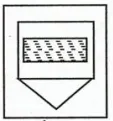
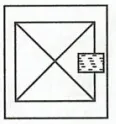
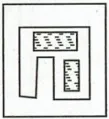
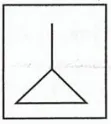 A transparent sheet has a pattern on it as shown in the figure above. When the transparent sheet is folded along the dotted line, how will the pattern appear?
- A.
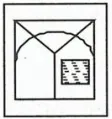
- B.
- C.
- D.
- A.
Q105 · Pathology & Genetics · Miscellaneous
Inborn errors of metabolism are the following, EXCEPT
- A.
Phenylketonuria.
- B.
Tay-Sachs disease.
- C.
Cystic fibrosis.
- D.
Turner's syndrome.
- A.
Q106 · Reasoning · Number series
दी गई श्रेणी में अगली संख्या क्या होगी?
2,6, 18, 54,?
- A.
108
- B.
152
- C.
162
- D.
181
- A.
Q107 · Medical & Surgical Nursing · Shock and Multisystem Failure
Cardiogenic shock is precipitated by
- A.
Bacteremia.
- B.
Spinal cord injury.
- C.
Myocardial infarction.
- D.
Severe allergy.
- A.
Q108 · Applied Microbiology & Infection control · Hand Hygiene
The most common method of microorganism transfer from one person to another in the hospital setting is prevented by
- A.
Washing hands thoroughly and frequently.
- B.
Disinfecting instruments in special solutions.
- C.
Changing bed linen daily.
- D.
Filtering air in the hospital.
- A.
Q109 · Obstetrics & Gynaecology · Endocrinology in Relation to Reproduction
Which of the following hormones causes ovulation?
- A.
F. S. H. (Follicle Stimulating Hormone)
- B.
L. H. (Luteinizing Hormone)
- C.
F.S.H. and L. H.
- D.
L. H. and H. P. L. (Human Placental Lactogen)
- A.
Q110 · Quantitative Aptitude and Mathematics · Miscellaneous
The sides of a triangle are 7 cm, 5 cm, and 3 cm. Then the largest angle of the triangle is:
- A.
45°
- B.
60°
- C.
36°
- D.
90°
- A.
Q111 · Medical & Surgical Nursing · Perioperative Concepts and Nursing Management
The following are the important preoperative nursing care for a patient with benign prostatic hypertrophy, EXCEPT
- A.
Assure nutrition and correct fluid and electrolyte balance.
- B.
Promoting urinary drainage.
- C.
Hormonal therapy.
- D.
Acid-ash diet to treat infection.
- A.
Q112 · Nursing Foundations · Infection control & BMW management
Medical asepsis differs from surgical asepsis in that it is aimed at:
- A.
Killing all microorganisms.
- B.
Sterilizing all equipment.
- C.
Preventing entry of microorganisms into the body.
- D.
Preventing transmission of microorganisms.
- A.
Q113 · Child Health Nursing (Pediatrics) · Central Nervous System
Bulging sack like lesion filled with spinal fluid and spinal cord element is:
- A.
Meningocele.
- B.
Myelomeningocele.
- C.
Hydrocephalus.
- D.
Spinal bifida occulta.
- A.
Q114 · Nursing Foundations · History of Nursing & Nursing as a profession
Principles of ethical practice include the following, EXCEPT
- A.
Justice.
- B.
Respect for autonomy.
- C.
Maleficence.
- D.
Beneficence.
- A.
Q115 · General Knowledge · Indian geography
चिल्का झील किस राज्य में स्थित है?
- A.
असम
- B.
ओडिशा
- C.
झारखण्ड
- D.
पश्चिम बंगाल
- A.
Q116 · Medical & Surgical Nursing · Other Acute Problems
Mantoux Test (Purified Protein Derivative) is significantly positive when the erythema measures
- A.
15 mm or greater
- B.
3.5 mm-9.9 mm
- C.
5 mm-10 mm
- D.
10 mm-14.9 mm
- A.
Q117 · Medical & Surgical Nursing · Perioperative Concepts and Nursing Management
Potential adverse effects of surgery and anesthesia are as follows, EXCEPT
- A.
Malignant hyperthermia / hypothermia.
- B.
Thrombosis from compression of blood vessels or stasis.
- C.
Dehydration and electrolyte imbalance.
- D.
Myocardial depression, bradycardia, circulatory collapse.
- A.
Q118 · Medical & Surgical Nursing · Digestive and Gastrointestinal Function
The patient with appendicitis usually exhibits the following clinical manifestations.
- A.
Pain occurs immediately after eating.
- B.
Hematemesis or melena.
- C.
Heartburn, regurgitation and dysphagia.
- D.
Rebound tenderness at the McBurney's Point.
- A.
Q119 · Child Health Nursing (Pediatrics) · Disorders of Cardiovascular System
The complications for ventricular septal defect are as follows, EXCEPT
- A.
Pulmonary hypertension.
- B.
Heart failure.
- C.
Endocarditis.
- D.
Cerebral palsy
- A.
Q120 · Nursing Research & Statistics · Analysis of data
Which is a more suitable advantage of histogram than polygon?
- A.
The frequency polygon is simpler than its histogram.
- B.
With respect to all other rectangles, the area of each rectangle does not show a proportional relationship to the total number of observations belonging to that class
- C.
Each rectangle represents a clearly distinct class in the distribution.
- D.
The frequency polygon shows the outline of the data pattern more clearly.
- A.
Q121 · Mental Health Nursing · Neurotic, stress related and somatisation disorders
Repetitive, uncontrollable thoughts and acts (Eg. Rituals, rigidity, inflexibility) is termed as:
- A.
Obsessive Compulsive Disorder.
- B.
Ritualistic behavior.
- C.
Phobias.
- D.
Apprehension.
- A.
Q122 · Obstetrics & Gynaecology · Miscellaneous
APGAR score is considered excellent if the score is:
- A.
4-6.
- B.
7-10.
- C.
0-3.
- D.
3-7.
- A.
Q123 · Obstetrics & Gynaecology · Fundamentals of Reproduction
"Para" is defined as:
- A.
Total number of pregnancies.
- B.
Number of past pregnancies gone beyond period of viability.
- C.
Born from beginning of 38 to 42 weeks.
- D.
Any pregnancy terminates before the period of viability.
- A.
Q124 · Community Health Nursing · Leadership, Supervision and Monitoring
The level of care which is oriented towards the promotion and maintenance of health, the prevention of Community disease, the management of common episodic disease and the monitoring of stable or chronic conditions.
- A.
Tertiary care level
- B.
Secondary care level
- C.
Advanced care level
- D.
Primary care Level
- A.
Q125 · Medical & Surgical Nursing · End-of-Life Care
A clinical sign that a patient is close to death would be
- A.
Periods of apnea and irregular respirations.
- B.
Increasing BP, pulse, respiration.
- C.
Nausea that occurs after meals.
- D.
Pain that is well controlled with small doses of morphine.
- A.