NORCET-10 Mains question paper
NORCET · 2026 · 160 questions · 180 minutes · 0.33 mark deducted per wrong answer
- Medical & Surgical Nursing 47
- Obstetrics & Gynaecology 28
- Child Health Nursing (Pediatrics) 23
- Mental Health Nursing 16
- Nursing Foundations 11
- Pharmacology 7
- Applied Microbiology & Infection control 6
- Forensic Nursing & Indian laws 4
- Community Health Nursing 4
- Nursing Management & Leadership 3
- Nursing Research & Statistics 3
- Applied Nutrition & Dietetics 3
- Pathology & Genetics 2
- Applied Physiology 2
- Applied Anatomy 1
See the answers and explanations
Sign in free: every answer with its explanation, attempt the paper timed with negative marking, and track your score.
Q1 · Pathology & Genetics · Systemic Pathology
A woman with dry mouth, gritty eye sensations, and bilateral salivary gland enlargement presents for evaluation. Laboratory tests show hypokalemia and metabolic acidosis. What is the most appropriate diagnostic test to confirm the diagnosis?
- A.
Schirmer’s test and autoantibody profile
- B.
Serum acetylcholine receptor antibody
- C.
Salivary gland scintigraphy
- D.
Serum calcium and ACE levels
- A.
Q2 · Obstetrics & Gynaecology · Special Topics in Obstetrics
A 36-week pregnant woman undergoes Non-Stress Test (NST) for fetal well-being. Which next parameter of Biophysical Profile (BPP) should be assessed?
- A.
Amniotic Fluid Index (AFI)
- B.
Breathing movement of baby
- C.
Contraction Stress Test (CST)
- D.
Fetal heart rate variability
- A.
Q3 · Medical & Surgical Nursing · Gas Exchange and Respiratory Function
Which valve help in synchronization with pt beath on BiPAP ?
- A.
expiratory valve
- B.
Trigger valve
- C.
oxygen valve
- D.
safety valve
- A.
Q4 · Obstetrics & Gynaecology · Abnormal Uterine Action
A woman in labour is receiving an oxytocin infusion. The uterine contraction pattern shows 5 contractions in 10 minutes, indicating uterine tachysystole. What is the next immediate nursing intervention?
- A.
Continue oxytocin infusion and observe closely
- B.
Increase oxytocin dose to improve labour progress
- C.
Stop oxytocin infusion immediately and reposition the patient
- D.
Prepare for emergency cesarean section immediately
- A.
Q5 · Obstetrics & Gynaecology · Miscellaneous
Which of the following is a characteristic pathological feature of molar pregnancy?
- A.
Degeneration of chorionic villi
- B.
Atrophy of endometrium
- C.
Hypertrophy of myometrium
- D.
Placental insufficiency
- A.
Q6 · Applied Physiology · General Physiology
A patient presents with right-sided weakness and aphasia. Which area of the brain is most likely affected?
- A.
Right cerebral hemisphere
- B.
Left cerebral hemisphere
- C.
Cerebellum
- D.
Brainstem
- A.
Q7 · Child Health Nursing (Pediatrics) · Integrated Management of Neonatal and Childhood Illness
A 2-year-old child is assessed under IMNCI guidelines. What is the cut-off for fast breathing?
- A.
20 breaths/min or above
- B.
40 breaths/min or above
- C.
50 breaths/min or above
- D.
60 breaths/min or above
- A.
Q8 · Nursing Management & Leadership · Miscellaneous
In a hospital, the presentation and analysis of care delivered data is best done using which type of chart?
- A.
Ishikawa chart
- B.
Pie chart
- C.
Histogram
- D.
Bar chart
- A.
Q9 · Medical & Surgical Nursing · Urinary Tract Function
Which of the following is the main advantage of peritoneal dialysis (PD)?
- A.
More effective than hemodialysis and requires no drugs
- B.
Can be performed at home and allows fewer dietary restrictions
- C.
Completely eliminates the need for fluid restriction in all patients
- D.
Requires no risk of infection and no catheter care
- A.
Q10 · Medical & Surgical Nursing · Metabolic and Endocrine Function
Patient skipping thyroid medication for one week. He is suffering from tremors, BP 80/50 mmHg, heart rate 46 bpm. What will be the immediate management for this patient?
- A.
Administer atropine 0.5 mg for symptomatic bradycardia
- B.
Immediate IV thyroid medicine
- C.
Endotracheal intubation
- D.
Administer fluid
- A.
Q11 · Nursing Foundations · Fluid, electrolytes & Acid-base balances
During IV line insertion, which site should be avoided?
- A.
Distal to proximal approach
- B.
Infiltration at distal site
- C.
Cubital region
- D.
Cephalic vein
- A.
Q12 · Child Health Nursing (Pediatrics) · Disorders of Respiratory System
A child with ARDS develops Bronchopulmonary Dysplasia (BPD). Which of the following findings is seen in Grade III BPD?
- A.
Alveolar edema and inflammation
- B.
Alveoli collapse with no gas exchange
- C.
Cilia damage of respiratory epithelium
- D.
Alveoli with fibrosis and scarring
- A.
Q13 · Obstetrics & Gynaecology · Normal Labor
Engagement at station +1 indicates:
- A.
At ischial spine
- B.
Above ischial spine
- C.
Below ischial spine
- D.
At pelvic inlet
- A.
Q14 · Nursing Foundations · Administration of medications
What is the correct angle for intramuscular (IM) injection?
- A.
90°
- B.
30°
- C.
45°
- D.
15°
- A.
Q15 · Medical & Surgical Nursing · Integumentary Function
A patient comes to OPD with soddened burn injury over his right thigh with erythema, blisters & line of demarcation. Which of the following is true of this case?
- A.
Moist burn
- B.
Chemical burn
- C.
Dry burn
- D.
Electric burn
- A.
Q16 · Child Health Nursing (Pediatrics) · Nutrition
A child with Acute Severe Malnutrition (SAM) is admitted. Which is the correct initial management in the first 1–2 days?
- A.
Treatment of hypothermia, hypoglycemia, and dehydration
- B.
Aggressive correction of electrolytes immediately
- C.
Start iron supplementation immediately
- D.
Rapid correction of micronutrient deficiencies
- A.
Q17 · Medical & Surgical Nursing · Sensorineural Function
In a patient, Weber test lateralizes to the right ear and Rinne test is negative in the right ear. What type of hearing loss is present?
- A.
Conductive hearing loss in right ear
- B.
Sensorineural hearing loss in right ear
- C.
Conductive hearing loss in left ear
- D.
Normal hearing
- A.
Q18 · Mental Health Nursing · Behavioural & Emotional Disorders of Childhood and Adolescence
A 16-year-old boy has been playing online games for 10–12 hours daily for the past 14 months. He becomes irritable when asked to stop and shows impaired control over gaming behavior despite negative consequences. What is the most likely diagnosis?
- A.
Gaming disorder
- B.
Attention-deficit/hyperactivity disorder (ADHD)
- C.
Conduct disorder
- D.
Obsessive-compulsive disorder (OCD)
- A.
Q19 · Child Health Nursing (Pediatrics) · Development
A 5-month-old baby is brought for developmental assessment. The mother reports that the child understands words but speaks only 1–2 sounds/words. What counselling should the nurse give?
- A.
This is normal; child understands well but will start speaking later
- B.
This indicates developmental delay and needs referral to counsellor
- C.
Start speech therapy immediately
- D.
Child has hearing loss
- A.
Q20 · Mental Health Nursing · Psychiatric Emergencies
A patient with depression expresses worthlessness and hopelessness. What should be the nurse's priority action?
- A.
Continuous monitoring for suicidal ideation
- B.
Encourage isolation for rest
- C.
Give reassurance that everything will be fine
- D.
Avoid discussing feelings
- A.
Q21 · Pharmacology · Drug Affecting Blood & Blood Formation
A patient with atrial fibrillation has been started on warfarin therapy. Which statement by the patient indicates correct understanding?
- A.
I will continue my vitamin K diet as usual and get regular INR monitoring.
- B.
I will stop the medicine if I notice bruising.
- C.
I will take extra doses if I miss a dose.
- D.
I do not need blood tests once I start warfarin.
- A.
Q22 · Medical & Surgical Nursing · Cardiovascular, Circulatory, and Hematologic Function
Which of the following is a characteristic clinical finding in a patient's lower limb with coarctation of the aorta?
- A.
Bounding femoral pulse
- B.
Weak or delayed femoral pulse
- C.
Increased blood pressure in upper limbs
- D.
Equal blood pressure in all limbs
- A.
Q23 · Child Health Nursing (Pediatrics) · Disorders of Cardiovascular System
After cardiac catheterization in a child, which post-procedure nursing management is appropriate?
- A.
Take vital signs at 15-minute intervals
- B.
Measure heart rate for 30 seconds
- C.
Measure pulse rate for 15 seconds
- D.
Check blood pressure every 1 hour
- A.
Q24 · Medical & Surgical Nursing · Oncology: Nursing Management in Cancer Care
A patient admitted to the oncology unit develops electrolyte abnormalities including hyperkalemia, hyperphosphatemia, and hypocalcemia following initiation of chemotherapy. Which of the following conditions is most likely responsible?
- A.
Tumor lysis syndrome
- B.
Septic shock
- C.
Hypercalcemia of malignancy
- D.
Syndrome of inappropriate antidiuretic hormone (SIADH)
- A.
Q25 · Medical & Surgical Nursing · Fluid and Electrolytes: Balance and Distribution
Which acid-base imbalance is most commonly seen in a patient with severe diarrhea?
- A.
Metabolic alkalosis
- B.
Metabolic acidosis
- C.
Lactic acidosis
- D.
Respiratory acidosis
- A.
- Sign in free
Done 25 questions? Check your answers
Sign in free: every answer with its explanation, attempt the paper timed with negative marking, and track your score.
Q26 · Pharmacology · Drug Affecting Blood & Blood Formation
According to the Government of India – Anaemia Mukt Bharat (AMB) programme, the recommended dose of Iron and Folic Acid (IFA) for pregnant women is:
- A.
60 mg iron and 500 mcg folic acid
- B.
60 mg iron and 500 mg folic acid
- C.
100 mg iron and 500 mcg folic acid
- D.
50 mg iron and 500 mcg folic acid
- A.
Q27 · Medical & Surgical Nursing · Gas Exchange and Respiratory Function
A patient presents with tension pneumothorax, showing tracheal deviation and absent breath sounds on the right side. What is the priority intervention?
- A.
Provide high-flow oxygen via mask
- B.
Immediate needle decompression
- C.
Give bronchodilators nebulization
- D.
Position the patient in prone position
- A.
Q28 · Obstetrics & Gynaecology · Special Topics in Obstetrics
A pregnant woman on NST shows U and V waves during contractions with decelerations at the same time. What is the appropriate management?
- A.
Left lateral and knee-chest position
- B.
Provide oxygen
- C.
Immediate C-section
- D.
No need of treatment
- A.
Q29 · Obstetrics & Gynaecology · Physiological Changes During Pregnancy
In a pregnant woman during the 2nd trimester, which cardiovascular finding is considered normal physiological change?
- A.
Decreased blood pressure
- B.
Increased blood pressure
- C.
Decreasked urine out put
- D.
Decreased heart rate
- A.
Q30 · Applied Microbiology & Infection control · Pathogenic Organisms
Zika virus infection is primarily transmitted to humans through the bite of which of the following vectors?
- A.
Anopheles mosquito
- B.
Aedes mosquito
- C.
Culex mosquito
- D.
Phlebotomus (sandfly)
- A.
Q31 · Mental Health Nursing · Behavioural & Emotional Disorders of Childhood and Adolescence
A 15-year-old child is aggressive and not following commands. What is the most likely diagnosis?
- A.
Conduct disorder
- B.
OCD (Obsessive Compulsive Disorder)
- C.
ADHD (Attention Deficit Hyperactivity Disorder)
- D.
Autism spectrum disorder
- A.
Q32 · Nursing Research & Statistics · Introduction to Statistics
Quantitative data is represented in all of the following EXCEPT:
- A.
Histogram
- B.
Pie chart
- C.
Pictogram
- D.
Frequency polygon
- A.
Q33 · Mental Health Nursing · Community Mental Health Nursing
An 18-year-old boy calls the Tele-MANAS helpline complaining of poor sleep pattern and low mood for the last 14 days. What is the most appropriate initial intervention by the Tele-MANAS team?
- A.
Immediate admission
- B.
Tele-counselling
- C.
Inform police
- D.
Start antidepressant immediately
- A.
Q34 · Obstetrics & Gynaecology · Contracted Pelvis
In a pregnant woman, the fetal head is floating freely and has not yet engaged in the pelvis. This condition indicates cephalic disproportion at which level?
- A.
Wastage of Morris's efficiency
- B.
Wastage of pelvic inlet
- C.
Wastage of anatomical outlet
- D.
Wastage of mid-pelvic cavity
- A.
Q35 · Mental Health Nursing · Treatment modalities and therapies used in mental disorders
Which of the following is not an example of group therapy?
- A.
focused group discussion
- B.
In-depth interview
- C.
Family therapy
- D.
Delphi method
- A.
Q36 · Forensic Nursing & Indian laws · Medico-legal Autopsy
An 18-year-old girl was brought to the hospital by her mother with history of sexual assault by her 24-year-old coworker in the factory. The mother doesn’t want to inform the police. What will you do as the doctor in charge?
- A.
Ask guardian for permission to do medicolegal examination
- B.
Do medicolegal examination with consent of victim
- C.
Do not collect materials required as forensic evidence
- D.
Do not inform police
- A.
Q37 · Medical & Surgical Nursing · Perioperative Concepts and Nursing Management
A patient with COPD undergoes appendectomy laparoscopic surgery with CO₂ insufflation. To provide a better operative field while minimizing respiratory compromise, which position is most appropriate?
- A.
Lithotomy
- B.
Reverse Trendelenburg
- C.
Prone
- D.
Trendelenburg
- A.
Q38 · Obstetrics & Gynaecology · Examination of a Gynecological Patient
Cord compression is present in a fetal heart rate tracing. Which type of deceleration is most likely seen?
- A.
Variable deceleration
- B.
Early deceleration
- C.
Late deceleration
- D.
Prolonged deceleration
- A.
Q39 · Mental Health Nursing · Schizophrenia
A psychotic patient is shouting loudly and aggressively in the ward. Which type of speech characteristic is shown by him?
- A.
Poverty of speech
- B.
Mutism
- C.
Pressure of speech
- D.
Neologism
- A.
Q40 · Child Health Nursing (Pediatrics) · Hematological Disorders
A child has the following laboratory findings:
- Platelets: 20,000/mm³
- Hemoglobin: 10 g/dL
- WBC: 24,000/mm³
- PCT: 30
What should be given immediate nursing priority attention?
- A.
Immediate attention to bruising and bleeding
- B.
Suspected leukemia
- C.
Fever monitoring
- D.
Strict input and output monitoring
Q41 · Medical & Surgical Nursing · Gas Exchange and Respiratory Function
A patient with pneumonia requires NG tube suctioning for airway secretion management. Which of the following is the correct sequence of nursing actions?
- A.
Start suction → Position upright → Provide O₂ with facemask → Tube reaches nasotrachea
- B.
Tube reaches nasotrachea → Start suction → Provide O₂ with facemask → Position upright
- C.
Position patient upright → Provide O₂ with facemask → Tube reaches nasotrachea → Start suction
- D.
Provide O₂ with facemask → Start suction → Position upright → Tube reaches nasotrachea
- A.
Q42 · Mental Health Nursing · Schizophrenia
A child is asked a question by the nurse during an examination. After a few minutes, the nurse changes the question, but the child keeps giving the same previous answer repeatedly. This behavior is called:
- A.
Verbigeration
- B.
Echolalia
- C.
Ecopraxia
- D.
Perseveration
- A.
Q43 · Obstetrics & Gynaecology · Population Dynamics and Control of Conception
The effective duration of a Copper T (CuT 380A intrauterine device) is:
- A.
10 years
- B.
8 years
- C.
5 years
- D.
3 years
- A.
Q44 · Medical & Surgical Nursing · Metabolic and Endocrine Function
What is the fasting blood sugar (FBS) cut-off for diagnosing diabetes mellitus?
- A.
126 mg/dL or above
- B.
140 mg/dL or above
- C.
200 mg/dL or above
- D.
180 mg/dL or above
- A.
Q45 · Mental Health Nursing · Principles and Concepts of Mental Health Nursing
Which principle of psychiatry indicates that the nurse is accepting the patient as he is?
- A.
Being non-judgmental and non-punitive
- B.
Maintaining proper IPR (Interpersonal Relationship)
- C.
Use self-understanding as a therapeutic goal
- D.
Maintain nurse-patient relationship
- A.
Q46 · Child Health Nursing (Pediatrics) · Integrated Management of Neonatal and Childhood Illness
Which of the following is NOT included as a danger sign in IMNCI guidelines?
- A.
Lethargic or unconscious
- B.
Cough for more than 7 days
- C.
Not breastfeeding well
- D.
Seizure
- A.
Q47 · Child Health Nursing (Pediatrics) · Pediatric Critical Care
For a 4-year-old child, which pain assessment scale is most appropriate?
- A.
FLACC scale with observation and parental input
- B.
Numerical rating scale
- C.
Child self-reporting of pain only
- D.
WONG baker FACES
- A.
Q48 · Child Health Nursing (Pediatrics) · Otolaryngology
A postoperative child on day 2 after cleft palate repair (palatoplasty) is under nursing care. Which of the following interventions is appropriate?
- A.
Use tongue depressor for oral examination
- B.
Measure oral temperature
- C.
Provide pacifier to soothe the child
- D.
Administer IV morphine as advised
- A.
Q49 · Pharmacology · Drug Affecting Blood & Blood Formation
A nurse is preparing to administer an intravenous infusion of paclitaxel to a client undergoing chemotherapy. Which of the following actions should the nurse take to ensure safe administration?
- A.
Perform continuous cardiac monitoring throughout the duration of the infusion.
- B.
Premedicate the client with hydrocortisone to prevent a hypersensitivity reaction.
- C.
Premedicate the client with oral castor oil 30 minutes prior to starting the infusion.
- D.
Use non-PVC administration sets equipped with an in-line 0.22-micron filter.
- A.
Q50 · Child Health Nursing (Pediatrics) · Diseases of Gastrointestinal System and Liver
A child diagnosed with Hirschsprung disease is admitted to the pediatric ward. The nurse plans to frequently measure the abdominal girth; however, the frequent measuring of abdominal girth makes the child restless and irritable. What is the most appropriate nursing action?
- A.
Measure abdominal girth before administering a saline enema
- B.
Leave the measuring tape beneath the child
- C.
Measure abdominal girth after administering a saline enema
- D.
perform a digital rectal examination
- A.
- Sign in free
Done 50 questions? Check your answers
Sign in free: every answer with its explanation, attempt the paper timed with negative marking, and track your score.
Q51 · Pharmacology · General Pharmacology
Match the following vaccines with their correct route of administration:
Disease/Vaccine Route a. BCG 1. Oral b. OPV 2. Intramuscular (IM) c. Hib 3. Intradermal (ID) d. Measles 4. Subcutaneous (SC) Which of the following is the correct match?
- A.
a-3, b-1, c-2, d-4
- B.
a-1, b-3, c-4, d-2
- C.
a-3, b-2, c-4, d-1
- D.
a-4, b-1, c-3, d-2
- A.
Q52 · Medical & Surgical Nursing · Urinary Tract Function
A patient undergoes a kidney (renal) biopsy. What is the most important post-procedure risk?
- A.
Infection
- B.
Bleeding
- C.
Vomiting
- D.
Constipation
- A.
Q53 · Child Health Nursing (Pediatrics) · Newborn Infants
Lung surfactant in a preterm neonate is administered via which route?
- A.
Intravenous (IV)
- B.
Intramuscular (IM)
- C.
Intratracheal (endotracheal route)
- D.
Subcutaneous (SC)
- A.
Q54 · Community Health Nursing · Demography, Surveillance and Interpretation of Data
Which of the following indicators reflects the severity of a disease?
- A.
Relative risk
- B.
Attributable risk
- C.
Case fatality rate
- D.
Incidence rate
- A.
Q55 · Nursing Foundations · Administration of medications
The nurse is preparing to give an intramuscular (IM) injection. Which of the following sites has the maximum risk of injury to major nerves?
- A.
Deltoid
- B.
Dorsogluteal
- C.
Ventrogluteal
- D.
Vastus lateralis
- A.
Q56 · Medical & Surgical Nursing · Digestive and Gastrointestinal Function
According to the American Association for the Surgery of Trauma (AAST) colon injury grading scale, how is a colonic laceration involving more than 50% of the bowel wall circumference without complete transection classified?
- A.
Grade II
- B.
Grade III
- C.
Grade IV
- D.
Grade V
- A.
Q57 · Nursing Foundations · Infection control & BMW management
A female has given birth at PHC. In which color-coded bag placenta should be discarded?
- A.
Yellow bag
- B.
Red bag
- C.
Blue bag
- D.
Black bag
- A.
Q58 · Mental Health Nursing · Substance Use Disorders
A patient who stopped consuming alcohol 12 hours ago presents with tremors, is oriented to time and place, and has increased blood pressure and heart rate. These findings are most suggestive of:
- A.
Delirium tremens
- B.
Alcohol intoxication
- C.
Alcohol withdrawal
- D.
Alcohol-induced psychosis
- A.
Q59 · Medical & Surgical Nursing · Metabolic and Endocrine Function
A patient with hyperthyroidism has been treated with radioactive iodine therapy. What discharge advice should the nurse give to the family?
- A.
Lifelong use of separate utensils
- B.
Isolate for 2–3 days
- C.
Isolate for 24 hours only
- D.
No precautions are needed at home
- A.
Q60 · Nursing Foundations · Administration of medications
A patient vomits immediately after taking a tablet. What should be the next nursing action?
- A.
Ask physician immediately
- B.
Inform doctor before repeating the dose
- C.
Repeat the dose immediately
- D.
Ignore and wait for next dose
- A.
Q61 · Pharmacology · Hormones & Related Drugs
Which statement is incorrect about NPH insulin?
- A.
Given by IV route
- B.
Given by subcutaneous route only
- C.
NPH causes hypoglycemia during peak time
- D.
It is an intermediate-acting insulin
- A.
Q62 · Child Health Nursing (Pediatrics) · Disorders of Respiratory System
A child with RSV infection presents with RR 78/min, excessive nasal secretions, cyanosis, and agitation. What is the next immediate nursing intervention?
- A.
Suction airway and provide oxygen
- B.
Bag and mask ventilation (BMV)
- C.
Calm the child with mother only
- D.
Give oral fluids immediately
- A.
Q63 · Medical & Surgical Nursing · Gas Exchange and Respiratory Function
Which of the following is a key nursing intervention included in the ventilator care bundle (VAP prevention)?
- A.
Keep the patient in a flat supine position
- B.
Elevate the head of the bed to 30–45°
- C.
Provide high-flow oxygen continuously without assessment
- D.
Perform deep suctioning every hour routinely
- A.
Q64 · Medical & Surgical Nursing · Neurologic Function
You have been called to assess a trauma patient and perform a log roll. What is the primary purpose of log rolling?
- A.
To maintain spinal alignment and protect the airway.
- B.
To achieve rapid hemorrhage control.
- C.
To assess the patient's level of consciousness.
- D.
To treat acute respiratory distress.
- A.
Q65 · Mental Health Nursing · Personality and Sexual Disorders
A man has excessive sexual urges and derives pleasure from touching others in social places without consent. This behavior is classified as:
- A.
Gender identity disorder
- B.
Paraphilia
- C.
Obsessive compulsive disorder
- D.
Bipolar disorder
- A.
Q66 · Child Health Nursing (Pediatrics) · Genetic Disorders
A newborn presents with hypotonia, single palmar crease, and flat nasal bridge. These clinical features are most commonly associated with which chromosomal abnormality?
- A.
Trisomy 18
- B.
Trisomy 21
- C.
Trisomy 15
- D.
Trisomy 13
- A.
Q67 · Medical & Surgical Nursing · Cardiovascular, Circulatory, and Hematologic Function
A patient is diagnosed with Deep Vein Thrombosis (DVT). Which of the following should be avoided in the management?
- A.
Early ambulation after anticoagulation
- B.
Calf massage of the affected limb
- C.
Elevation of the limb
- D.
Administration of anticoagulants
- A.
Q68 · Medical & Surgical Nursing · Cardiovascular, Circulatory, and Hematologic Function
Which of the following is the most appropriate postoperative nursing intervention after cardiac catheterization?
- A.
Check proximal pulse
- B.
Check distal pulse for impairment of circulation
- C.
Check blood pressure only
- D.
Encourage immediate ambulation
- A.
Q69 · Pharmacology · Hormones & Related Drugs
To prevent oral thrush while using a corticosteroid inhaler, which of the following should the patient do?
- A.
Skip doses if symptoms improve
- B.
Rinse mouth after using the inhaler
- C.
Take the inhaler on an empty stomach
- D.
Lie down immediately after inhalation
- A.
Q70 · Applied Microbiology & Infection control · Patient Safety Indicators and Incidents and Adverse Events
In a hospital which is used to assess root cause analysis ?
- A.
Histogram
- B.
Barchart
- C.
Ishikawa chart
- D.
Pie chart
- A.
Q71 · Pathology & Genetics · General Pathology
What are the correct options regarding Peutz-Jeghers syndrome:
1. STK 11 mutation
2. Shows arborising pattern
3. Autosomal dominant
4. Congenital hypertrophy of retinal pigment epithelium
- A.
1, 2, 3 are correct
- B.
1, 2, 4 are correct
- C.
3 & 4 are correct
- D.
1, 2 are correct
- A.
Q72 · Child Health Nursing (Pediatrics) · Diseases of Gastrointestinal System and Liver
A child with celiac disease is on dietary management. Which statement by the mother indicates a need for further teaching/intervention?
- A.
Avoid wheat
- B.
Avoid rye
- C.
Avoid milk and milk products
- D.
Give high protein vegetables
- A.
Q73 · Obstetrics & Gynaecology · Normal Labor
What is the function of the oblique ligaments of the uterus?
- A.
Hemostasis
- B.
Separation of placenta
- C.
Removal of placenta
- D.
Cervical dilation
- A.
Q74 · Obstetrics & Gynaecology · Population Dynamics and Control of Conception
Postpartum intrauterine contraceptive device (IUCD) insertion should ideally be performed within which of the following time frames?
- A.
Within 24–48 hours
- B.
Within 10 minutes of placental delivery
- C.
At 4 weeks postpartum
- D.
After 6 weeks postpartum
- A.
Q75 · Applied Physiology · Musculoskeletal system
Wolff's law/criteria in fracture healing refers to which process?
- A.
Hematoma formation
- B.
Remodeling of bone
- C.
Cellulosis formation
- D.
Infection control
- A.
- Sign in free
Done 75 questions? Check your answers
Sign in free: every answer with its explanation, attempt the paper timed with negative marking, and track your score.
Q76 · Medical & Surgical Nursing · Gas Exchange and Respiratory Function
A patient on mechanical ventilation has the following settings:
- FiO₂: 75%
- PaO2: 83%
- PEEP: 10 cm H₂O
- Tidal volume (Vt): 350 mL
These parameters are most consistent with which type of ARDS?
- A.
Mild ARDS
- B.
Moderate ARDS
- C.
Severe ARDS
- D.
Normal lung function
Q77 · Applied Anatomy · Endocrine System
After surgery for hyperthyroidism (thyroidectomy), a patient develops facial twitching and carpopedal spasm. This is most likely due to:
- A.
Hypocalcemia due to damage to parathyroid glands
- B.
Hypercalcemia due to damage to parathyroid glands
- C.
Hypernatremia
- D.
Hyponatremia
- A.
Q78 · Medical & Surgical Nursing · Digestive and Gastrointestinal Function
A patient with appendicitis has a rigid (board-like) abdomen, fever, tenderness, and hypotension. Which action taken by a student nurse should be intervened (stopped) by the senior nurse?
- A.
Rectal enema
- B.
Administering antibiotics
- C.
IV fluids
- D.
Pain assessment
- A.
Q79 · Community Health Nursing · Environmental Science, Environmental Health, and Sanitation
Which of the following is the most effective method for controlling mosquito larvae in water bodies?
- A.
Gambusia fish
- B.
Chemical spray
- C.
Mosquito nets
- D.
Indoor residual spraying
- A.
Q80 · Obstetrics & Gynaecology · Special Topics in Obstetrics
A nurse is providing education to a third-trimester pregnant client regarding how to perform fetal kick counts at home. Which statement made by the client indicates a need for further teaching?
- A.
"I will count the number of kicks while lying flat on my back."
- B.
"I can count the number of kicks by placing my hand on my abdomen."
- C.
I should choose a time to count when my baby is usually the most active."
- D.
"I will notify my healthcare provider immediately if I feel fewer than 10 movements in two hours."
- A.
Q81 · Mental Health Nursing · Behavioural & Emotional Disorders of Childhood and Adolescence
A child diagnosed with Autism Spectrum Disorder (ASD) is being managed. What is the best treatment modality?
- A.
Structured plan and schedule
- B.
Let the child do whatever he wants
- C.
Group therapy only
- D.
No specific intervention needed
- A.
Q82 · Obstetrics & Gynaecology · Preterm Labor, Preterm Rupture of the Membranes, Postmaturity, Intrauterine Fetal Death
A pregnant woman at 32 weeks gestation has cervical dilation of 6 cm and station -2 (not yet engaged). Which drug is recommended for fetal lung maturity?
- A.
Dexamethasone
- B.
Oxytocin
- C.
Tranexamic acid
- D.
Magnesium sulphate
- A.
Q83 · Medical & Surgical Nursing · Fluid and Electrolytes: Balance and Distribution
A patient presents with serum sodium level 150 mEq/L and a history of persistent vomiting. What is the most likely fluid and electrolyte imbalance?
- A.
Euvolemic hyponatremia
- B.
Hypovolemic hyponatremia
- C.
Hypervolemic hyponatremia
- D.
Hypovolemic hypernatremia
- A.
Q84 · Child Health Nursing (Pediatrics) · Newborn Infants
A newborn/infant suspected of diaphragmatic hernia presents with respiratory distress and scaphoid abdomen. Which of the following is the incorrect (NOT to do) management step?
- A.
Immediate bag and mask ventilation (PPV)
- B.
Insert nasogastric tube for decompression
- C.
Prepare for endotracheal intubation
- D.
Keep patient NPO and provide oxygen support
- A.
Q85 · Medical & Surgical Nursing · Gas Exchange and Respiratory Function
A 65-year-old patient with known COPD is receiving oxygen via face mask. He now presents with worsening cyanosis, lethargy, and altered sensorium, but his blood pressure is stable and pulse oximetry shows normal saturation. What should be the next best step in management?
- A.
Increase oxygen flow via face mask to improve saturation
- B.
Start intravenous steroids immediately
- C.
Reduce oxygen and initiate non-invasive ventilation (BiPAP)
- D.
Administer diuretics to reduce fluid overload
- A.
Q86 · Obstetrics & Gynaecology · Multiple Pregnancy, Amniotic Fluid Disorders, Abnormalities of Placenta and Cord
Presentation of interlocking (locked) twins is most commonly seen in which situation?
- A.
Breech-first baby and a vertex-second baby
- B.
Both breech
- C.
Both cephalic
- D.
First cephalic and second breech
- A.
Q87 · Medical & Surgical Nursing · Neurologic Function
A patient with anterior medulla brain injury presents with deep irregular breathing, hypoventilation, and episodes of apnea. What type of respiration is most likely observed?
- A.
Biot's respiration
- B.
Kussmaul respiration
- C.
Cheyne-Stokes respiration
- D.
Eupnea
- A.
Q88 · Pharmacology · Miscellaneous
Which test is used to monitor the potency of freeze-sensitive vaccines?
- A.
Mantoux test
- B.
Shake test
- C.
HEEBL test
- D.
Modified Hobbles test
- A.
Q89 · Forensic Nursing & Indian laws · Forensic Psychiatry
A person kills his friend because of his belief that he will poison him & later he was diagnosed as a case of schizophrenia. He was taken to court. Based on McNaughten’s rule how is person liable for crime?
- A.
Partially guilty
- B.
Guilty
- C.
Not guilty
- D.
Guilty, if act committed was committed with knowing it is wrong
- A.
Q90 · Obstetrics & Gynaecology · Special Topics in Obstetrics
A pregnant woman undergoes a Non-Stress Test (NST). After 20 minutes, there is no fetal heart rate acceleration and no fetal movement observed. What is the priority nursing action?
- A.
Reassure the mother and discharge her
- B.
Place the patient in left lateral position and give hydration, then repeat NST after 20–30 minutes
- C.
Immediately inform HCP and prepare for emergency LSCS
- D.
Start oxytocin infusion to stimulate uterine contractions
- A.
Q91 · Community Health Nursing · Epidemiology – Epidemiological Approaches and Processes
What is the correct interpretation of this 4th stage?
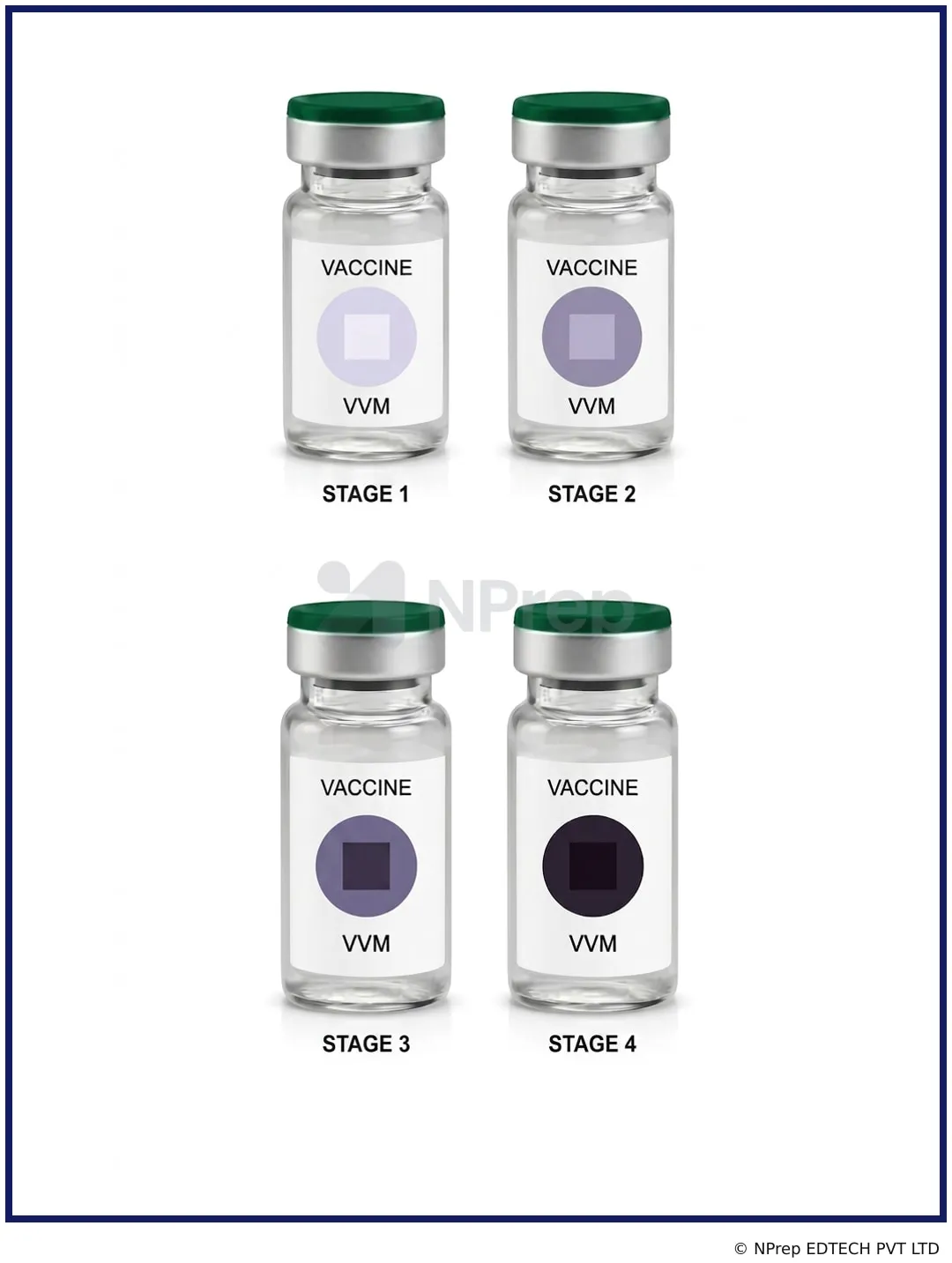
- A.
Vaccine is safe and can be used
- B.
Vaccine potency is slightly reduced but usable
- C.
Vaccine has reached discard point and should not be used
- D.
Vaccine should be shaken before use
- A.
Q92 · Medical & Surgical Nursing · Shock and Multisystem Failure
A patient with peptic ulcer presents with hypovolemic shock (BP 84/60 mmHg). What is the fluid of choice for initial management?
- A.
Normal Saline + Ringer Lactate
- B.
D5W + 0.45% NS
- C.
Dextrose 10%
- D.
D5NS only
- A.
Q93 · Community Health Nursing · Epidemiology – Epidemiological Approaches and Processes
In a cohort study, the relative risk (RR) is 1.0. This indicates:
- A.
The exposure is a protective factor against the disease
- B.
There is a positive association between exposure and disease
- C.
There is no association between exposure and disease
- D.
The exposure definitely causes the disease
- A.
Q94 · Medical & Surgical Nursing · Metabolic and Endocrine Function
A patient with liver cirrhosis presents with features of hepatic encephalopathy (confusion, asterixis, altered sensorium). What is the most appropriate initial management?
- A.
High protein diet
- B.
Lactulose administration
- C.
Increase fluid intake
- D.
Sedatives to calm the patient
- A.
Q95 · Medical & Surgical Nursing · Cardiovascular, Circulatory, and Hematologic Function
A client who underwent a total hip arthroplasty 5 days ago has been receiving enoxaparin for deep vein thrombosis (DVT) prophylaxis. The nurse notes localized skin necrosis at the injection site, and the client's laboratory results reveal a platelet count drop from 220000/mm3 to 20000/mm3 . Which action should the nurse take immediately?
- A.
Maintain standard protocols, document the findings, and continue to monitor the client.
- B.
Prepare for an emergency platelet transfusion to correct the thrombocytopenia.
- C.
Administer the next scheduled dose of enoxaparin and request a repeat complete blood count (CBC).
- D.
Discontinue all heparin-containing products and immediately notify the surgeon.
- A.
Q96 · Nursing Foundations · Health Assessment
Why is auscultation performed before palpation during abdominal examination?
- A.
Palpation may alter bowel sounds, causing them to increase or decrease
- B.
To assess liver size before listening to sounds
- C.
To detect fluid accumulation by touch first
- D.
To reduce patient discomfort during examination
- A.
Q97 · Medical & Surgical Nursing · Gas Exchange and Respiratory Function
A patient with chronic obstructive pulmonary disease (COPD) undergoes arterial blood gas (ABG) analysis. Which of the following ABG values is most consistent with partially compensated respiratory acidosis?
- A.
pH 7.35, pCO₂ 49 mmHg, HCO₃⁻ 24 mEq/L
- B.
pH 7.29, pCO₂ 50 mmHg, HCO₃⁻ 28 mEq/L
- C.
pH 7.40, pCO₂ 40 mmHg, HCO₃⁻ 24 mEq/L
- D.
pH 7.48, pCO₂ 30 mmHg, HCO₃⁻ 22 mEq/L
- A.
Q98 · Medical & Surgical Nursing · Fluid and Electrolytes: Balance and Distribution
A patient on hemodialysis develops muscle weakness and muscle cramps during the procedure. Which electrolyte imbalance is most likely responsible?
- A.
Hypercalcemia
- B.
Hypomagnesemia
- C.
Hypocalcemia
- D.
Hyperkalemia
- A.
Q99 · Nursing Foundations · Documentation & Reporting
A nurse administers a medication but forgets to document it in the patient's record. This action violates which principle of documentation?
- A.
Legibility
- B.
Completeness
- C.
Advanced objective
- D.
Confidentiality
- A.
Q100 · Obstetrics & Gynaecology · Preterm Labor, Preterm Rupture of the Membranes, Postmaturity, Intrauterine Fetal Death
A baby is born at 42 weeks of gestation. Which of the following findings is most likely expected?
- A.
Lethargy and cracked (dry, peeling) skin
- B.
Excess lanugo hair and soft skin
- C.
Poor muscle tone with abundant vernix
- D.
Increased subcutaneous fat with smooth skin
- A.
- Sign in free
Done 100 questions? Check your answers
Sign in free: every answer with its explanation, attempt the paper timed with negative marking, and track your score.
Q101 · Obstetrics & Gynaecology · Special Topics in Obstetrics
A mother on fetal monitoring shows late decelerations. What is the appropriate management?
- A.
Immediate C-section
- B.
Provide oxygen
- C.
No need of treatment
- D.
Reassure and continue routine monitoring
- A.
Q102 · Obstetrics & Gynaecology · Diagnosis of Pregnancy
Sign shown in image typically can be detected at which gestational age?
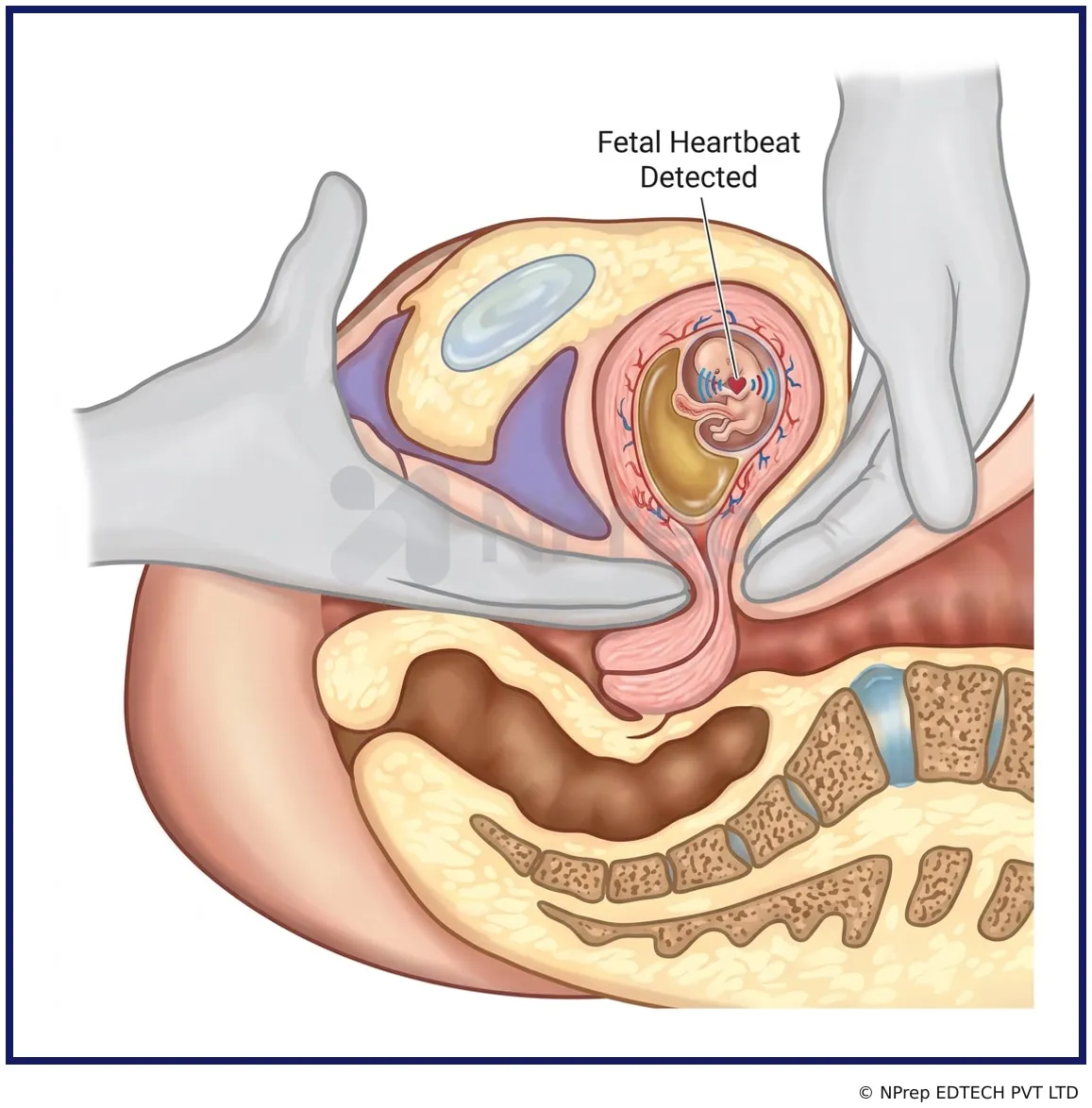
- A.
4 weeks
- B.
6 weeks
- C.
10 weeks
- D.
14 weeks
- A.
Q103 · Child Health Nursing (Pediatrics) · Otolaryngology
A 6-year-old child develops epistaxis while at school. Which is the most appropriate nursing intervention?
- A.
Sit and lean forward and press the anterior 3/4th of the nose
- B.
Lie down and press anterior 3/4th of the nose
- C.
Lie down and press nasal bridge
- D.
Sit and lean forward and press nasal bridge
- A.
Q104 · Child Health Nursing (Pediatrics) · Pediatric Critical Care
A patient in NICU is on NIV (BiPAP). What is the main goal kept in mind during this therapy?
- A.
Expiratory valve
- B.
Inspiratory valve
- C.
PEEP (Positive End-Expiratory Pressure)
- D.
Endotracheal tube valve
- A.
Q105 · Applied Microbiology & Infection control · Patient Safety Indicators and Incidents and Adverse Events
Which one of the following is considered a sentinel event?
- A.
Mild medication error without harm
- B.
Patient fall with serious injury
- C.
Delay in routine lab report
- D.
Minor pressure redness on skin
- A.
Q106 · Mental Health Nursing · Principles and Concepts of Mental Health Nursing
Which of the following indicates the effectiveness of a community mental health program?
- A.
Increasing stigma toward mental illness
- B.
Increasing hospitalization rates
- C.
decrease relapse
- D.
increase in social isolation of pt
- A.
Q107 · Forensic Nursing & Indian laws · Indian Judicial System and Laws
A nurse did not administer a medication but signed the record indicating that the medication was given. This action represents which legal/ethical breach?
- A.
Malpractice
- B.
Beneficence
- C.
Assault
- D.
Battery
- A.
Q108 · Obstetrics & Gynaecology · Normal Puerperium
A female patient is diagnosed with stress urinary incontinence. What is the most appropriate initial management?
- A.
Kegel exercises
- B.
Surgery
- C.
Psychological support only
- D.
Antibiotics
- A.
Q109 · Obstetrics & Gynaecology · Hemorrhage in Early Pregnancy
firm fleshy mass, destructed chorionic villi which of the following is the complication of missed abortion ?
- A.
blighted ovum
- B.
hydatidiform mole
- C.
carcenous mole
- D.
incomplete abortion
- A.
Q110 · Medical & Surgical Nursing · Gas Exchange and Respiratory Function
Which of the following clinical features is most characteristic of acute epiglottitis?
- A.
Drooling, absence of cough, and agitation
- B.
Excessive salivation with preference to lie down
- C.
Barking cough and hoarseness
- D.
Productive cough with wheezing
- A.
Q111 · Applied Microbiology & Infection control · Hospital-Acquired Infections
Cleaning of the eye is done from inner canthus to outer canthus. Why?
- A.
To prevent infection of the lacrimal duct
- B.
To prevent dryness of the eye
- C.
To improve vision clarity
- D.
To increase tear production
- A.
Q112 · Nursing Management & Leadership · Nursing as a Profession
Your co-worker has come to duty in an intoxicated form . This is the 3 times he is doing this in a single month as a principle of safety for the pt. What will be your best action regarding this incident along with preserving the dignity of your co - worker ? .
- A.
Directly confront co-worker. / realise his behaviour
- B.
Raise safety concern in general meeting
- C.
Ignore the co-worker behaviour and watch for pt. safety under his care
- D.
Report the incident to the supervisor.
- A.
Q113 · Obstetrics & Gynaecology · Special Topics in Obstetrics
A pregnant woman attends her antenatal visit. The fetal heart rate (FHR) is assessed using a handheld Doppler device. At which gestational age can fetal heart sounds most reliably be detected using Doppler?
- A.
6–8 weeks
- B.
10–12 weeks
- C.
14–16 weeks
- D.
18–20 weeks
- A.
Q114 · Medical & Surgical Nursing · Integumentary Function
A patient has a partial thickness burn of the lower limb. What is the priority management in the first 24 hours?
- A.
IV fluid resuscitation
- B.
Oxygen therapy and respiratory support
- C.
Broad-spectrum antibiotics to prevent infection
- D.
Apply topical antiseptic dressing only
- A.
Q115 · Obstetrics & Gynaecology · Complications of the Third Stage of Labor
A woman delivered 1 hour ago and is experiencing heavy vaginal bleeding. The uterus is soft and deviated to the right. What is the priority nursing action?
- A.
Assist the mother to void
- B.
Vigorously massage the uterus
- C.
Give oxytocin immediately
- D.
Attempt to separate the placenta
- A.
Q116 · Nursing Research & Statistics · Miscellaneous
A community consists of 500 individuals, and over a period of 2 years, 20 new cases of a certain disease were identified. The total observation time amounted to 950 person-years. What is the incidence rate of this disease in the population?
- A.
2.1 per 1000 person-years
- B.
2.1 per 100 person-years
- C.
4 per 1000 person-years
- D.
2 per 100 person-years
- A.
Q117 · Forensic Nursing & Indian laws · Asphyxial Conditions
A case of hanging has come to forensic department for autopsy. The autopsy Dr. notices a ligature mark covering about 1/3rd of neck, protruded tongue, salivary stains, opened right eye, closed left eye, both pupils dilated. What is the probable reason for opened right eye?
- A.
Compression of IJVs
- B.
Compression of ICA
- C.
Compression of Cervical sympathetic chain
- D.
Compression of Vagus
- A.
Q118 · Nursing Research & Statistics · Introduction to Statistics
A research study observes that individuals who exercise regularly have a lower risk of developing heart disease. However, those who work out also tend to maintain a healthier diet, which itself lowers heart disease risk. In this scenario, diet serves as a—?
- A.
Mediator
- B.
Effect modifier
- C.
Confounder
- D.
Independent variable
- A.
Q119 · Applied Nutrition & Dietetics · Balanced Diet
A pregnant woman in the 2nd trimester, who is a moderate working woman, requires daily caloric intake as per NIN 2020 guidelines. What is the recommended kcal/day?
- A.
2100 kcal
- B.
2480 kcal
- C.
2589 kcal
- D.
2750 kcal
- A.
Q120 · Nursing Foundations · Promoting safety in health care environment
The symbol represents which of the following?
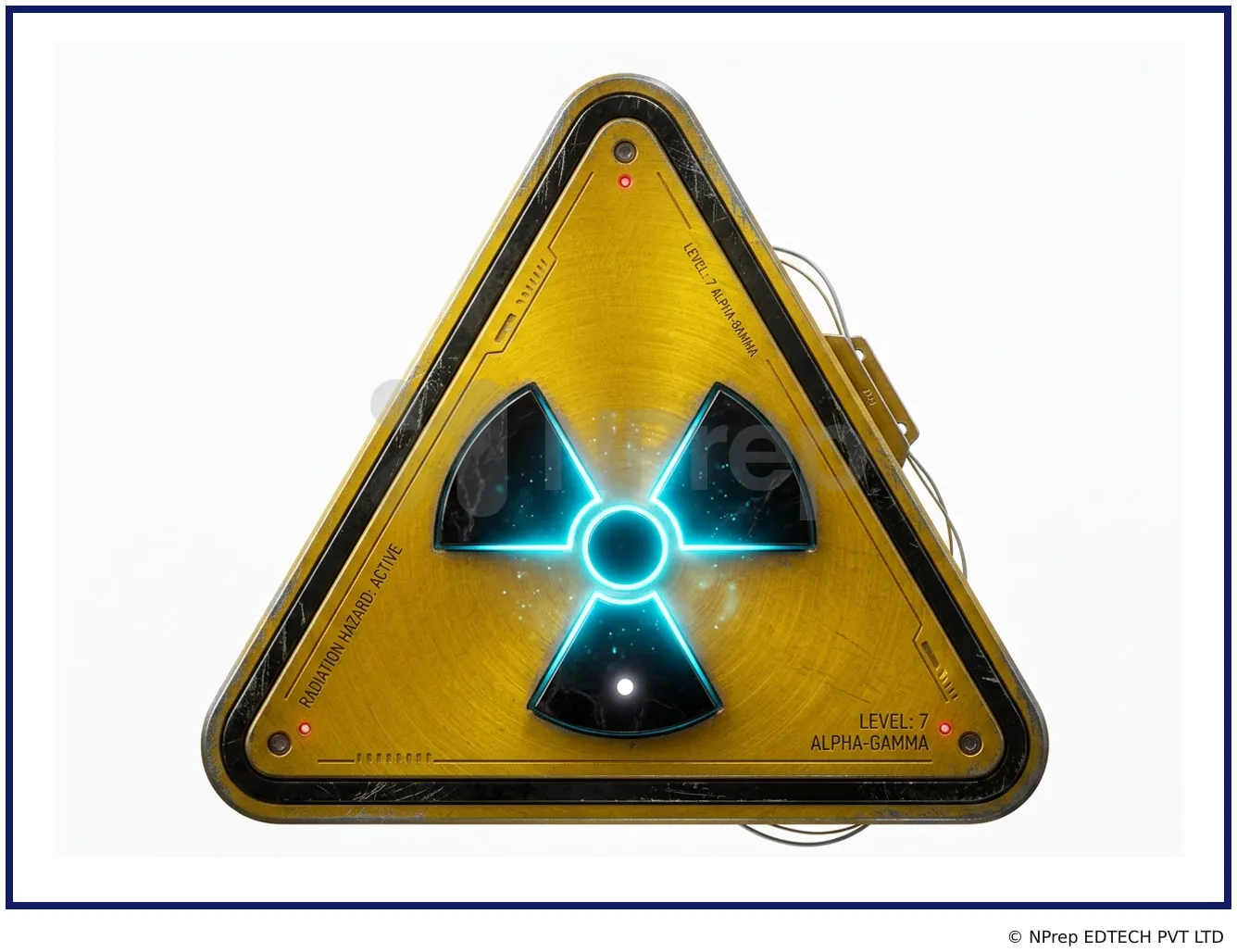
- A.
Chemical hazard
- B.
Radiation hazard
- C.
Infectious hazard
- D.
Fire hazard
- A.
Q121 · Child Health Nursing (Pediatrics) · Disorders of Cardiovascular System
An infant has been diagnosed with Congenital Heart Disease (CHD). To improve quality of life and reduce the number of cyanotic events throughout their life, which of the following nursing interventions is most important?
- A.
Give uninterrupted care with scheduled rest periods
- B.
Encourage active crying to expand the lungs.
- C.
Administer high-flow oxygen continuously at all times.
- D.
Feed large volumes of formula quickly to increase caloric intake
- A.
Q122 · Obstetrics & Gynaecology · Antepartum Hemorrhage
A pregnant woman with painless bright red vaginal bleeding is diagnosed with complete placenta previa on ultrasound. Which doctor's order should the nurse question immediately?
- A.
Ultrasound abdomen (USG)
- B.
Continuous fetal heart rate monitoring
- C.
Per vaginal (PV) examination
- D.
Preparation for emergency cesarean section
- A.
Q123 · Mental Health Nursing · Personality and Sexual Disorders
A father brings his son to a psychiatrist with complaints of repeated self-harm behavior, social isolation, and inability to maintain a stable relationship with his spouse. Which of the following is the most likely diagnosis?
- A.
Borderline personality disorder
- B.
Narcissistic personality disorder
- C.
Histrionic personality disorder
- D.
Schizoid personality disorder
- A.
Q124 · Medical & Surgical Nursing · Cardiovascular, Circulatory, and Hematologic Function
A patient develops fever (↑ 1.5°C), chills, and rigor within 15–20 minutes of starting blood transfusion. BP and oxygen saturation are normal. Which blood transfusion reaction is most likely?
- A.
Non-hemolytic febrile reaction
- B.
Allergic reaction
- C.
Sepsis (septic transfusion reaction)
- D.
Acute hemolytic reaction
- A.
Q125 · Medical & Surgical Nursing · Metabolic and Endocrine Function
A patient with diabetic neuropathy has dry feet. Which nursing intervention is most appropriate to help prevent worsening peripheral neuropathy complications?
- A.
Provide warm compression
- B.
Apply moisturizer
- C.
Elevate the leg
- D.
Massage in every shift
- A.
- Sign in free
Done 125 questions? Check your answers
Sign in free: every answer with its explanation, attempt the paper timed with negative marking, and track your score.
Q126 · Medical & Surgical Nursing · Shock and Multisystem Failure
After 2 hours of hemodialysis, a patient develops dizziness, hypotension (80/54 mmHg), tachycardia (HR 120/min), and altered level of consciousness. What is the priority nursing action?
- A.
Stop or slow dialysis and start 0.9% normal saline
- B.
Continue dialysis as prescribed
- C.
Consider it a normal condition
- D.
Give oral fluids immediately
- A.
Q127 · Obstetrics & Gynaecology · Examination of a Gynecological Patient
A pregnant woman experiences IVC compression while sleeping. Which position should be advised?
- A.
Left lateral position
- B.
Prone position
- C.
Supine position
- D.
Sitting position
- A.
Q128 · Obstetrics & Gynaecology · Fetal Skull and Maternal Pelvis
During abdominal palpation in a pregnant woman, the sinciput and occiput are felt per abdomen. Approximately 3/5 of the fetal head is palpable above the pelvic brim. What does this finding indicate?
- A.
3/5 palpable – Engaged
- B.
3/5 palpable – Non-engaged
- C.
3/5 non-palpable – Engaged
- D.
3/5 non-palpable – Non-engaged
- A.
Q129 · Medical & Surgical Nursing · Sensorineural Function
Krukenberg spindle formation on the corneal endothelium is a characteristic finding of which type of glaucoma?
- A.
Pigmentary glaucoma
- B.
Malignant glaucoma
- C.
Acute angle closure glaucoma
- D.
Neovascular glaucoma
- A.
Q130 · Medical & Surgical Nursing · Perioperative Concepts and Nursing Management
A patient with cholecystitis undergoes laparoscopic surgery and is placed in supine position postoperatively. The patient develops shoulder pain. This is due to which complication?
- A.
Decreased bowel sounds
- B.
Referred pain from CO₂ gas irritation
- C.
Urethral stricture
- D.
Wound infection
- A.
Q131 · Applied Nutrition & Dietetics · Therapeutic Diet
Which of the following is NOT restricted in celiac disease?
- A.
Wheat
- B.
Rice
- C.
Barley
- D.
Rye
- A.
Q132 · Mental Health Nursing · Substance Use Disorders
A person who consumes alcohol occasionally is counseled for de-addiction. Which intervention is typically a 5–10 minute session?
- A.
Brief intervention
- B.
Psychotherapy
- C.
Rehabilitation program
- D.
Long-term counseling only
- A.
Q133 · Child Health Nursing (Pediatrics) · Central Nervous System
A child is suspected to have bacterial meningitis. What is the most appropriate nursing action?
- A.
Initiate appropriate isolation precautions and administer prescribed antibiotics
- B.
Encourage bright light exposure and frequent stimulation
- C.
Delay treatment until laboratory confirmation is obtained
- D.
Place the child in Trendelenburg position to improve circulation
- A.
Q134 · Nursing Foundations · Health Assessment
A nursing officer observes a patient's gait, posture, and personal hygiene before beginning history collection. This is classified as which of the following?
- A.
General examination
- B.
Detailed systemic examination
- C.
Diagnostic investigation
- D.
Therapeutic intervention
- A.
Q135 · Medical & Surgical Nursing · Gas Exchange and Respiratory Function
A patient with COPD is receiving oxygen at 6 L/min via nasal cannula and develops dizziness and altered level of consciousness. What is the priority nursing intervention?
- A.
Reduce FiO₂ and notify the physician
- B.
Increase FiO₂
- C.
Encourage deep breathing exercises
- D.
Place the patient in supine position
- A.
Q136 · Applied Nutrition & Dietetics · Nutritional Deficiency Disorder
In a patient with early pregnancy bleeding and uterine contractions, which finding indicates threatened abortion rather than inevitable abortion?
- A.
Cervical os is closed
- B.
Cervical os is open
- C.
Abortion is unavoidable
- D.
Products of conception are expelled
- A.
Q137 · Medical & Surgical Nursing · Shock and Multisystem Failure
A patient is 3 hours post-operative. Vital signs trend
BP HR` Temp Time
120/80 78 37*c 8 AM
110/70 102 37.2*C 10 AM
96/60 122 37.5*C 11 AM
What is the nurse’s best interpretation?
- A.
Normal post-operative response
- B.
Early hypovolemic shock
- C.
Post-operative infection
- D.
normal anesthetic effect
- A.
Q138 · Medical & Surgical Nursing · Metabolic and Endocrine Function
What is the most common cause of Cushing syndrome?
- A.
Exogenous steroid use
- B.
Tumor of adrenal cortex
- C.
Pituitary ACTH increase
- D.
Ectopic ACTH production
- A.
Q139 · Child Health Nursing (Pediatrics) · Disorders of Kidney and Urinary Tract
A child with nephrotic syndrome is receiving steroid therapy. What should be the priority nursing intervention?
- A.
Monitor for infection
- B.
Encourage high-protein diet
- C.
Restrict all fluids completely
- D.
Promote high-sodium diet
- A.
Q140 · Mental Health Nursing · Eating Disorders
Which electrolyte imbalance is most commonly seen in bulimia nervosa?
- A.
Hyperkalemia
- B.
Hypokalemia
- C.
Hypernatremia
- D.
Hypercalcemia
- A.
Q141 · Nursing Foundations · Administration of medications
Two drugs are identified as look-alike, sound-alike (LASA) medications. Which nursing intervention is most appropriate to prevent medication error?
- A.
Verbal order follow
- B.
Tall man lettering
- C.
Place drugs randomly in storage
- D.
Administer quickly to avoid delay
- A.
Q142 · Nursing Foundations · Health care delivery system
After a disaster, a family is suffering from PTSD (Post-Traumatic Stress Disorder). The nurse performs screening. This represents which level of prevention?
- A.
Primary prevention
- B.
Secondary prevention
- C.
Tertiary prevention
- D.
Primordial prevention
- A.
Q143 · Mental Health Nursing · Crisis Intervention
A patient with substance abuse states, "I consume only when I am stressed; otherwise I don't use it." This statement reflects which defense mechanism?
- A.
Suppression
- B.
Denial
- C.
Compensation
- D.
Regression
- A.
Q144 · Medical & Surgical Nursing · Cardiovascular, Circulatory, and Hematologic Function
A post-CABG patient shows sudden decrease in chest drain output (80 mL/hr → 10 mL/hr) along with hypotension, raised JVP, and tachycardia. What is the most likely cause?
- A.
Hypovolemic shock due to bleeding
- B.
Tube blockage due to clot leading to cardiac tamponade
- C.
Myocardial infarction
- D.
Pulmonary embolism
- A.
Q145 · Child Health Nursing (Pediatrics) · Diseases of Gastrointestinal System and Liver
A child diagnosed with Hirschsprung disease is scheduled for a contrast (hydrostatic) enema. Which of the following preoperative assessments is most appropriate?
- A.
Check abdominal girth before hydrostatic pressure enema
- B.
Check abdominal girth after hydrostatic pressure enema
- C.
Avoid abdominal assessment before the procedure
- D.
Assess bowel sounds only after the procedure
- A.
Q146 · Applied Microbiology & Infection control · Biomedical Waste Management (BMW)
Which of the following BMW segregation statements is INCORRECT?
- A.
Collection of syringes and needles in a puncture-proof container/bag
- B.
Waste should be discarded at the point of generation
- C.
Placenta is discarded in a yellow bag
- D.
Sharps should be mixed with general waste if properly sealed
- A.
Q147 · Medical & Surgical Nursing · Cardiovascular, Circulatory, and Hematologic Function
Budd-Chiari syndrome is primarily related to which of the following?
- A.
Obstruction of hepatic veins
- B.
Inflammation of the pancreas
- C.
Infection of the gallbladder
- D.
Obstruction of the ureter
- A.
Q148 · Medical & Surgical Nursing · Pain Management
A patient reports pain score 9/10, but vital signs are normal. What is the appropriate nursing management?
- A.
Manage according to pain score
- B.
Assume patient is agitated and ignore pain report
- C.
Reassess after 3 hours
- D.
No treatment is needed as vitals are normal
- A.
Q149 · Medical & Surgical Nursing · Neurologic Function
Which neurotransmitter is primarily deficient in Parkinson’s disease?
- A.
Dopamine
- B.
Acetylcholine
- C.
Serotonin
- D.
GABA
- A.
Q150 · Medical & Surgical Nursing · Metabolic and Endocrine Function
Which of the following findings is NOT typically seen in Conn's syndrome?
- A.
Hypernatremia
- B.
Hypokalemia
- C.
Hypertension
- D.
Metabolic alkalosis
- A.
- Sign in free
Done 150 questions? Check your answers
Sign in free: every answer with its explanation, attempt the paper timed with negative marking, and track your score.
Q151 · Applied Microbiology & Infection control · Biomedical Waste Management (BMW)
The symbol represents which of the following?

- A.
Chemical hazard
- B.
Radiation hazard
- C.
Biohazard
- D.
Fire hazard
- A.
Q152 · Medical & Surgical Nursing · Miscellaneous
A patient is brought to the emergency department with suspected myxedema coma. Which is the priority nursing action?
- A.
Provide IV thyroid hormone replacement and maintain airway
- B.
Encourage oral fluids and ambulation
- C.
Apply cold compresses to reduce temperature
- D.
Administer high-dose insulin immediately
- A.
Q153 · Child Health Nursing (Pediatrics) · Otolaryngology
Which of the following hearing tests is not performed in infants?
- A.
OAE (Otoacoustic Emissions)
- B.
BERA (Brainstem Evoked Response Audiometry)
- C.
PTA (Pure Tone Audiometry)
- D.
Free-field audiometry
- A.
Q154 · Obstetrics & Gynaecology · Dysmenorrhea and Other Disorders of Menstrual Cycles
A 16-year-old girl presents with cyclic abdominal pain but no menstrual bleeding due to imperforate hymen. What is the most likely diagnosis?
- A.
Cryptomenorrhea
- B.
Dysmenorrhea
- C.
Hypomenorrhea
- D.
Amenorrhea
- A.
Q155 · Nursing Management & Leadership · Management of Nursing Service in the Hospital & Community
What is the correct full form of PDSA in quality improvement methodology?
- A.
Plan Do Study Act
- B.
Procedure Do Study Act
- C.
Plan Do Student Act
- D.
None of the above
- A.
Q156 · Obstetrics & Gynaecology · Physiological Changes During Pregnancy
Which of the following is NOT a sign of good attachment during breastfeeding?
- A.
Inverted lower lip
- B.
Chin touching the breast
- C.
Wide open mouth
- D.
Upper areola more visible than lower
- A.
Q157 · Child Health Nursing (Pediatrics) · Central Nervous System
A 7-year-old child diagnosed with cerebral palsy is brought to the clinic. What important history should the nurse primarily collect from the parents?
- A.
Previous history of birth asphyxia
- B.
Baby's play and walking pattern
- C.
Dietary preferences of the child
- D.
Recent school performance only
- A.
Q158 · Medical & Surgical Nursing · Cardiovascular, Circulatory, and Hematologic Function
A patient performing mild activity shows an increase in heart rate from 80 to 130 bpm. This finding indicates:
- A.
Poor cardiac compensation
- B.
Anxiety
- C.
Normal physiological response
- D.
Dehydration only
- A.
Q159 · Obstetrics & Gynaecology · Safe Motherhood, Epidemiology of Obstetrics
A nursing officer is conducting a term delivery in a labor room where privacy is ensured using curtains. The woman is allowed a birth companion, respectful maternity care is provided, and strict infection prevention protocols are followed. Under which program are these specific quality improvement facilities included?
- A.
Respectful Maternity Care (RMC)
- B.
Reproductive and Child Health (RCH) Program
- C.
Kangaroo Mother Care (KMC) Program
- D.
LaQshya Program
- A.
Q160 · Medical & Surgical Nursing · Musculoskeletal Function
A patient with a fracture in a plaster cast develops pulselessness, coldness, and numbness of the affected limb. What is the priority nursing intervention?
- A.
Notify the physician and remove the plaster cast immediately (prepare for possible surgical intervention)
- B.
Reassess the limb after 15 minutes
- C.
Check blood pressure in that limb
- D.
Elevate the limb and observe
- A.
More NORCET papers
- NORCET-11 Mains2026 · 155 questions
- NORCET-11 Prelims2026 · 100 questions
- NORCET-10 Prelims2026 · 100 questions
- NORCET-9 Prelims2025 · 100 questions
- NORCET-9 Mains2025 · 160 questions
- NORCET-8 Prelims2025 · 100 questions
- NORCET-8 Mains2025 · 160 questions
- NORCET-7 Prelims2024 · 100 questions
- NORCET-7 Mains2024 · 160 questions
- NORCET-6 Prelims2024 · 100 questions
- NORCET-6 Mains2024 · 100 questions
- NORCET-5 Prelims (Shift 1)2023 · 100 questions