NORCET-9 Prelims question paper
NORCET · 2025 · 100 questions · 90 minutes · 0.33 mark deducted per wrong answer
- Medical & Surgical Nursing 22
- Obstetrics & Gynaecology 17
- Child Health Nursing (Pediatrics) 12
- Mental Health Nursing 11
- General Knowledge 8
- Community Health Nursing 5
- Pharmacology 4
- Reasoning 4
- Nursing Foundations 4
- English 4
- Health Information and Technology (Basic Computer) 3
- Applied Physiology 2
- Pathology & Genetics 1
- Nursing Research & Statistics 1
- Quantitative Aptitude and Mathematics 1
- Applied Anatomy 1
See the answers and explanations
Sign in free: every answer with its explanation, attempt the paper timed with negative marking, and track your score.
Q1 · Child Health Nursing (Pediatrics) · Disorders of Cardiovascular System
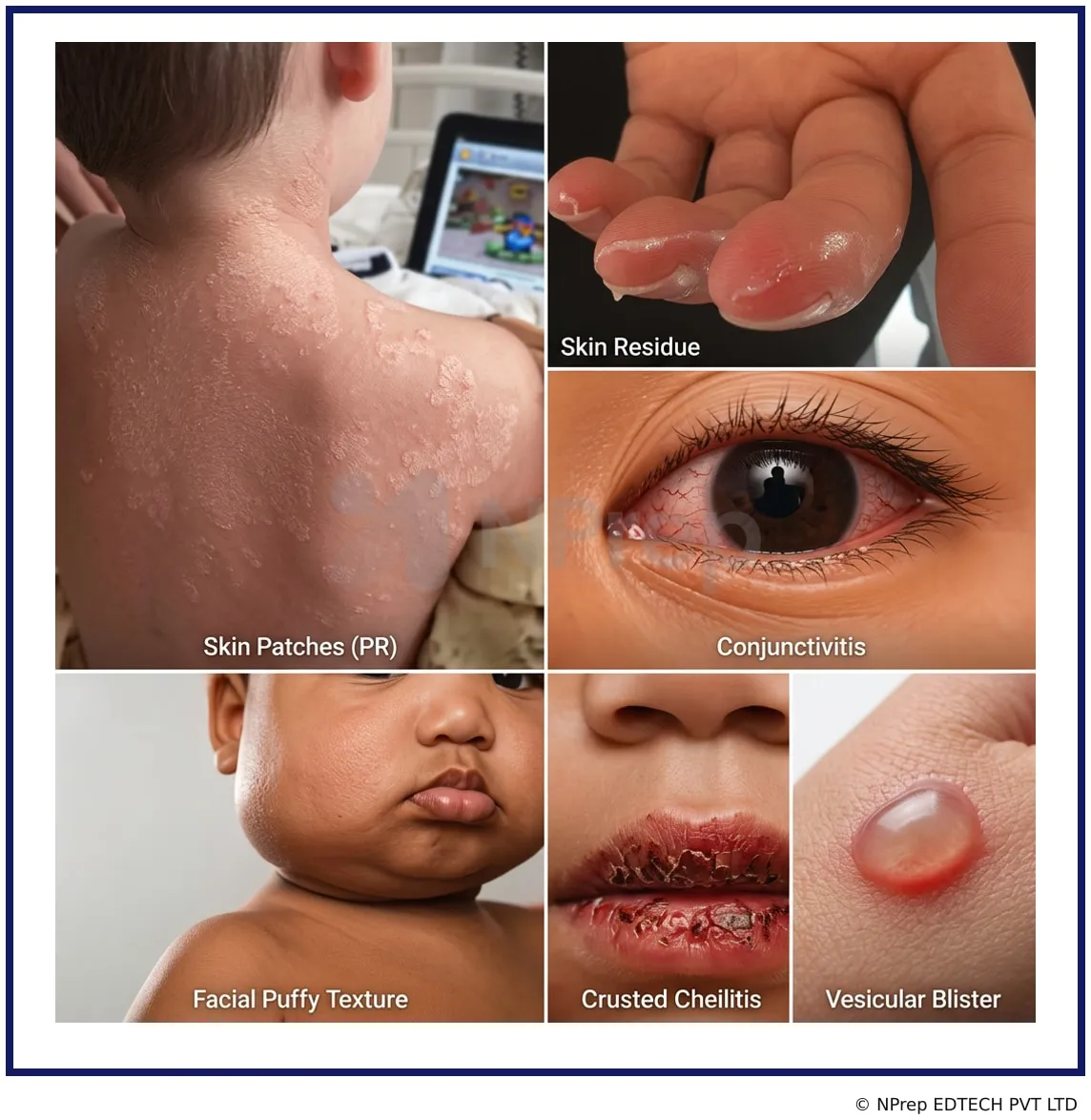
Identify the following image ?
- A.
Kawasaki disease
- B.
measles
- C.
mumps
- D.
pertussis
- A.
Q2 · Community Health Nursing · Epidemiology – Epidemiological Approaches and Processes
A person is infected with a pathogenic organism but shows no discernible clinical signs or symptoms of the disease. This individual, who can still transmit the pathogen to others, is best described as a:
- A.
Case
- B.
Carrier
- C.
Host
- D.
Vector
- A.
Q3 · Child Health Nursing (Pediatrics) · Disorders of Kidney and Urinary Tract
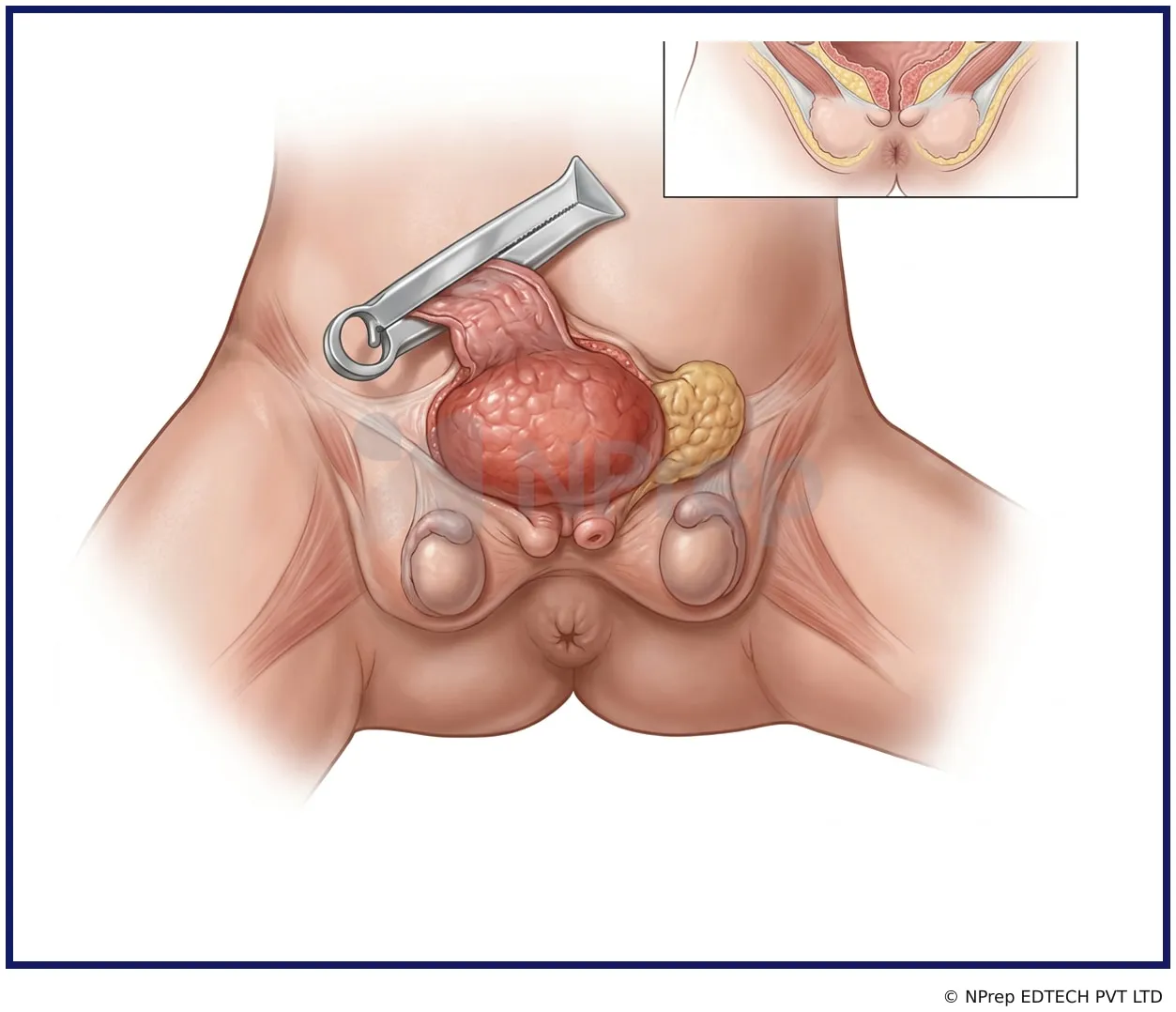
Upon assessing a newborn, the nurse observes a visible, open, and everted urinary bladder on the surface of the lower abdomen, with urine draining directly onto the skin. This congenital anomaly is known as:
- A.
Hypospadias
- B.
Epispadias
- C.
Cryptorchidism
- D.
Bladder Exstrophy
- A.
Q4 · Obstetrics & Gynaecology · Population Dynamics and Control of Conception
A client asks for a contraceptive method that does not require daily administration. The nurse describes a medication that is taken once a week on the same day. Which medication fits this description?
- A.
Combined oral contraceptive pill
- B.
Progestin-only pill (Minipill)
- C.
Saheli (Ormeloxifene)
- D.
Emergency contraceptive pill
- A.
Q5 · Mental Health Nursing · Treatment modalities and therapies used in mental disorders
A client diagnosed with a panic disorder is taught to identify and challenge their catastrophic thinking patterns and practice relaxation techniques during anxious episodes. This therapeutic approach, which focuses on modifying dysfunctional thoughts and behaviors, is known as:
- A.
Psychoanalytic Therapy
- B.
Interpersonal Therapy
- C.
Cognitive Behavioral Therapy (CBT)
- D.
Group Therapy
- A.
Q6 · Medical & Surgical Nursing · Immunologic Function
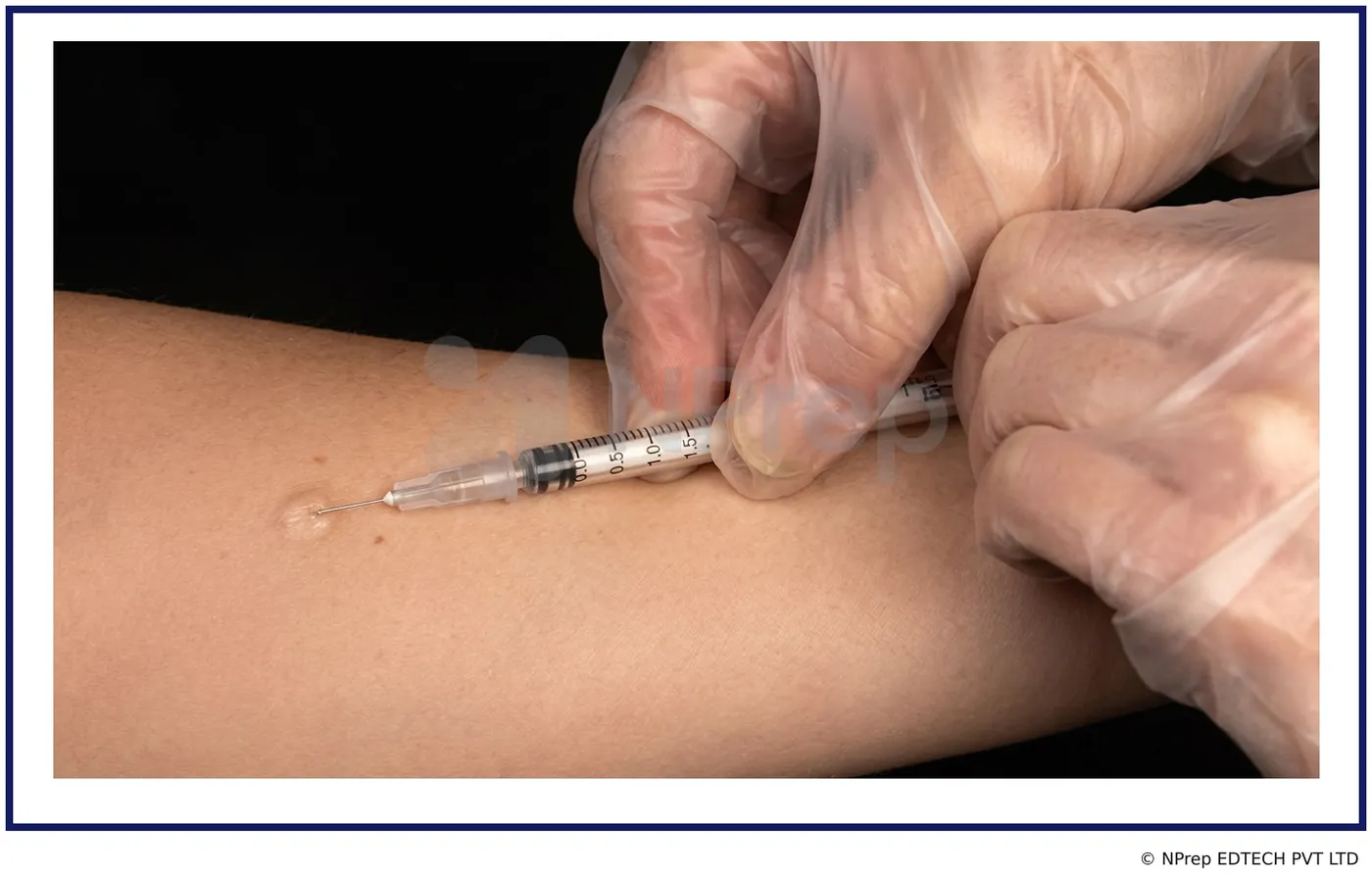
Identify the image
- A.
Gardasil
- B.
Heparin
- C.
Montax
- D.
None of the above
- A.
Q7 · Health Information and Technology (Basic Computer) · Introduction to computer applications
Which key is used as the refresh button on a keyboard ?
- A.
F1
- B.
F3
- C.
F5
- D.
F8
- A.
Q8 · Obstetrics & Gynaecology · Special Topics in Obstetrics
A pregnant client at 34 weeks gestation undergoes a non-stress test (NST). The fetal heart rate tracing shows a baseline of 140 bpm with moderate variability and three accelerations of 15 bpm lasting for 15 seconds within a 20-minute period. How should the nurse interpret these findings?
- A.
Reactive NST, indicating fetal well-being
- B.
Non-reactive NST, requiring further evaluation
- C.
Positive NST, suggesting fetal compromise
- D.
Sinusoidal pattern, indicating severe fetal anemia
- A.
Q9 · Medical & Surgical Nursing · Other Acute Problems
In the emergency department, 20 victims arrive after an accident. Using START triage, identify which patient should be classified as Red (immediate priority):
- A.
Burn patient (TBSA 80%, vitals stable)
- B.
Patient with pinpoint pupils and breathing difficulty
- C.
Cardiac arrest patient with no pulse
- D.
Patient with fractured arm, walking
- A.
Q10 · Pharmacology · Antimicrobial Drugs
Which of the following is classified as a live attenuated vaccine?
- A.
Tetanus toxoid (TT)
- B.
Inactivated Polio Vaccine (IPV)
- C.
Measles, Mumps, Rubella (MMR)
- D.
Hepatitis B vaccine
- A.
Q11 · General Knowledge · Health sector Current Affairs
The Sputnik V vaccine, one of the first registered COVID-19 vaccines, was developed in which country?
- A.
United Kingdom
- B.
China
- C.
United States
- D.
Russia
- A.
Q12 · Obstetrics & Gynaecology · Multiple Pregnancy, Amniotic Fluid Disorders, Abnormalities of Placenta and Cord
A woman in labour with a twin pregnancy is being monitored. The first twin shows a low fetal heart rate. Suddenly the second twin's heart sounds become absent and the mother develops a weak, thready pulse and signs of shock. What is the most likely diagnosis?
- A.
Uterine rupture
- B.
Cord prolapse of the second twin
- C.
Abruptio placentae (placental abruption)
- D.
Vasa previa
- A.
Q13 · Obstetrics & Gynaecology · Prolonged Labor, Obstructed Labor, Dystocia Caused by Fetal Anomalies
During a delivery, after the emergence of the fetal head, the nurse notes that it retracts back against the perineum (turtle sign), indicating shoulder dystocia. What is the initial, first-line maneuver recommended to resolve this obstetric emergency?
- A.
Woods' screw maneuver
- B.
Zavanelli maneuver
- C.
McRoberts maneuver
- D.
Application of fundal pressure
- A.
Q14 · Community Health Nursing · National Health Programs
Under the Indian Government's National Programme for Prevention and Control of Non-Communicable Diseases (NP-NCD), which age group is primarily targeted for screening?
- A.
30-70 years
- B.
18-30 years
- C.
15-60 years
- D.
45-80 years
- A.
Q15 · Medical & Surgical Nursing · Fluid and Electrolytes: Balance and Distribution
A patient's laboratory report shows serum potassium 6.3 mEq/L. The doctor orders intravenous calcium. What is the nurse's priority action?
- A.
Administer calcium injection over 10–15 minutes and monitor for arrhythmias
- B.
Administer calcium as a rapid IV push
- C.
Hold calcium and repeat potassium after 1 hour
- D.
Give oral calcium and potassium binder
- A.
Q16 · Pharmacology · Miscellaneous
A patient presents to the emergency department with severe anticholinergic toxicity, including delirium, tachycardia, mydriasis, and urinary retention after ingesting an unknown substance. The physician considers administering an antidote. Which medication is a centrally-acting acetylcholinesterase inhibitor used to reverse these effects?
- A.
Atropine
- B.
Pralidoxime
- C.
Physostigmine
- D.
Naloxone
- A.
Q17 · Child Health Nursing (Pediatrics) · Newborn Infants
Which of the following is a sign of adequate breast milk intake in the new born?
- A.
Sleeping through overnight
- B.
having 6-8 wet diaper in 24 hours
- C.
excessive crying
- D.
feeding in every 5-6 hours
- A.
Q18 · Reasoning · Classification (Odd One Out)
Identify the figure that is odd in the group
- A.
Square
- B.
Triangle
- C.
Rectangle
- D.
Circle
- A.
Q19 · Mental Health Nursing · Psychiatric Emergencies
A patient who was admitted after a suicide attempt following a job loss now appears cheerful, energetic, and states, "I've figured everything out and I feel so much better." What is the nurse's priority assessment?
- A.
Congratulate the patient on their improved mood.
- B.
Inquire about the patient's plans for finding a new job.
- C.
Directly ask the patient if they are having thoughts of suicide and if they have a plan.
- D.
Document the patient's positive change in affect and mood.
- A.
Q20 · Child Health Nursing (Pediatrics) · Disorders of Kidney and Urinary Tract
A 15-month-old, non-toilet-trained child requires a sterile urine sample for culture and sensitivity. Which method is the most appropriate for obtaining this specimen?
- A.
Placing cotton balls in the diaper to soak up urine
- B.
Attaching a sterile urine collection bag to the perineum
- C.
Performing an in-and-out sterile urethral catheterization
- D.
Waiting to catch a mid-stream sample in a sterile cup
- A.
Q21 · Medical & Surgical Nursing · Fluid and Electrolytes: Balance and Distribution
A patient with hypertension and diabetes mellitus presents with metabolic acidosis. Arterial blood gas shows a normal pH. Which electrolyte should the nurse monitor and manage carefully?
- A.
Potassium (K+)
- B.
Sodium (Na+)
- C.
Calcium (Ca2+)
- D.
Magnesium (Mg2+)
- A.
Q22 · Obstetrics & Gynaecology · Genital Malignancy
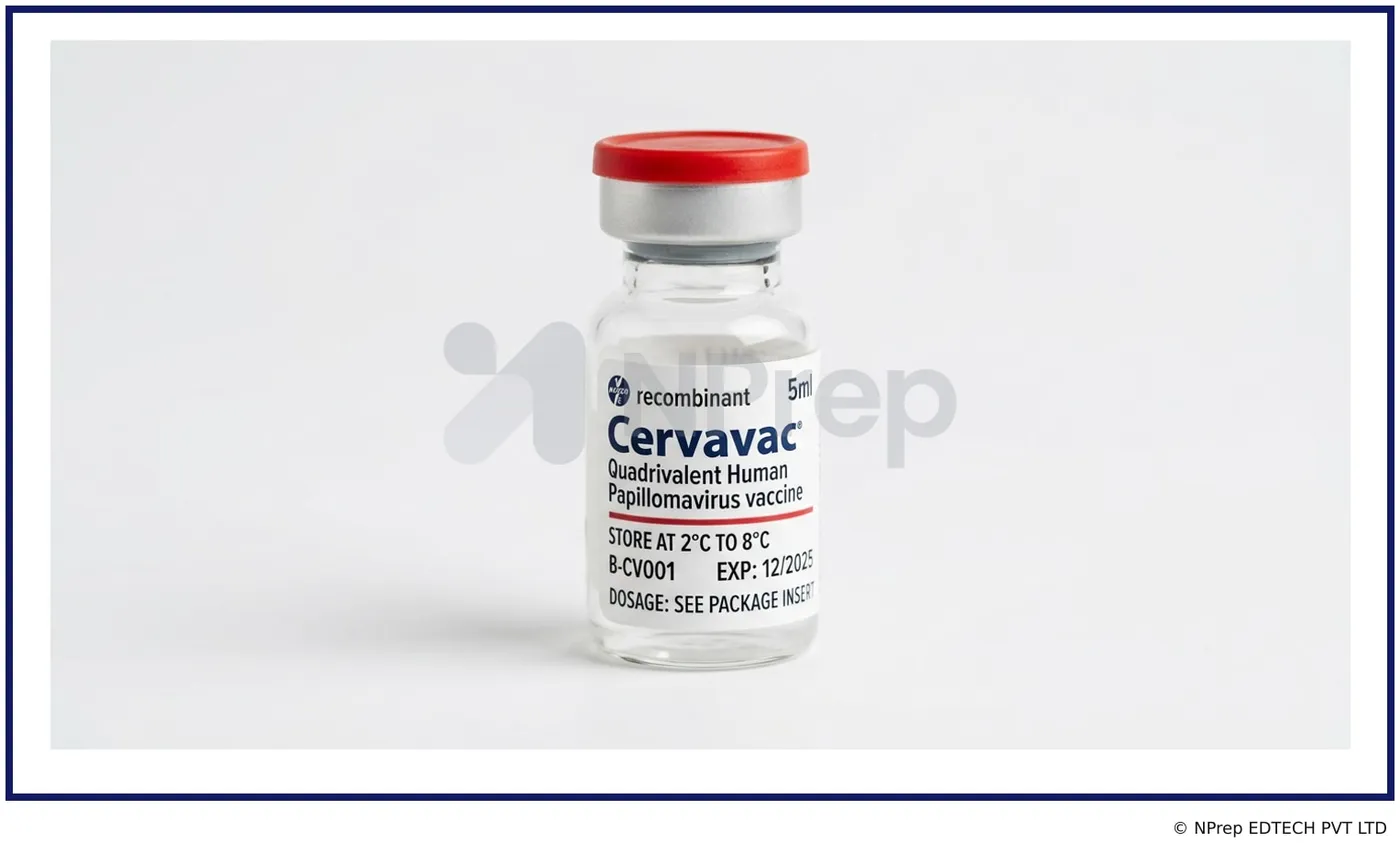
A nurse is shown an image of the Cervavac vaccine vial. The nurse correctly identifies that this vaccine is administered to prevent which type of cancer?
- A.
Liver Cancer
- B.
Breast Cancer
- C.
Lung Cancer
- D.
Cervical Cancer
- A.
Q23 · Medical & Surgical Nursing · Metabolic and Endocrine Function
A patient is scheduled for an intravenous pyelogram (IVP). After being NPO for 8 hours, the patient reports thirst. Lab results show: serum osmolarity 300 mOsm/L, serum sodium 155 mEq/L, and urine specific gravity normal. What is the most likely nursing interpretation?
- A.
Fluid restriction; thirst is expected due to NPO
- B.
ADH hormone is increased
- C.
Kidney is not working properly
- D.
Patient has diabetes insipidus
- A.
Q24 · Obstetrics & Gynaecology · Hypertensive Disorders in Pregnancy
A fetus is diagnosed with a single umbilical artery (SUA). SUA is not associated with which of the following conditions?
- A.
Imperforated Anus
- B.
Renal anomalies
- C.
Esophageal Atresia
- D.
Genitourinary Abnormality
- A.
Q25 · Child Health Nursing (Pediatrics) · Immunization and Immunodeficiency
According to the universal immunization schedule, the nurse is administering the oral Rotavirus vaccine (Rotarix) to a 6-week-old infant. What is the standard volume for a single dose of this vaccine?
- A.
0.1 mL
- B.
0.5 mL
- C.
1.5 mL
- D.
2.5 mL
- A.
- Sign in free
Done 25 questions? Check your answers
Sign in free: every answer with its explanation, attempt the paper timed with negative marking, and track your score.
Q26 · Nursing Foundations · Administration of medications
A healthcare provider orders a continuous IV infusion of Nitroglycerin to run at 15 mcg/min. The pharmacy supplies a solution of 50 mg of Nitroglycerin in 500 mL of D5W. At what rate (in mL/hr) should the nurse set the infusion pump?
- A.
3 mL/hr
- B.
6 mL/hr
- C.
9 mL/hr
- D.
15 mL/hr
- A.
Q27 · Obstetrics & Gynaecology · Infections of the Individual Pelvic Organs
A female patient complains of a painful, tender, and swollen lump on one side of her vaginal opening, making it uncomfortable to walk or sit. Based on the location and symptoms, the nurse suspects an infection of which gland?
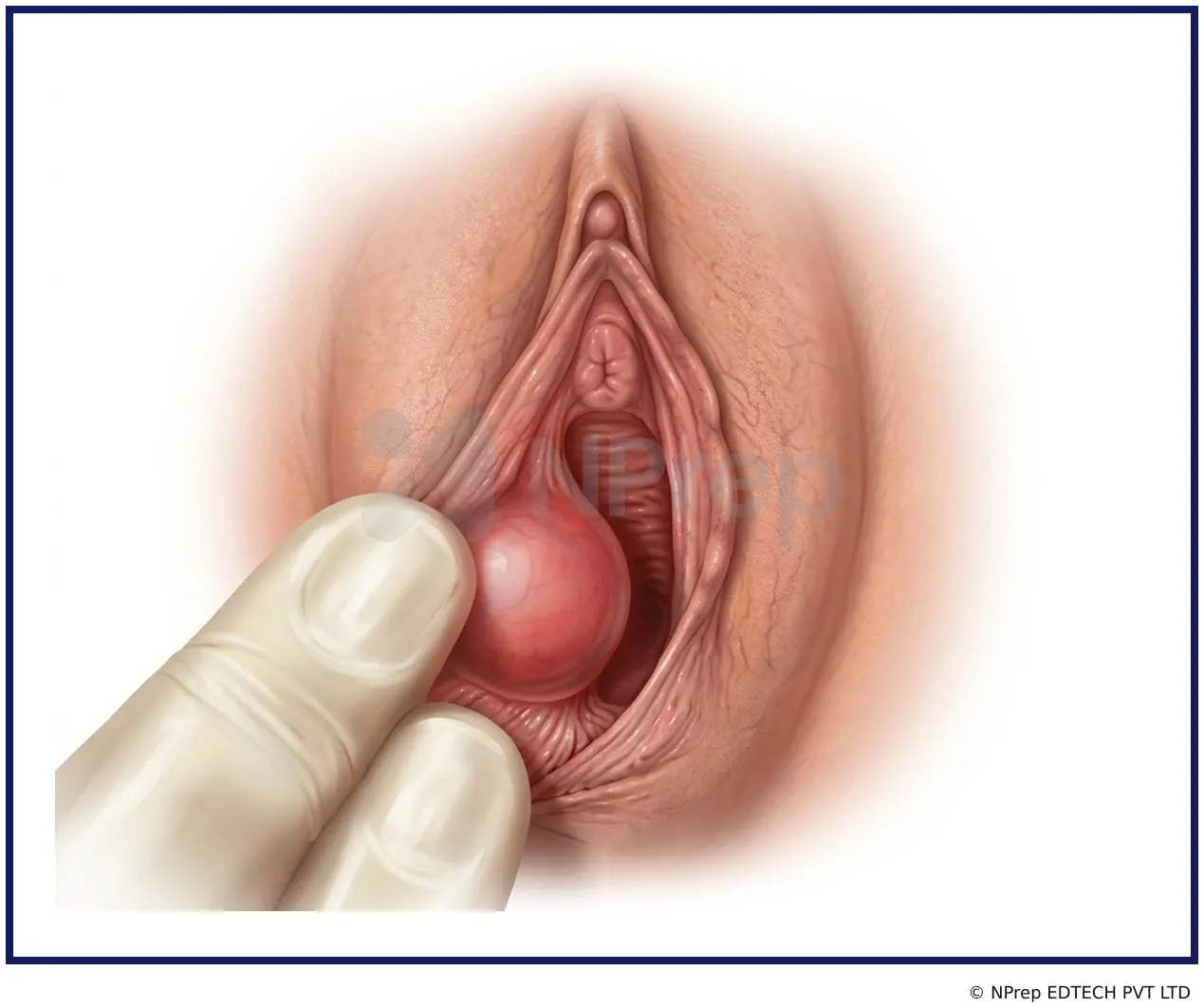
- A.
Skene's gland
- B.
Bartholin's gland
- C.
Sebaceous gland
- D.
Apocrine gland
- A.
Q28 · Mental Health Nursing · Schizophrenia
A Psychiatric patient keeps repeating the same phrases again and again for example 'i want to go home ...home.. home... home...'this phenomenon is called ?
- A.
Echolalia
- B.
Echopraxia
- C.
Perseveration
- D.
Verbigeration
- A.
Q29 · Medical & Surgical Nursing · Cardiovascular, Circulatory, and Hematologic Function
A patient with a serum potassium level of 6.2 mEq/L and peaked T waves on the ECG is receiving an intravenous infusion of calcium gluconate. What is the most critical adverse effect the nurse must monitor for during this infusion?
- A.
Severe hypertension
- B.
Respiratory depression
- C.
Bradycardia and hypotension
- D.
Hypoglycemia
- A.
Q30 · Medical & Surgical Nursing · Cardiovascular, Circulatory, and Hematologic Function
A patient is two hours post-operative from a Coronary Artery Bypass Graft (CABG) surgery. The nurse notes that the chest tube has drained 300 mL of sanguineous fluid in the last hour. What is the nurse's priority action?
- A.
Document the finding as normal post-operative drainage.
- B.
Administer a STAT dose of a prescribed diuretic.
- C.
Notify the surgeon immediately.
- D.
Clamp the chest tube to slow the bleeding.
- A.
Q31 · Child Health Nursing (Pediatrics) · Diseases of Gastrointestinal System and Liver
When assessing a 3-month-old infant with a reducible umbilical hernia, which finding requires immediate notification to the healthcare provider?
- A.
The hernia protrudes more when the infant is crying.
- B.
The hernia is soft and can be easily pushed back into the abdomen.
- C.
The infant experiences sudden vomiting and the hernia becomes hard and discolored.
- D.
The skin over the hernia appears normal in color and is warm to the touch.
- A.
Q32 · Obstetrics & Gynaecology · Hypertensive Disorders in Pregnancy
A 36-week pregnant client (G3 P1 L1) presents to the labor unit with a blood pressure of 160/110 mmHg and proteinuria. Her history reveals a tonic-clonic seizure occurred one day prior. Which combination of interventions is the highest priority for this client?
- A.
Administering labetalol and observing for 24 hours
- B.
Initiating an infusion of Magnesium Sulfate and preparing for imminent delivery
- C.
Performing an amniocentesis to check for fetal lung maturity
- D.
Placing the client in a quiet room for strict bed rest and monitoring fetal heart rate
- A.
Q33 · Pharmacology · Chemotherapy of Neoplastic Drugs
Drugs used primarily to inhibit the growth and spread of malignant cells, often by interfering with cell division, are known as:
- A.
Antihistaminic drugs
- B.
Antineoplastic drugs
- C.
Antiemetic drugs
- D.
Antipyretic drugs
- A.
Q34 · Nursing Foundations · Administration of medications
A nurse must prepare an intravenous (IV) solution of adrenaline (epinephrine) at a 1:10,000 concentration. The stock available is a 1 mL ampule containing 1 mg of adrenaline (a 1:1,000 solution). Which method correctly prepares the required dilution?
- A.
Mix 1 mL of 1:1,000 adrenaline with 9 mL of normal saline.
- B.
Mix 1 mL of 1:1,000 adrenaline with 99 mL of normal saline.
- C.
Mix 0.1 mL of 1:1,000 adrenaline with 10 mL of normal saline.
- D.
Mix 0.5 mL of 1:1,000 adrenaline with 5 mL of normal saline.
- A.
Q35 · Mental Health Nursing · Personality and Sexual Disorders
A 16 year old girls is diagnosed with borderline personality disorder (BPD) , which of the following is a typical characteristic of BPD?
- A.
Unstable interpersonal relationship and fear of abandonment
- B.
Social withdrawal and lack of emotional expression
- C.
Preoccupation with orderliness and perfectionism
- D.
Excessive suspiciousness and distrust of others
- A.
Q36 · Obstetrics & Gynaecology · Prolonged Labor, Obstructed Labor, Dystocia Caused by Fetal Anomalies
An image shows a healthcare provider applying firm, downward pressure on the uterine fundus. What is the procedure here:
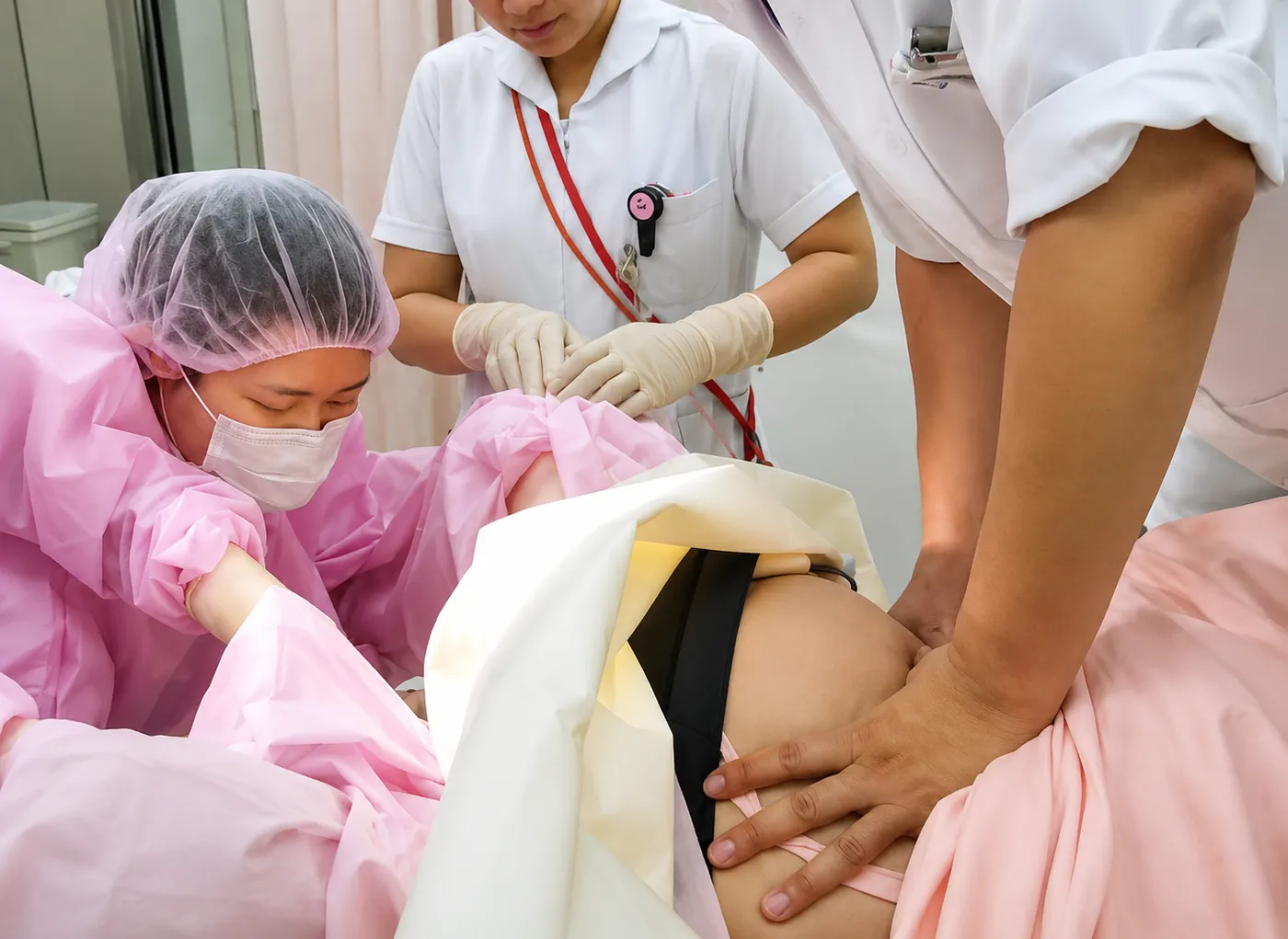
- A.
Fundal pressure
- B.
Mc Robinson maneuver
- C.
Loveset Maneuver
- D.
None of the above
- A.
Q37 · General Knowledge · Indian geography
Which state has the longest coastline in India ?
- A.
Andhra Pradesh
- B.
Maharashtra
- C.
Gujarat
- D.
Odisha
- A.
Q38 · Reasoning · Direction Sense
A man walks 4 km north, then turn to the right and walk 2 km. after that, he walk 4km south. now how much distance is he from the starting point ?
- A.
2 km
- B.
4 km
- C.
6 km
- D.
8 km
- A.
Q39 · General Knowledge · Indian history
Who was the first women governor of an Indian state ?
- A.
Indira Gandhi
- B.
Sarojini Naidu
- C.
Sucheta Kriplani
- D.
Vijaya Lakshmi Pandit
- A.
Q40 · Medical & Surgical Nursing · Perioperative Concepts and Nursing Management
A nurse is monitoring a 6-month-old infant undergoing a minor surgical procedure. The baby appears drowsy but remains conscious, and is able to maintain airway reflexes without assistance. This condition is referred to as conscious sedation. Which type of anesthesia is most likely being administered?
- A.
General anesthesia
- B.
Moderate sedation
- C.
Deep sedation
- D.
Local anesthesia
- A.
Q41 · Community Health Nursing · Epidemiology – Epidemiological Approaches and Processes
Which of the following best differentiates Surveillance from Epidemiological Research?
- A.
Surveillance is systematic, whereas research is aimed at generating new knowledge.
- B.
Surveillance is done only during epidemics, whereas research is done only in non-epidemic periods.
- C.
Surveillance is retrospective in nature, whereas research is always prospective.
- D.
Surveillance requires less ethical consideration, whereas research always requires ethical approval.
- A.
Q42 · Obstetrics & Gynaecology · Antepartum Hemorrhage
A client at 32 weeks gestation with a known twin pregnancy is admitted to the labor and delivery unit. She reports the sudden onset of continuous, severe abdominal pain and dark red vaginal bleeding. On assessment, the uterus is noted to be rigid and tender. These signs and symptoms are most characteristic of which obstetric emergency?
- A.
Placenta previa
- B.
Vasa previa
- C.
Abruptio placentae
- D.
Preterm labor
- A.
Q43 · Medical & Surgical Nursing · Digestive and Gastrointestinal Function
The client presents with severe rectal bleeding. 16 diarrheal stools a day, severe abdominal pain, tenesmus and dehydration. Because of these symptoms the nurse should be alert for other problems associated with what disease?
- A.
Peritonitis
- B.
Diverticulitis
- C.
Ulcerative colitis
- D.
Crohn's disease
- A.
Q44 · Medical & Surgical Nursing · Perioperative Concepts and Nursing Management
When caring for a patient with a Jackson-Pratt (J-P) drain post-operatively, which nursing action is essential for the drain to function effectively?
- A.
Irrigating the tubing with sterile saline every shift
- B.
Keeping the drainage bulb fully expanded at all times
- C.
Emptying the drain only when it is 100% full
- D.
Compressing the bulb after emptying and closing the port
- A.
Q45 · Mental Health Nursing · Community Mental Health Nursing
The telephone number 14416 (or 1800-891-4416) is associated with which national government service in India?
- A.
Tele-MANAS
- B.
e-Sanjeevani (National Telemedicine Service)
- C.
KIRAN (Mental Health Rehabilitation Helpline)
- D.
112 (National Emergency Helpline)
- A.
Q46 · Obstetrics & Gynaecology · Hypertensive Disorders in Pregnancy
A woman at 34 weeks of gestation is brought to the hospital after experiencing a tonic-clonic seizure. Her blood pressure is 160/110 mmHg, and urinalysis reveals 3+ proteinuria. Which diagnosis and corresponding priority management plan is most appropriate?
- A.
Severe pre-eclampsia; administer antihypertensives and monitor closely.
- B.
Eclampsia; stabilize with IV magnesium sulfate and prepare for imminent delivery.
- C.
HELLP syndrome; administer corticosteroids to promote fetal lung maturity.
- D.
Gestational hypertension; place the client on strict bed rest and perform a non-stress test.
- A.
Q47 · General Knowledge · International Current Affairs
Where is the UNESCO Headquarters situated ?
- A.
New York
- B.
Switzerland
- C.
Paris
- D.
United Kingdom
- A.
Q48 · Nursing Foundations · Vital Signs
When measuring blood pressure, if a cuff that is too small is used on a patient, how will the BP reading be affected?
- A.
Reading will be falsely high
- B.
Reading will be falsely low
- C.
Reading will be accurate
- D.
Cannot measure BP at all
- A.
Q49 · Mental Health Nursing · Mood disorders
A patient on long-term lithium therapy for bipolar disorder calls the clinic complaining of persistent nausea, vomiting, and coarse hand tremors. Which is the most appropriate instruction for the nurse to provide?
- A.
"Take your next dose of lithium with a large meal and a full glass of water."
- B.
"These are expected side effects; they should resolve within a few days."
- C.
"Withhold your next dose of lithium and come to the clinic immediately for a blood test."
- D.
"Increase your daily fluid intake and reduce your salt consumption."
- A.
Q50 · Mental Health Nursing · Substance Use Disorders
A young male is brought to the emergency department with paranoia, tachycardia, mydriasis (dilated pupils), and tactile hallucinations. Examination reveals erythema and perforation of the nasal septum. The patient admits to insufflating (snorting) a white powder. Which substance is the most likely cause of this presentation?
- A.
Heroin
- B.
Cocaine
- C.
Marijuana
- D.
LSD (Lysergic acid diethylamide)
- A.
- Sign in free
Done 50 questions? Check your answers
Sign in free: every answer with its explanation, attempt the paper timed with negative marking, and track your score.
Q51 · Child Health Nursing (Pediatrics) · Newborn Infants
Recommended dose of adrenaline (epinephrine) during neonatal resuscitation is?
- A.
1 mg/kg body weight (1 ml in 1:1,000 dilution)
- B.
0.1 mg/kg body weight (0.1 ml in 1:10,000)
- C.
0.01 mg/kg body weight (0.1 ml in 1:10,000)
- D.
0.5 mg/kg body weight (0.1 ml in 1:1,000)
- A.
Q52 · Medical & Surgical Nursing · Gas Exchange and Respiratory Function
A patient with severe acute pancreatitis is intubated and mechanically ventilated. The ventilator settings are: FiO₂ 100%, PEEP 12 cm H₂O, and the patient has bilateral lung infiltrates on chest X-ray with poor oxygenation. Which is the most appropriate immediate intervention to improve oxygenation?
- A.
Place the patient in the prone position
- B.
Increase tidal volume to improve oxygenation
- C.
Decrease PEEP to avoid barotrauma
- D.
Stop FiO₂ immediately to prevent oxygen toxicity
- A.
Q53 · Applied Physiology · Circulatory & Lymphatic system
When analyzing a normal electrocardiogram (ECG) tracing, what physiological event does the T wave represent?
- A.
Atrial depolarization
- B.
Ventricular depolarization
- C.
Atrial repolarization
- D.
Ventricular repolarization
- A.
Q54 · Medical & Surgical Nursing · Perioperative Concepts and Nursing Management
After removing a non-tunneled central venous catheter (CVC), the nurse applies firm pressure and then secures an air-occlusive dressing over the site. What is the standard recommended duration for keeping this dressing in place to prevent air embolism and ensure hemostasis?
- A.
1-2 hours
- B.
6-8 hours
- C.
24-48 hours
- D.
72 hours (3 days)
- A.
Q55 · Mental Health Nursing · Psychiatric Emergencies
A patient receiving haloperidol for schizophrenia reports an inner feeling of motor restlessness, stating, "I can't stop moving my legs, I feel like I need to pace all the time." The nurse recognizes this extrapyramidal side effect as:
- A.
Dystonia
- B.
Akathisia
- C.
Tardive dyskinesia
- D.
Pseudoparkinsonism
- A.
Q56 · General Knowledge · International Current Affairs
Which country launched the world first artificial satellite Sputnik-1 in 1957?
- A.
USA
- B.
USSR
- C.
UK
- D.
France
- A.
Q57 · Medical & Surgical Nursing · Fluid and Electrolytes: Balance and Distribution
An 80 kg adult patient has sustained full-thickness burns covering 40% of their Total Body Surface Area (TBSA). Using the Parkland (Baxter) formula for fluid resuscitation (4 mL×kg×%TBSA), what is the total volume of Lactated Ringer's solution (in mL) the nurse should administer in the first 8 hours from the time of injury?
- A.
12,800 mL
- B.
6,400 mL
- C.
3,200 mL
- D.
1,600 mL
- A.
Q58 · Applied Physiology · Circulatory & Lymphatic system
Anaphylactic shock, characterized by a severe, systemic allergic reaction leading to massive vasodilation and increased capillary permeability, is classified as which type of shock?
- A.
Cardiogenic Shock
- B.
Hypovolemic Shock
- C.
Distributive Shock
- D.
Obstructive Shock
- A.
Q59 · Health Information and Technology (Basic Computer) · Shared Care & Electronic Health Records
Java software (programming language) was developed by which company ?
- A.
Microsoft
- B.
IBM
- C.
Sun Microsystems
- D.
Oracle
- A.
Q60 · Pathology & Genetics · Systemic Pathology
A 36-year-old woman presents with secondary amenorrhea. Karyotyping shows 45,XO. What is the most likely diagnosis?
- A.
Turner syndrome
- B.
Klinefelter syndrome
- C.
Androgen insensitivity syndrome
- D.
Asherman syndrome
- A.
Q61 · Mental Health Nursing · Nursing process in Psychiatry
A patient is assessed using the Mini-Mental State Examination (MMSE) and scores 19/30. Which category does this score fall into?
- A.
Normal cognitive function
- B.
Mild cognitive impairment
- C.
Moderate cognitive impairment
- D.
Severe cognitive impairment
- A.
Q62 · Medical & Surgical Nursing · Neurologic Function
The client has clear drainage from the nose and ears after a head injury. How can the nurse determine if the drainage is CSF?
- A.
Test for chlorides
- B.
Test for glucose
- C.
Measure the specific gravity of the fluid
- D.
Measure the pH of the fluid
- A.
Q63 · Child Health Nursing (Pediatrics) · Otolaryngology
A child who underwent a tonsillectomy and adenoidectomy is being prepared for discharge. What is the most critical sign of a potential complication that the nurse must instruct the parents to watch for and report immediately?
- A.
Low-grade fever of 99.5°F (37.5°C)
- B.
Complaints of a sore throat
- C.
Presence of white patches in the throat
- D.
Frequent or continuous swallowing
- A.
Q64 · English · Vocabulary
Which of the following words is the antonym of "transparent"?
- A.
Clear
- B.
Opaque
- C.
Translucent
- D.
Lucid
- A.
Q65 · Mental Health Nursing · Mood disorders
A patient taking lithium for bipolar disorder develops new muscle weakness, coarse tremor, nausea, and drowsiness. What is the nurse's priority action?
- A.
Encourage oral fluids and continue the next lithium dose
- B.
Assess serum lithium level immediately
- C.
Administer an anxiolytic for tremors
- D.
Restrict sodium intake and monitor intake output
- A.
Q66 · Reasoning · Coding-Decoding
if CLOCK is coded as DMPDL, then what will be the code for WATCH?
- A.
XBUDI
- B.
WBUDI
- C.
XBUJE
- D.
XNUJD
- A.
Q67 · Obstetrics & Gynaecology · COMPLICATED LABOR-Malposition, Malpresentation and Cord Prolapse
The Burns-Marshall maneuver is a technique sometimes used in obstetrics during which specific situation?
- A.
To assist in the delivery of the placenta
- B.
To manage postpartum hemorrhage
- C.
To facilitate the delivery of the after-coming head in a breech presentation
- D.
To resolve shoulder dystocia
- A.
Q68 · English · Vocabulary
Choose the synonym of vindicate?
- A.
Justify
- B.
Condemn
- C.
Punish
- D.
Betray
- A.
Q69 · General Knowledge · Indian geography
Shantiniketan, the renowned cultural and educational institution founded by Nobel laureate Rabindranath Tagore, is located in which Indian state?
- A.
Maharashtra
- B.
West Bengal
- C.
Uttar Pradesh
- D.
Gujarat
- A.
Q70 · Community Health Nursing · Demography, Surveillance and Interpretation of Data
A health agency is tasked with the ongoing, systematic collection, analysis, and interpretation of health data essential for planning, implementing, and evaluating public health practice. This active and continuous process is known as:
- A.
Epidemiology
- B.
Public Health Surveillance
- C.
A retrospective study
- D.
A randomized controlled trial
- A.
Q71 · Medical & Surgical Nursing · Neurologic Function
A patient with a severe head injury begins to exhibit Cushing's triad. The nurse would assess for which combination of vital signs?
- A.
Hypertension, Bradycardia, and Irregular Respirations
- B.
Hypotension, Tachycardia, and Kussmaul Respirations
- C.
Hypertension, Tachycardia, and Cheyne-Stokes Respirations
- D.
Hypotension, Bradycardia, and Apnea
- A.
Q72 · Medical & Surgical Nursing · Cardiovascular, Circulatory, and Hematologic Function
A nurse is analyzing an electrocardiogram (ECG) strip and observes that the PR interval is consistently prolonged at 0.24 seconds, but all P waves are followed by a QRS complex. Which cardiac arrhythmia should the nurse identify?
- A.
Second-degree AV block, Mobitz type I
- B.
Third-degree (complete) AV block
- C.
First-degree AV block
- D.
Atrial fibrillation
- A.
Q73 · Health Information and Technology (Basic Computer) · Introduction to computer applications
In the context of computer hardware and peripherals, which of the following is correctly classified as an output device?
- A.
Scanner
- B.
Printer
- C.
Mouse
- D.
Keyboard
- A.
Q74 · Obstetrics & Gynaecology · Complicated Pregnancy
Which of the following statements is NOT true regarding Anti-D immunoglobulin?
- A.
In first-trimester abortion, 50 µg of Anti-D is given.
- B.
After normal delivery of a Rh-positive baby, 100 µg of Anti-D is given.
- C.
300 µg of Anti-D can neutralize 30 mL of fetal RBCs.
- D.
300 µg of Anti-D is given after abortion in the first trimester.
- A.
Q75 · General Knowledge · Indian history
Who is known as the 'missile man of India'?
- A.
Vikram Sarabhai
- B.
A.P.J. Abdul Kalam
- C.
Homi Bhabha
- D.
C.V. Raman
- A.
- Sign in free
Done 75 questions? Check your answers
Sign in free: every answer with its explanation, attempt the paper timed with negative marking, and track your score.
Q76 · Community Health Nursing · Health Care Planning and Organization of Health Care at various levels
A 45-year-old man from a rural area dials the national telemedicine helpline . He speaks to a doctor, receives medical advice, and is even given a prescription on call without visiting the hospital. This service is provided under which government initiative?
- A.
Nikshay Poshan Yojana
- B.
eSanjeevani (Telemedicine Service)
- C.
Janani Shishu Suraksha Karyakram (JSSK)
- D.
Ayushman Bharat – PMJAY
- A.
Q77 · Mental Health Nursing · Mood disorders
During a mental status examination, a nurse notes that a patient consistently repeats the same words, phrases, or ideas in response to a variety of different questions. This speech pattern is known as:
- A.
Echolalia
- B.
Clang association
- C.
Word salad
- D.
Perseveration
- A.
Q78 · Child Health Nursing (Pediatrics) · Disorders of Cardiovascular System
The presence of a single umbilical artery (SUA) in a newborn is a soft marker that should prompt the nurse to assess for associated congenital anomalies. Which organ system is most frequently affected in infants with SUA?
- A.
Musculoskeletal
- B.
Neurological
- C.
Cardiovascular
- D.
Respiratory
- A.
Q79 · Medical & Surgical Nursing · Neurologic Function
What is the priority nursing assessment in the first 24 hours after admission of a client with a thrombotic CVA?
- A.
Pupil size and pupillary response
- B.
Cholesterol level
- C.
Echocardiogram
- D.
Bowel sounds
- A.
Q80 · Child Health Nursing (Pediatrics) · Infections and Infestations
A nurse assesses a toddler who presents with a high fever for five days, bilateral conjunctivitis without exudate, a bright red "strawberry" tongue, and a diffuse maculopapular rash. The nurse also notes erythema and swelling of the hands and feet. These findings are most characteristic of which condition?
- A.
Measles (Rubeola)
- B.
Scarlet Fever
- C.
Kawasaki Disease
- D.
Hand, Foot, and Mouth Disease
- A.
Q81 · Child Health Nursing (Pediatrics) · Poisonings, Injuries and Accidents
A child is brought to the emergency department after accidentally ingesting kerosene. The child is coughing and showing signs of respiratory distress. What is the primary management priority for this patient?
- A.
Administering the universal antidote, activated charcoal
- B.
Inducing emesis immediately to remove the poison
- C.
Performing gastric lavage with normal saline
- D.
Providing supportive care, primarily focused on airway and breathing
- A.
Q82 · Medical & Surgical Nursing · Gas Exchange and Respiratory Function
A patient with severe full-thickness burns to the face, neck, and upper chest is admitted with suspected inhalation injury and hypoxemia. Which oxygen delivery method is most appropriate to ensure delivery of high-concentration, humidified oxygen in this situation?
- A.
Nasal cannula
- B.
Simple face mask
- C.
Oxygen tent
- D.
Non-rebreather mask
- A.
Q83 · Medical & Surgical Nursing · Fluid and Electrolytes: Balance and Distribution
A patient with an acute exacerbation of chronic obstructive pulmonary disease (COPD) has an Arterial Blood Gas (ABG) analysis that confirms respiratory acidosis. The nurse anticipates that this acid-base imbalance will most likely cause which corresponding electrolyte disturbance?
- A.
Hyponatremia
- B.
Hypercalcemia
- C.
Hypokalemia
- D.
Hyperkalemia
- A.
Q84 · Nursing Research & Statistics · Foundation of Nursing Research
The average of 20 numbers is 48. If two numbers, namely, 53 and 70 are discarded, what is the average of the remaining numbers?
- A.
45
- B.
45.5
- C.
46.5
- D.
47.5
- A.
Q85 · Reasoning · Number series
Find the next number in this series ?
2,4,8,16
- A.
40
- B.
16
- C.
30
- D.
32
- A.
Q86 · English · Grammar
Convert the following sentence from direct to indirect speech: He said, "I am busy now."
- A.
He said that he was busy then.
- B.
He said that I am busy now.
- C.
He told that he is busy.
- D.
He said he was busy now.
- A.
Q87 · Quantitative Aptitude and Mathematics · Ratio
“A number is greater than 30% of itself by 49. What is the number?”
- A.
56
- B.
63
- C.
70
- D.
210
- A.
Q88 · General Knowledge · Indian history
Who built the Jama masjid in Delhi ?
- A.
Akbar
- B.
Shah Jahan
- C.
Aurangzeb
- D.
Babar
- A.
Q89 · Obstetrics & Gynaecology · Multiple Pregnancy, Amniotic Fluid Disorders, Abnormalities of Placenta and Cord
An ultrasound of a twin pregnancy reveals a single placenta and a thin dividing membrane between the two fetuses. This finding is characteristic of which type of placentation?
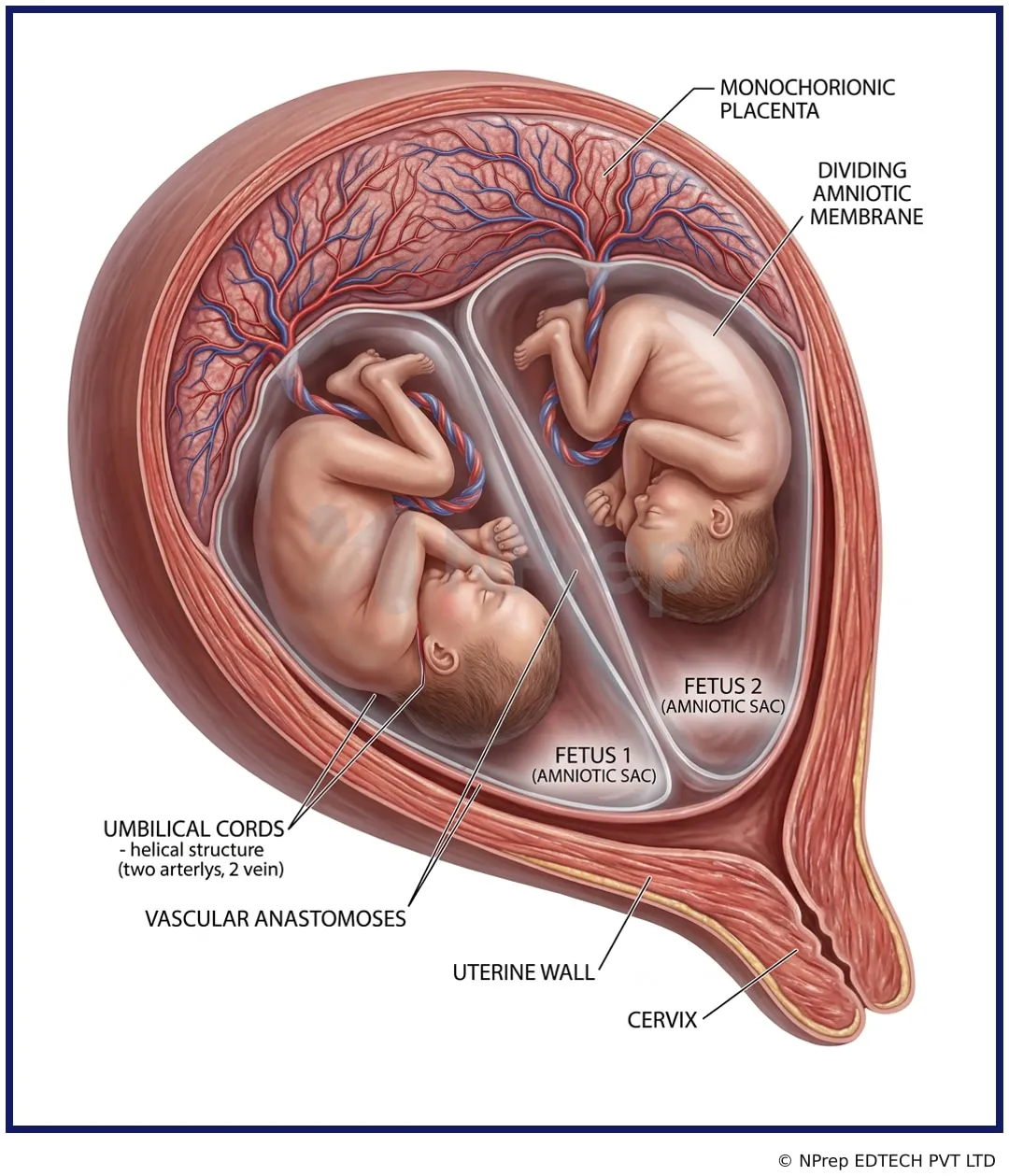
- A.
Dichorionic-Diamniotic
- B.
Monochorionic-Diamniotic
- C.
Monochorionic-Monoamniotic
- D.
Conjoined twins
- A.
Q90 · Child Health Nursing (Pediatrics) · Newborn Infants
A mother is positive for Chlamydia trachomatis at delivery. Her newborn is asymptomatic. What should be given to the baby to prevent ophthalmia neonatorum?
- A.
Erythromycin 0.5% ophthalmic ointment
- B.
Erythromycin oral
- C.
Tetracycline
- D.
1% AgNO₃ (Silver Nitrate)
- A.
Q91 · Obstetrics & Gynaecology · Normal Labor
A client in labor is assessed, and the nurse determines that her cervix is dilated to 5 cm and is 80% effaced. The client is experiencing strong contractions every 3-4 minutes. Which phase of the first stage of labor is the client in?
- A.
Latent Phase
- B.
Active Phase
- C.
Transition Phase
- D.
Second Stage
- A.
Q92 · Applied Anatomy · Sensory Organs
Light rays entering the eye is controlled by:
- A.
Lens
- B.
Cornea
- C.
Iris
- D.
Pupil
- A.
Q93 · Obstetrics & Gynaecology · Prolonged Labor, Obstructed Labor, Dystocia Caused by Fetal Anomalies
An image shows a nurse applying pressure to the mother's lower abdomen during the third stage of labor. What is the nurse doing?
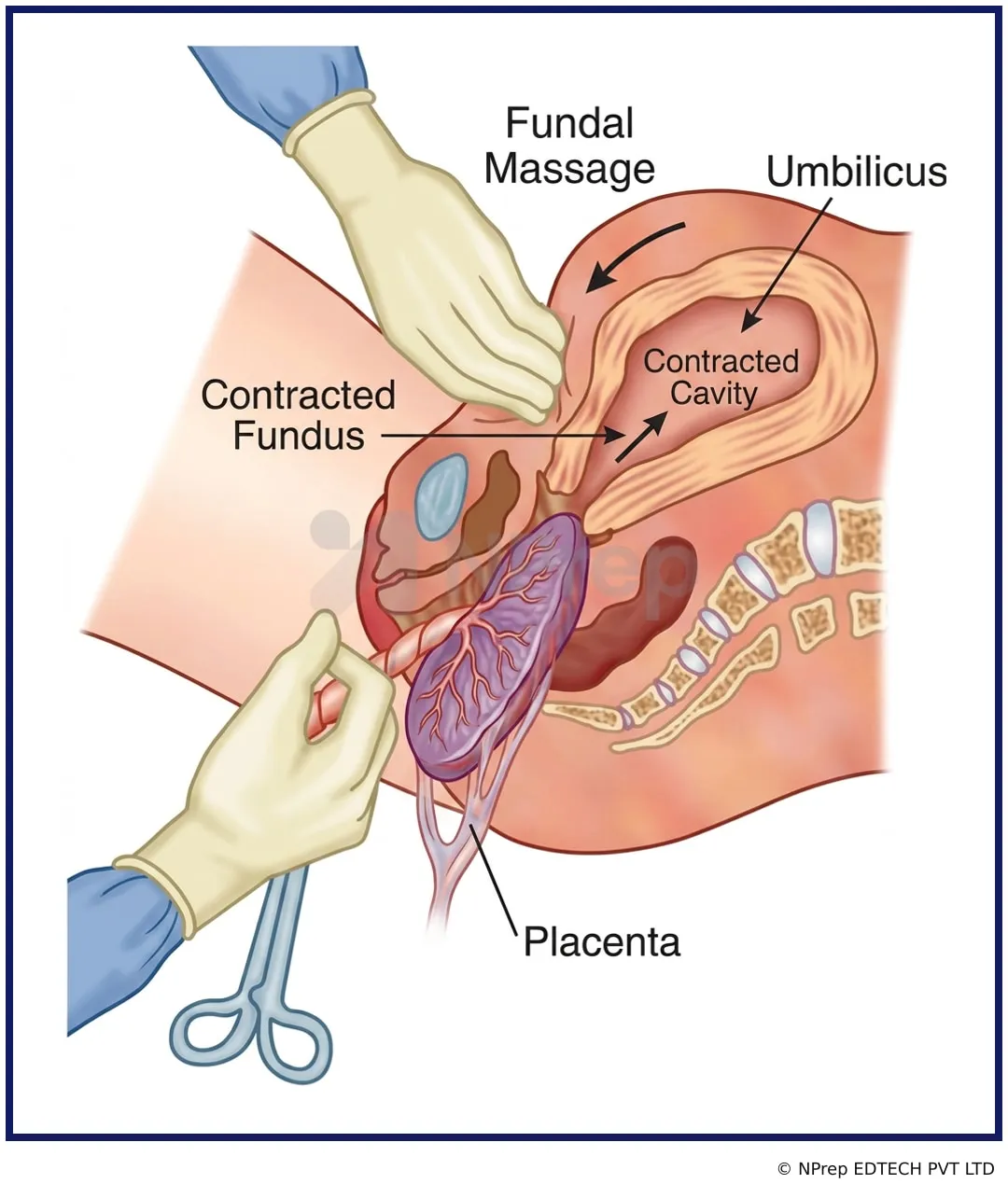
- A.
Giving fundal pressure
- B.
Assisting with controlled cord traction
- C.
Applying uterine massage after placenta delivery
- D.
Assisting with perineal massage
- A.
Q94 · Medical & Surgical Nursing · Cardiovascular, Circulatory, and Hematologic Function
Massive transfusion is defined as the replacement of a patient's total blood volume in a 24-hour period. This is clinically approximated as the transfusion of how many units of packed red blood cells (PRBCs) within 24 hours for an adult?
- A.
3 units
- B.
5 units
- C.
10 units
- D.
20 units
- A.
Q95 · Medical & Surgical Nursing · Neurologic Function
A trauma patient is diagnosed with a complete T4 spinal cord injury. Which finding is most likely?
- A.
Profound weakness of upper extremities
- B.
Diaphragmatic paralysis requiring ventilatory support
- C.
Weakness/paralysis and sensory loss in lower extremities
- D.
Isolated hand grip weakness
- A.
Q96 · Obstetrics & Gynaecology · Special Topics in Obstetrics
A non-stress test (NST) is performed on a 36-week pregnant client. The fetal heart rate tracing shows a baseline of 135 bpm, minimal variability, and only one acceleration of 10 bpm lasting 10 seconds over a 20-minute period. How should this result be interpreted?
- A.
Reactive
- B.
Non-reactive
- C.
Sinusoidal
- D.
Positive
- A.
Q97 · English · Vocabulary
What does the idiom ''Break the ice'' means?
- A.
To make people feel more comfortable in new situation
- B.
To quarrel and spoil a friendship
- C.
To waste time in useless talk
- D.
To face a very difficult situation
- A.
Q98 · Medical & Surgical Nursing · Perioperative Concepts and Nursing Management
What is meant by conscious anesthesia?
- A.
Deep sleep (general anesthesia)
- B.
Conscious sedation
- C.
Regional anesthesia (e.g., spinal/epidural)
- D.
Local anesthesia only
- A.
Q99 · Nursing Foundations · Administration of medications
A patient is prescribed dopamine at 15 mcg/min. The prepared infusion is dopamine 5 mg in 500 mL D5W. What IV pump rate (mL/hr) should be set to deliver the ordered dose?
- A.
9 mL/hr
- B.
19 mL/hr
- C.
90 mL/hr
- D.
180 mL/hr
- A.
Q100 · Pharmacology · Hormones & Related Drugs
A patient is started on intravenous hydrocortisone. Which nursing action should be performed after administration?
- A.
Assess blood glucose levels
- B.
Encourage high-sodium diet
- C.
Withhold fluid intake
- D.
Monitor for hypokalemia only
- A.
More NORCET papers
- NORCET-11 Mains2026 · 155 questions
- NORCET-11 Prelims2026 · 100 questions
- NORCET-10 Mains2026 · 160 questions
- NORCET-10 Prelims2026 · 100 questions
- NORCET-9 Mains2025 · 160 questions
- NORCET-8 Prelims2025 · 100 questions
- NORCET-8 Mains2025 · 160 questions
- NORCET-7 Prelims2024 · 100 questions
- NORCET-7 Mains2024 · 160 questions
- NORCET-6 Prelims2024 · 100 questions
- NORCET-6 Mains2024 · 100 questions
- NORCET-5 Prelims (Shift 1)2023 · 100 questions