Nursing Foundations · Administration of medications

Administration of Medications

Medication orderdefinition

A prescriber's legal instruction for a drug, dose, route, frequency and duration.

in simple words: The doctor's written or verbal instruction to give a medicine.

Types of orders

  • Stat – Given immediately and only once. High yield
  • Standing – Carried out continuously at a set frequency until discontinued. High yield
  • PRN – Pro re nata = 'as needed', based on symptoms, not necessarily immediately. High yield
  • Single (one-time) – Given only once at a specified time, e.g. pre-operative antibiotic. High yield
  • Now – Given quickly, within up to 90 minutes, but not a stat order.
© NextNurse

nextnurse.in

Administration of Medications · Nursing Foundations

Measurement Systems

Why units matter

Metric and household measurements are used in drug calculation. Always convert the prescribed dose and the available dose to the same unit before calculating.

Metric conversions

UnitEquivalent
1 g1000 mg
1 mg1000 mcg
1 tablespoon15 mL (half a fluid ounce)
1 fluid ounce30 mL (2 tablespoons)
1 mLapproximately 15–20 drops of aqueous solution

© NextNurse

nextnurse.in

Administration of Medications · Nursing Foundations

Dose Calculation

Dose formuladefinition

Volume to administer = (Desired Dose / Stock Strength) × Stock Volume.

in simple words: Divide what you want by what you have, then multiply by the volume it comes in.

e.g. 250 mg ordered from 500 mg/mL: (250/500) × 1 mL = 0.5 mL.

Tablet calculation

  • Formula – Tablets required = dose ordered ÷ dose available per tablet.
  • Example – 150 mcg ordered from 0.1 mg tablets: 0.1 mg = 100 mcg; 150 ÷ 100 = 1.5 tablets.
  • Example – 0.25 g ordered from 125 mg tablets: 250 mg ÷ 125 mg = 2 tablets.

© NextNurse

nextnurse.in

Administration of Medications · Nursing Foundations

IV Flow Rates

Drip ratedefinition

Drops/min = (Total volume in mL × Drip factor in gtt/mL) ÷ Total time in minutes.

in simple words: Volume times drop factor, divided by time in minutes.

Worked examples

OrderSetDrip rate
1000 mL over 8 hr15 gtt/mL31 drops/min
500 mL over 5 hr20 gtt/mL33 drops/min
2000 mL over 24 hr15 gtt/mL21 gtt/min
60 mL/hr60 gtt/mL microdrip60 drops/min
50 mL over 15 min—200 mL/hr

© NextNurse

nextnurse.in

Administration of Medications · Nursing Foundations

IV Sets & Pumps

Choosing the set

Macrodrip sets deliver 10, 15 or 20 drops/mL and are used for routine or rapid adult infusions. Microdrip sets deliver 60 drops/mL and are preferred for children, older adults and potent drugs needing precise slow infusion.

Set comparison

FeatureMacrodripMicrodrip
Drop factor10, 15 or 20 gtt/mL60 gtt/mL
Typical useRoutine adult infusionPaediatric, elderly, potent drugs
mL/hr to drops/minCalculate with formulamL/hr = drops/min

© NextNurse

nextnurse.in

Administration of Medications · Nursing Foundations

Parenteral Angles

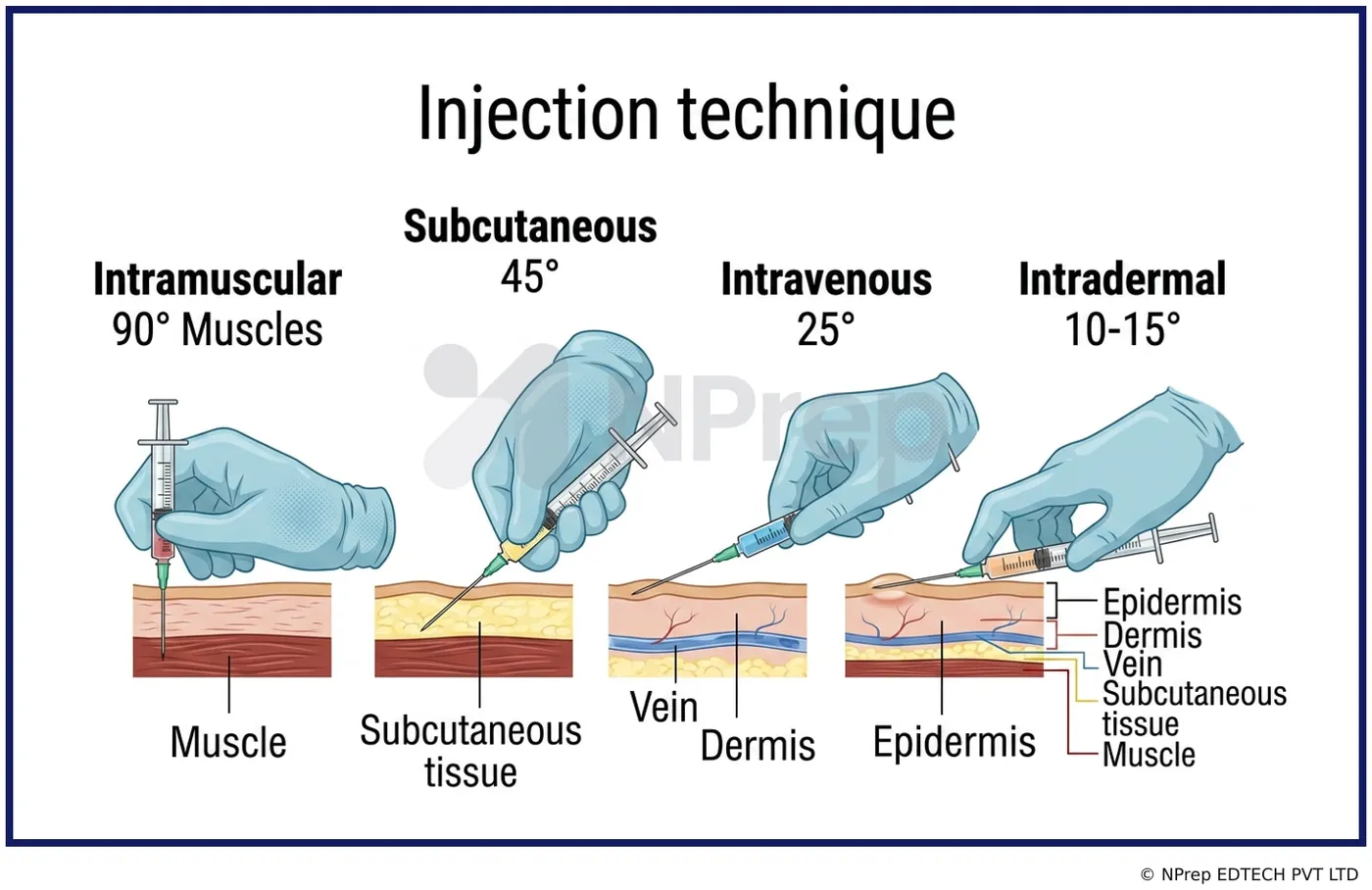
Angles and routes

RouteAngleKey point
Intradermal10–15°Bleb must form; used for sensitivity tests. High yield
Subcutaneous45° or 90°Fatty tissue; insulin and heparin. High yield
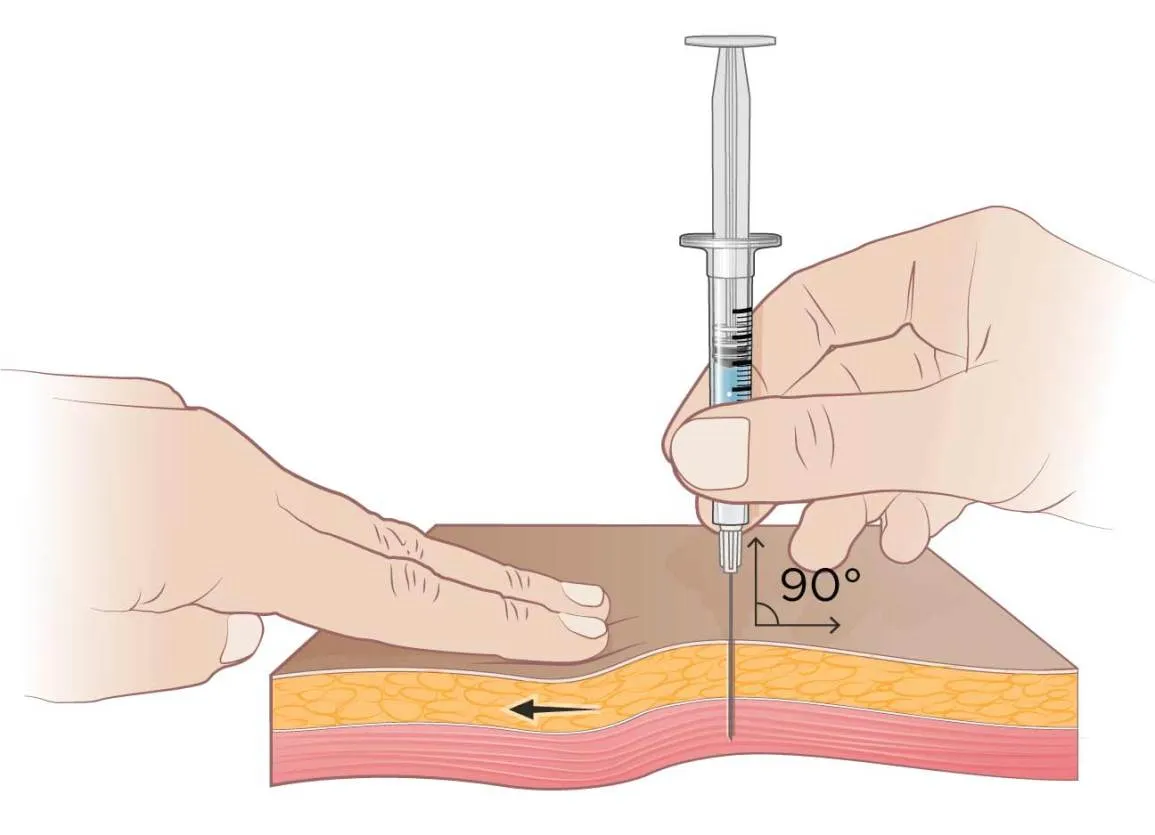
Intramuscular90°Deep muscle; rich blood supply. High yield
Intravenous—Direct into vein.
A close-up showing the intradermal injection technique used to administer BCG vaccine.
BCG intradermal injection technique
A needle inserted at a 90-degree angle into muscle for an intramuscular injection.
Intramuscular injection at 90 degrees

© NextNurse

nextnurse.in

Administration of Medications · Nursing Foundations

IM Sites & Technique

Intramuscular sites

  • Vastus lateralis – Preferred for infants 0–12 months; large, away from sciatic nerve. High yield
  • Deltoid – Safe for small volumes (1 mL or less) in adults; 2–3 finger-widths below acromion. High yield
  • Ventrogluteal – Generally safest for adults; preferred for iron dextran Z-track.
  • Dorsogluteal – Avoided; near sciatic nerve, risk of paralysis and foot drop. High yield

Z-track methoddefinition

Pull skin and subcutaneous tissue laterally 1–1.5 inches (2.5–3.5 cm) before inserting the needle, creating a zigzag path that seals medication in the muscle.

in simple words: Displace the skin, inject, release — the track seals and prevents leakage.

An illustration of the Z-track technique for intramuscular injection with skin displaced laterally.
Z-track intramuscular injection technique
The Z-track injection technique used to prevent backflow of iron medication.
Z-track technique for iron injection

© NextNurse

nextnurse.in

Administration of Medications · Nursing Foundations

Needles & Syringes

Needle selection

RouteGaugeLength
Intramuscular (adult)20–25 G1–1.5 inches
Intramuscular (child)22–25 G1 inch
Subcutaneous25–31 G5/8 inch
Intradermal25–27 G3/8–5/8 inch

Syringe parts

  • Barrel – Hollow cylindrical reservoir that holds and measures fluid.
  • Tip – Luer-Lok (threaded) or Luer-slip (friction-fit); needle attaches here.
  • Flange – Prevents the syringe from rolling on a flat surface.

© NextNurse

nextnurse.in

Administration of Medications · Nursing Foundations

Cannula Colour Code

Universal IV cannula colours

GaugeColourFlow
14 GOrangeFastest
16 GGreyFast
18 GGreenModerate
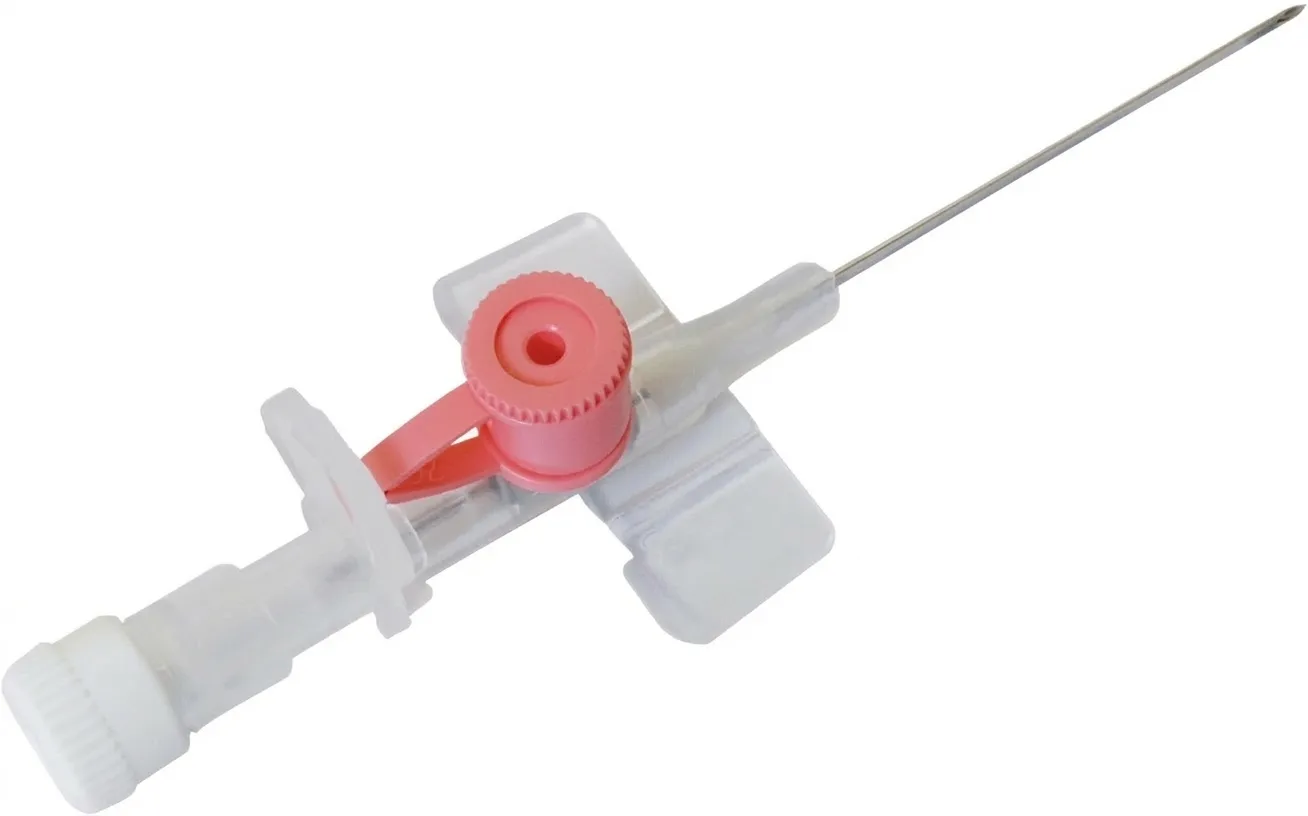
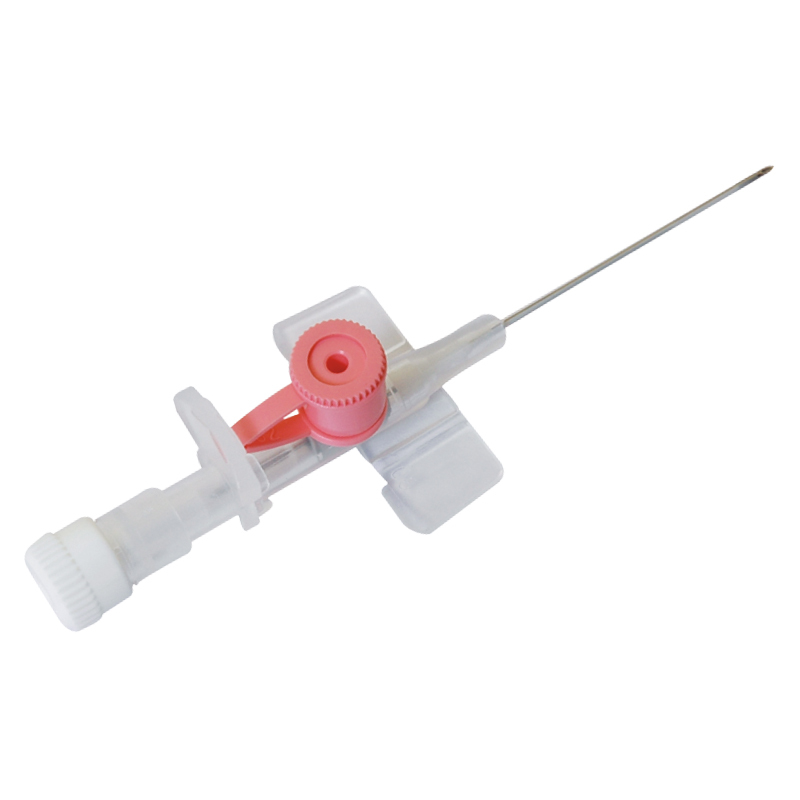
20 GPinkAbout 60 mL/min
22 GBlueSlow
24 GYellowVery slow
An image of an intravenous cannula identified as 20 gauge.
20 G IV cannula
A close-up of an intravenous cannula showing its 20 gauge size.
20 Gauge IV cannula

© NextNurse

nextnurse.in

Administration of Medications · Nursing Foundations

Topical & Eye/Ear

Inunctiondefinition

Application of a medication by rubbing it into the skin.

in simple words: Massaging an ointment or oil into the skin.

e.g. Nitroglycerin ointment — wear gloves to avoid absorbing the drug yourself.

Eye and ear procedures

  • Ear drops (adult/child >3 yr) – Pull pinna up and back to straighten the ear canal. High yield
  • Warm ear drops – Warm to body temperature to prevent vertigo, nausea and pain.
  • Eye drops – Ask patient to look up, retract lower eyelid to form conjunctival sac.
  • Punctal occlusion – Press nasolacrimal duct for 30–60 seconds to prevent systemic absorption.

© NextNurse

nextnurse.in

Administration of Medications · Nursing Foundations

High-Alert Drugs

Why high-alert?

High-alert medications carry a heightened risk of significant patient harm when used in error. Independent double-checks by two nurses are often required for setup and rate changes.

High-alert drugs

DrugRiskMonitoring
HeparinOverdose: hemorrhage; underdose: thromboembolismaPTT
NitroglycerinSevere hypotension and reflex tachycardiaBlood pressure, heart rate
MorphineOpioid; respiratory depressionIndependent double-check
DigoxinNarrow therapeutic index 0.5–2 ng/mLDouble-check dose
DopamineVasoactive; small changes alter BP and HRInfusion pump, close monitoring

© NextNurse · Checked against: NextNurse Q-Bank explanations

nextnurse.in