Nursing Foundations · Mobility & Immobility

Mobility & Immobility

Ergonomicsdefinition

The applied science of arranging work so that people and things interact efficiently and safely.

in simple words: Applying body mechanics principles to tasks like lifting, transferring and repositioning to prevent injury to staff and patients.

Why body mechanics matters

The primary objective of body mechanics is to avoid strain and fatigue during physical work. Good posture is a component, not the goal. Good muscle strength alone does not prevent injury — correct technique is more critical.

Core principles

  • Base of support – Wide base by spreading feet apart — lowers centre of gravity, increases stability.
  • Bend at – Knees and hips, not at the waist — uses strong leg and gluteal muscles.
  • Large muscles – Use quadriceps, gluteals, abdominals for lifting.
  • Load – Carry close to the body's midline — reduces lever arm and strain.
© NextNurse

nextnurse.in

Mobility & Immobility · Nursing Foundations

Safe Patient Handling

Log-rolling

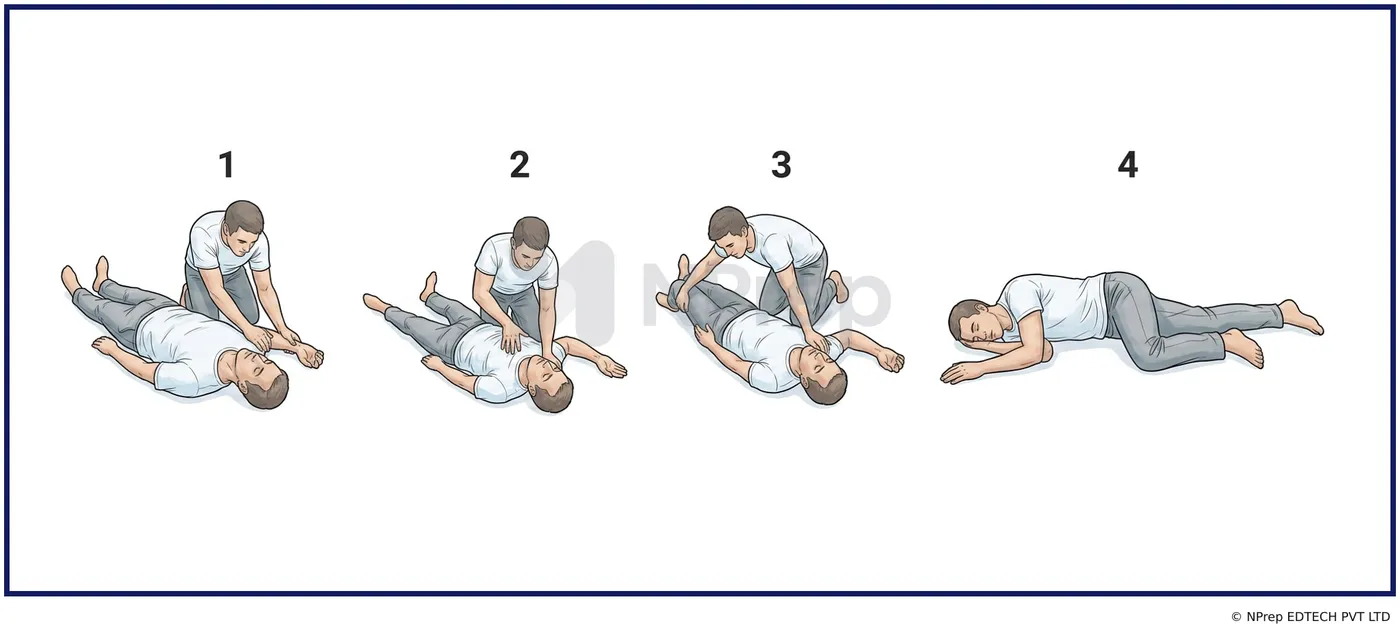
Used to turn a patient while maintaining spinal alignment — the correct technique when spinal injury is suspected. A blanket lift is contraindicated in suspected spinal injury; log-rolling with a spine board keeps the spine neutral.

Log-rolling sequence

  1. Position teamNurse at head leads, ensures head, neck, spine aligned.
  2. Cross armsPatient's arms crossed over chest.
  3. Turn as unitCoordinated movement as a single unit — prevents twisting.
  4. Support spineSpine board keeps spine neutral.

Blanket lift

  • Multiple caregivers lift evenly by holding edges.
  • Blanket acts as a sling, distributes weight.
  • Contraindicated in suspected spinal injury.

Log-rolling

  • Maintains spinal alignment.
  • Correct when spinal injury suspected.

Lifting methods

Choose the right technique

© NextNurse

nextnurse.in

Mobility & Immobility · Nursing Foundations

Exercise Types

Why exercise matters

Aims of assisted mobility include performing active and passive range-of-motion exercises and promoting patient independence. ROM exercises prevent contractures and atrophy; promoting independence enhances psychological well-being.

Types of exercise

TypeDefinitionExample
IsotonicMuscle contraction changes length, produces joint movementWalking, bathing, dressing, eating
IsometricContraction without change in length or joint movementMaintains strength in immobilized part (limb in cast)
IsokineticContraction against resistance at constant speedSpecialized equipment (dynamometers)
Endurance (aerobic)Sustained activity raising heart and breathing ratesClassified by cardiovascular effect

Range of motion

  • Active ROM – Improves muscle strength — requires voluntary contraction.
  • Passive ROM – Maintains joint mobility but does not strengthen muscles.
  • ADLs – Walking, bathing, dressing, eating are isotonic exercises.
  • Bedridden – Active or passive ROM are forms of isotonic exercise — prevent contractures and circulatory problems.

© NextNurse

nextnurse.in

Mobility & Immobility · Nursing Foundations

Effects of Immobility

Systemic effects

Prolonged immobility causes disuse atrophy of muscles and disuse osteoporosis from bone resorption exceeding formation. Bone demineralisation releases calcium into blood, causing hypercalcaemia and raising risk of renal calculi.

Musculoskeletal

  • Disuse atrophy
  • Disuse osteoporosis
  • Negative nitrogen balance

Cardiovascular

  • Venous stasis — Virchow's triad
  • DVT risk

Immobility

Respiratory

  • Reduced vital capacity
  • Atelectasis

Renal

  • Hypercalcaemia
  • Renal calculi

Key mechanisms

SystemEffectMechanism
MusculoskeletalDisuse atrophy & osteoporosisProtein breakdown; osteoclasts outpace osteoblasts
MetabolicNegative nitrogen balanceMuscle protein broken down in catabolic state
RespiratoryAtelectasisShallow breathing, reduced chest wall movement
CardiovascularDVTVenous stasis — loss of skeletal muscle pump

© NextNurse

nextnurse.in

Mobility & Immobility · Nursing Foundations

Positioning & Alignment

Why positioning matters

Maintaining normal body alignment prevents complications. Immobile patients should be repositioned at least every 2 hours to redistribute pressure and maintain skin integrity.

Common positions

PositionDescriptionUse
SupineFlat on backCan worsen dyspnoea — abdominal contents press diaphragm
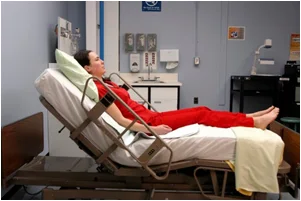
Fowler'sSemi-sitting, head 45–60°General breathing difficulty; reduces work of breathing
High Fowler'sHead 60–90°Most effective to promote lung expansion; contraindicated in suspected spinal injury
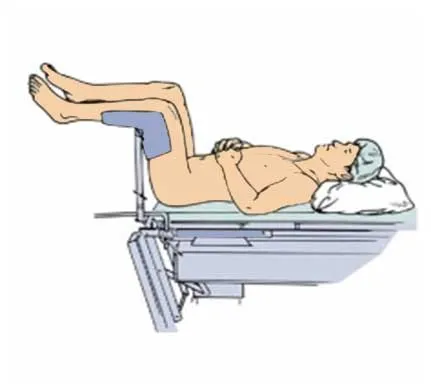
LithotomySupine, hips/knees flexed, legs in stirrupsPerineal, rectal, vaginal procedures
Sims'Side-lying (semi-prone)Oral care of unconscious patient — secretions drain by gravity
TrendelenburgEntire bed tilted, head lower than feetSpecific therapeutic indication
Patient lying supine with hips and knees flexed and legs supported in stirrups.
Lithotomy position
Patient lying on the side with the upper leg flexed and head tilted back to keep the airway open.
Recovery position

© NextNurse

nextnurse.in

Mobility & Immobility · Nursing Foundations

Positioning Devices

Purpose of devices

Positioning devices maintain functional alignment, prevent contractures and footdrop, and reduce pressure. They should be removed at scheduled intervals (e.g., every 2 hours) to check for redness, irritation or pressure sores over bony prominences.

Devices and their functions

DeviceFunction
Trapeze barOverhead device grasped to help repositioning and strengthen upper body; prevents shearing by lifting torso off bed
Hand rollMaintains functional position of hand, thumb, fingers; prevents contractures
Positioning bootsHold foot and ankle in neutral dorsiflexion at 90° to prevent footdrop
Trochanter rollPlaced along outer thigh to prevent external rotation of hip; maintains neutral alignment
Bed cradleKeeps weight of top linens off feet; prevents pressure but does not support foot position
SplintRigid device maintains joint in functional position; foot splint holds dorsiflexion

© NextNurse

nextnurse.in

Mobility & Immobility · Nursing Foundations

Nursing Interventions

Preventing pressure ulcers

Repositioning a bedridden patient at least every two hours is the most effective way to prevent pressure ulcers. Sustained pressure exceeding capillary closing pressure of approximately 32 mmHg obstructs blood flow, leading to tissue ischemia and necrosis.

Key interventions

  • Reposition – Every 2 hours — redistributes pressure from bony prominences (sacrum, heels, hips).
  • Skin care – Keep clean and dry; moisture makes skin susceptible to breakdown. Lubricate with lotion to maintain pliability.
  • Nutrition – Adequate protein vital for healthy skin and healing.
  • Special mattresses – Pressure-redistributing surfaces reduce pressure on vulnerable areas.
  • Water mattress – Static pressure-relieving device; conforms to body contours, distributes weight.

© NextNurse · Checked against: NextNurse Q-Bank explanations

nextnurse.in