Nursing Foundations · Elimination needs

Elimination Needs

Urinary eliminationdefinition

The process of expelling urine from the bladder.

in simple words: Passing urine.

e.g. Average 24-hour output in a healthy adult is about 1500 mL (range 800–2000 mL).

Urine Output Abnormalities

TermDefinitionKey point
Oliguria<400 mL/24 hReport; <0.5 mL/kg/h for 2 h is critical
Anuria<50–100 mL/24 hSevere reduction
Polyuria>2500–3000 mL/24 hExcessive output
EnuresisInvoluntary urination (bedwetting)Bladder control problem
MicturitionAct of urinatingNot a volume measure

Output terms

OAP

  • Oliguria – low output (<400 mL/day)
  • Anuria – almost no output (<50–100 mL/day)
  • Polyuria – high output (>2500–3000 mL/day)
© NextNurse

nextnurse.in

Elimination Needs · Nursing Foundations

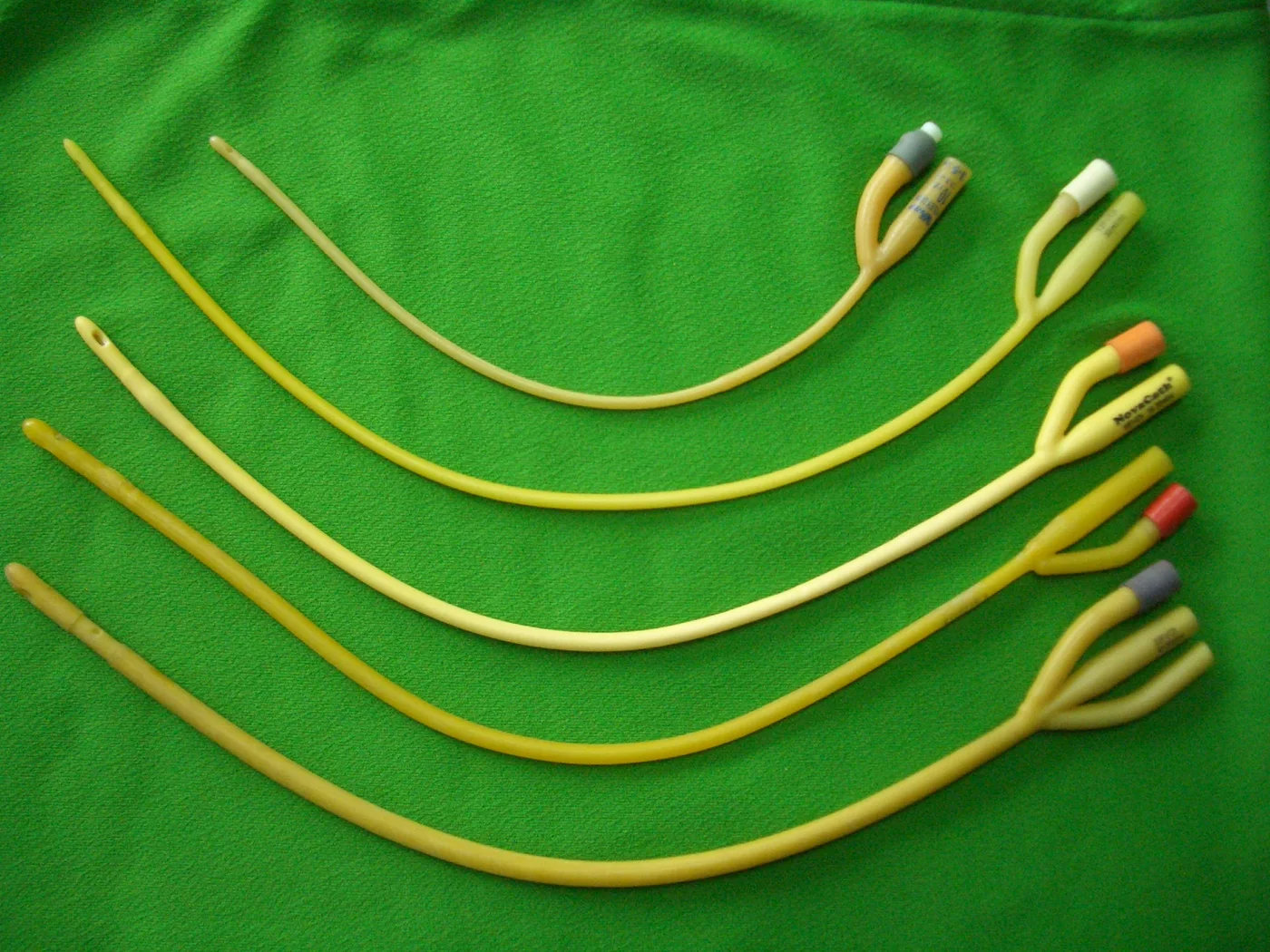
Urinary Catheters

Urinary catheterdefinition

A tube inserted into the bladder to drain urine.

in simple words: Helps urine come out when the patient cannot void.

e.g. Foley, red rubber, Malecot.

Types of Urinary Catheters

TypeFeatureUse
FoleySelf-retaining balloon at tipIndwelling continuous drainage
Red rubberStraight, no balloonIntermittent (in-and-out)
MalecotExpandable wings at tipSelf-retaining, e.g., suprapubic
Diagram comparing Foley, straight, and condom urinary catheters with their features.
Types of urinary catheters

Image: Saltanat ebli, CC0

Catheter Sizes (Fr)

  • Adult female – 14–16 Fr
  • Adult male – 16–18 Fr
  • Infants/children – 5–8 Fr
  • Gross hematuria with clots – 20–24 Fr three-way for continuous bladder irrigation

© NextNurse

nextnurse.in

Elimination Needs · Nursing Foundations

Catheter Insertion & Care

Female Foley Insertion

  1. CleanBetadine, front to back
  2. LubricateCatheter tip
  3. InsertUntil urine returns
  4. Advance1–2 inches (2.5–5 cm) more
  5. InflateBalloon with sterile water

Catheter Care Key Points

  • Drainage bag – Always below bladder level; never touch floor
  • Tubing – Check for kinks if urine stops flowing
  • Irrigation – Avoid routine; breaks closed system, raises CAUTI risk
  • Clamping – Not routine; can cause bladder overdistension
  • Catheter care – Independent nursing intervention (no doctor's order needed)

© NextNurse

nextnurse.in

Elimination Needs · Nursing Foundations

Enema Positions & Types

Enemadefinition

Instillation of a solution into the rectum and sigmoid colon to promote defecation.

in simple words: Fluid is put into the rectum to help pass stool.

e.g. Used for constipation, bowel prep, bowel training.

Positions for Enema

PositionUseReason
Left Sims'StandardGravity aids flow into descending/sigmoid colon
Right lateralAlternativeLess effective
Knee-chestAlternativeDifficult to maintain
SupineNot usedGravity works against flow
ProneNot usedNo gravity assist; poor access
TrendelenburgUnsafeSolution flows too rapidly and high

Common Enema Types

  • Carminative – Relieves gaseous distension; MGW or milk and molasses
  • Oil-retention – Lubricates and softens hard, dry stool in fecal impaction
  • Cold (ice water) – Reduces hyperpyrexia
  • Antihelminthic – Kills and expels intestinal parasites
  • Purgative – Strong cleansing; complete bowel evacuation
  • Soap and water – Irritates bowel to stimulate movement

© NextNurse

nextnurse.in

Elimination Needs · Nursing Foundations

Enema Administration & Safety

Enema Administration Steps

  1. PositionLeft Sims'
  2. LubricateTube tip
  3. InsertGently into rectum
  4. InstillBag height: high 30–45 cm; low 7.5 cm
  5. Stop if crampingWait, then resume slower

Safety Points

  • Vagus nerve – Enema can stimulate vagus → bradycardia; stop if dizzy, lightheaded, nauseated
  • Hypertonic enema – Contraindicated in dehydrated patients (worsens fluid/electrolyte imbalance)
  • Colostomy irrigation – Insert catheter/cone about 10 cm (3–4 in) into stoma
  • Retention enema – Hold solution 30 min or more for medication absorption or stool softening

© NextNurse

nextnurse.in

Elimination Needs · Nursing Foundations

Specimens & Special Care

Midstream urine specimendefinition

A clean-catch urine sample collected after the initial flow has flushed the urethra.

in simple words: Catch urine in the middle of voiding, not the first part.

e.g. Used for urine culture and sensitivity.

Specimen Collection

  • If patient cannot provide midstream – Obtain sterile specimen via in-and-out catheterization
  • Guaiac test – Fecal occult blood test (FOBT); blue color = positive
  • Positive Guaiac – Report promptly; follow-up colonoscopy to find GI bleeding source

Neurogenic Bladder Home Care

  • Perineal hygiene – Keep clean and dry
  • Maintain bladder tone – Timed voiding or clean intermittent catheterization
  • Ambulation – Promotes normal elimination

© NextNurse · Checked against: NextNurse Q-Bank explanations

nextnurse.in