Nursing Foundations · Vital Signs

Vital Signs

Vital Signsdefinition

The four primary vital signs are temperature, pulse, respiration and blood pressure.

in simple words: Basic measurements that reflect the body's essential functions.

e.g. Some modern frameworks also include pain and pulse oximetry.

Why They Matter

Abnormal vital signs are often the earliest indicators of deterioration such as infection (fever), shock (low blood pressure with high pulse) or respiratory distress. They prompt immediate nursing assessment and escalation.

Pain – 5th vital sign

  • Assessed as routinely as TPR and BP.
  • Promoted by American Pain Society and The Joint Commission.
  • Untreated acute pain can impair recovery.
© NextNurse

nextnurse.in

Vital Signs · Nursing Foundations

Temperature Measurement

Core Temperaturedefinition

Temperature of deep tissues and organs; remains relatively constant.

in simple words: The body's internal temperature, little affected by environment.

e.g. Surface (skin) temperature fluctuates with ambient temperature.

Temperature Sites

SiteAccuracyNotes
OralSurfaceAltered by hot/cold drinks, food, smoking, mouth breathing. Wait 15–20 min after intake.
AxillaryLeast accurateUnderestimates core temperature.
RectalMost accurate non-invasive coreReads ~0.5°C (1°F) higher than oral. Avoid in newborns, cardiac disease, rectal surgery, diarrhoea, neutropenia.
TympanicCoreReflects carotid blood supply to hypothalamus. Avoid if otitis media or cerumen impaction.
TemporalCoreInfrared over temporal artery; non-invasive.
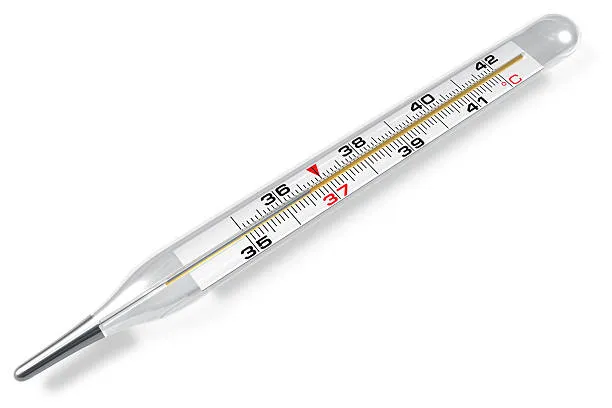
A clinical thermometer used to measure body temperature orally or axillary.
Clinical thermometer for temperature measurement
A single-use disposable thermometer for measuring body temperature.
Disposable thermometer

Temperature Conversion

  1. °F to °C°C = (°F − 32) × 5/9
  2. °C to °F°F = (°C × 9/5) + 32
  3. Example99°F ≈ 37.2°C; 101°F ≈ 38.3°C

© NextNurse

nextnurse.in

Vital Signs · Nursing Foundations

Temperature Measurement (contd.)

© NextNurse

nextnurse.in

Vital Signs · Nursing Foundations

Fever Patterns

Fever (Pyrexia)definition

Core body temperature at or above 38°C (100.4°F).

in simple words: A regulated rise in the hypothalamic set-point caused by pyrogens.

e.g. Bacteria and viruses act as pyrogens.

Fever Patterns

PatternDescription
IntermittentTemperature rises and returns to normal at least once in 24 hours.
RemittentTemperature fluctuates but does not return to normal.
SustainedPersistently elevated with fluctuations <1°C (1.8°F).
RelapsingFebrile episodes lasting days separated by afebrile periods of days.
InverseHighest temperature in morning, lowest in evening; clue to miliary TB.

Crisis vs Lysisdefinition

Crisis: sudden fall of high fever to normal within hours, often with profuse sweating. Lysis: gradual decline over days.

in simple words: Crisis is abrupt; lysis is gradual.

e.g. Monitor for dehydration and hypotension during crisis.

© NextNurse

nextnurse.in

Vital Signs · Nursing Foundations

Pulse Assessment

Pulsedefinition

A wave of blood created by contraction of the left ventricle.

in simple words: The heartbeat felt at peripheral arteries.

e.g. Normal adult resting pulse: 60–100 bpm.

Pulse Characteristics

TermDefinition
TachycardiaPulse >100 bpm in adults.
BradycardiaPulse <60 bpm in adults.
Pulse deficitDifference between apical and radial rates; indicates weak beats.
Pulse pressureDifference between systolic and diastolic BP.
Thready pulseWeak, low volume, disappears with light pressure; grade 1+.
Bounding pulseForceful, difficult to obliterate; grade 4+.

Apical Pulse

Best assessed at the point of maximal impulse: 5th intercostal space, left mid-clavicular line. Count for a full minute before giving digoxin or beta-blockers. In children under 7, PMI is at 4th intercostal space.

© NextNurse

nextnurse.in

Vital Signs · Nursing Foundations

Respiration

Respirationdefinition

The exchange of oxygen and carbon dioxide.

in simple words: Breathing.

e.g. Normal adult rate: 12–20 breaths per minute.

Respiratory Terms

TermDefinition
TachypneaRate >20 breaths/min in adults.
BradypneaRate <12 breaths/min in adults.
ApneaAbsence of breathing for several seconds or longer.
EupneaNormal, unlabored breathing.
HyperventilationRapid deep breathing; can cause dizziness and tingling.

Counting Respirations

Count discreetly after taking the pulse, with hand still on wrist, so patient does not alter breathing. Respiratory rate is one of the earliest indicators of deterioration.

© NextNurse

nextnurse.in

Vital Signs · Nursing Foundations

Pulse Oximetry

Pulse Oximetrydefinition

Noninvasive measurement of arterial oxyhemoglobin saturation (SpO2).

in simple words: Percentage of hemoglobin bound to oxygen.

e.g. Normal SpO2: 95–100%. Below 90% is a clinical emergency.

Factors Affecting Accuracy

  • Hypotension/shock – Weakens signal; false or unobtainable readings.
  • Oedema – Widens gap between emitter and detector; scatters light.
  • Dark nail polish – Absorbs light; falsely low SpO2.
  • Hypothermia – Vasoconstriction weakens pulse; reading may be unobtainable.
  • Carbon monoxide – Falsely high SpO2; cannot distinguish carboxyhemoglobin.

Troubleshooting Low SpO2

Check for warm extremity, remove nail polish, verify probe placement, try earlobe or forehead site. Confirm with clinical assessment and ABG if needed.

© NextNurse

nextnurse.in

Vital Signs · Nursing Foundations

Blood Pressure

Blood Pressuredefinition

The force exerted by blood against arterial walls.

in simple words: Pressure in the arteries.

e.g. Normal adult BP: <120/80 mm Hg.

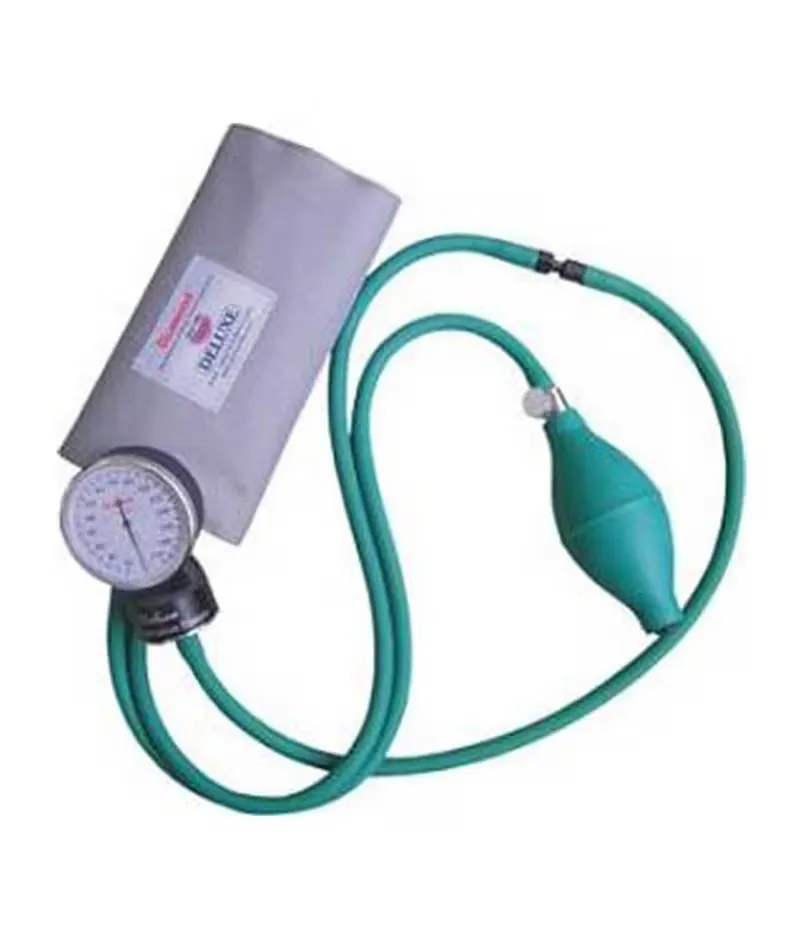
An aneroid sphygmomanometer with dial gauge used to measure blood pressure.
Aneroid blood pressure apparatus

BP Categories

CategorySystolic (mm Hg)Diastolic (mm Hg)
Normal<120<80
Stage 1 hypertension130–13980–89
Stage 2 hypertension≥140≥90
Hypotension<90<60

Korotkoff Sounds

Phase I (first clear tapping) = systolic. Phase V (disappearance) = diastolic in adults. Phase IV (muffling) used in children and pregnant women.

© NextNurse

nextnurse.in

Vital Signs · Nursing Foundations

BP Measurement

Cuff Size

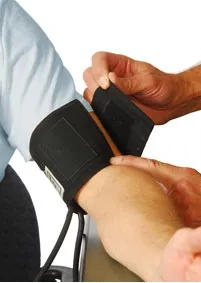
Bladder width ~40% of arm circumference; length-to-width ratio 2:1. Select cuff size after assessing upper-arm circumference.

Illustration showing that a blood pressure cuff that is too small records a falsely higher reading.
Small cuff gives falsely high BP

Sites to Avoid

  • IV line – Use contralateral arm.
  • AV fistula – Avoid.
  • Mastectomy with lymph node removal – Avoid.
  • Carotid sinus – Not for routine BP; can cause vasovagal response.

Technique

Inflate cuff 30 mmHg above estimated systolic, deflate at 2–3 mmHg/sec. Arm at heart level. Avoid auscultatory gap by palpating systolic first.

© NextNurse

nextnurse.in

Vital Signs · Nursing Foundations

Pulse Deficit

Pulse Deficitdefinition

Difference between apical and radial pulse rates counted over the same period.

in simple words: Some heartbeats are too weak to reach the wrist.

e.g. Common in atrial fibrillation.

Measurement

Two clinicians count apical and radial pulses simultaneously for a full minute. Apical is auscultated at PMI (5th ICS, left mid-clavicular line).

Significance

Indicates reduced cardiac output. New pulse deficit should be reported and may require ECG. Hold digoxin or beta-blockers if new deficit appears.

© NextNurse

nextnurse.in

Vital Signs · Nursing Foundations

Documenting Vital Signs

Tachycardiadefinition

Pulse greater than 100 beats per minute in adults.

in simple words: Fast heart rate.

e.g. Causes: anxiety, exertion, hypovolemia, infection, arrhythmia.

Normal Values

Average normal oral temperature: 37°C (98.6°F). Normal adult pulse: 60–100 bpm. Normal adult respirations: 12–20/min. Normal adult BP: <120/80 mm Hg.

Documentation

Record vital signs accurately, including site and method. Report abnormal values promptly. In Indian healthcare, document temperature in Celsius.

© NextNurse · Checked against: NextNurse Q-Bank explanations

nextnurse.in